
 Business License

Kubota V3300 Engines in Mini Excavators and Skid Steers
A contractor with a pair of three tonne excavators found that one of them was burning a full service interval sooner than the other, on the same site and the same work. The difference turned out to be the operators. One kept the machine at a high idle between movements, and the other let it drop to idle every time the sticks came back to centre.
Compact machines are unforgiving in that way, because the engine is sized close to the work it does. There is little spare capacity for a habit that wastes it, and the cycle a machine follows is repeated thousands of times a season.
These notes on the V3300 engine in mini excavators and on a V3300 skid steer application describe how the engine meets a compact machine, from the load it sees through the hydraulic pump and the idle share of a working day to the enclosure it lives in, the service access it allows, and what a replacement order has to establish on V3300 compact equipment.
1. V3300 Engine in Mini Excavators: The Machine Around the Engine
A V3300 engine in mini excavators sits at the centre of a package that was drawn around it rather than the other way round.
The unit is a four cylinder liquid cooled diesel of roughly three and a third litres, with a bore approaching one hundred millimetres and a stroke that is the longer of the two dimensions. It is offered in naturally aspirated and turbocharged forms, and the choice between them follows the machine's duty rather than its size.
In a compact excavator the engine is mounted behind or beneath the operator station, close to the counterweight, and much of the machine is arranged to keep its centre of gravity low and its tail swing small. That constraint shapes everything about the installation, from the shape of the enclosure to the route the exhaust takes.
The engine therefore spends its life serving a hydraulic system rather than driving wheels. Almost all of what it produces leaves through a coupling to the pumps, and the machine's behaviour is decided by how that load rises and falls.
2. V3300 Engine in Mini Excavators: Load Through the Hydraulic Pump
The load a V3300 engine in mini excavators meets arrives through the hydraulic pump rather than through a gearbox, and that changes what the engine has to do well.
The pump asks for torque that rises with pressure, so the load follows what the cylinders and the travel motors are doing rather than the speed of the machine. Digging into clay loads the engine in a way that tracking across level ground does not.
That pattern suits an engine with a broad torque band and a governor that holds speed as the load moves. The excavator's hydraulic system is set to expect a near constant engine speed, because the flow the pumps deliver depends on it, and a machine whose engine droops under load loses speed in every circuit at once.
The engine's own controls are part of the load answer. A mechanical governor holds speed by metering fuel as demand rises, and the torque reserve behind the rated point is what allows the pump to take a sudden increase without the engine stalling. On a compact machine that reserve is the difference between a smooth dig and a machine that stalls at the worst moment.
3. V3300 Skid Steer Application: Two Circuits, One Engine
A V3300 skid steer application loads the engine differently again, because the machine asks for drive and work at the same time.
A skid steer steers by driving its two sides at different speeds, so the travel circuit is in use whenever the machine moves. The lift and tilt circuit is in use whenever the bucket is working. On a busy cycle both are live together, and the engine sees the sum of them.
That is why the transmission on many machines is hydrostatic, with the engine driving a pump that feeds the drive motors. The engine speed then sets the available travel speed, and the operator works the machine by holding the engine at a chosen point rather than by changing gear.
Attachment work adds a third demand when an auxiliary circuit drives a breaker, a broom or a grapple. A machine running such an attachment spends more of its day at high load, and the engine's cooling and filtration have to be right for that pattern rather than for the lighter duty the base machine was built for.
| Circuit in use | What the engine sees | Machine under load |
|---|---|---|
| Travel alone | Steady demand through the drive pump | Moving across site |
| Work alone | Rising demand as pressure builds | Digging, lifting, loading |
| Both together | Sum of the two circuits | Loading a truck while turning |
| With an attachment | Sustained high demand | Breaking, sweeping, grabbing |
4. V3300 Engine in Mini Excavators: The Idle Share of a Working Day
The idle share of a working day is the part of a V3300 engine in mini excavators that a specification sheet never mentions.
A compact machine spends a large fraction of its hours at low load or at idle. An operator waiting for a truck, lining up a trench or talking to a spotter is not consuming hydraulic power, and the engine is turning over for the convenience of the next movement.
Those hours count on the hour meter, and they are why the service interval on compact equipment is expressed in hours of running rather than in hours of work. Idling hours warm the engine, pass fuel through the system and put time on the lubricant without producing useful output.
The consequence for an owner is that the meter reading and the load history are separate pieces of information. Two machines with the same meter reading can be at very different points in their wear, and the record of the duty is what tells them apart.
5. V3300 Skid Steer Application: Cooling and Air in a Tight Enclosure
A V3300 skid steer application fights for cooling space, because the machine wraps the engine in structure on every side.
Radiator, oil cooler and charge cooler, where one is fitted, share a single air path in a compartment with little room for ducts. The fan has to pull air through that path while the machine is working in a cloud of its own dust, and the air that reaches the core is no cleaner than the pre-cleaner and the screen allow.
Dust is the harder of the two problems. Fine material that passes the screen packs into the fins of the radiator, and a core with blocked fins rejects less heat at exactly the moment the engine is working hardest. The daily routine of blowing the core out is part of the machine's duty rather than an optional courtesy.
The same enclosure affects the intake. A restricted air cleaner raises the vacuum in the inlet, which costs the engine the oxygen it needs at the top of its load range. On a compact machine working in dust, the filter service indicator is one of the readings worth checking every day.
6. V3300 Compact Equipment: Power Take Off and Accessory Drive
V3300 compact equipment takes its useful output from the flywheel end, and what happens at that interface decides how the machine behaves.
On an excavator the flywheel carries a coupling to the main hydraulic pump, with a second pump often driven in tandem for pilot and auxiliary circuits. Alignment and the condition of the coupling matter, because a worn element introduces vibration that reaches the pump as well as the engine.
On a skid steer the drive pump follows the same arrangement, and the engine's front end drives the fan, the alternator and the water pump through belts. Those belts are the parts that fail with time rather than with hours, and a machine standing idle for months is a machine whose belts deserve a look before the season begins.
The power an owner can take from the engine for an attachment depends on the auxiliary circuit the machine was built with. A machine specified for a bucket will not run a high flow attachment without changes to the hydraulic package, and that limit sits in the pump rather than in the engine.
7. V3300 Engine in Mini Excavators: Service Access in a Small Machine
Service access is the compromise a V3300 engine in mini excavators makes in exchange for its compact footprint.
Daily checks are arranged to be reachable, since the operator is expected to do them. The oil dipstick, the coolant level, the air filter indicator and the water separator are placed behind a panel or under a hood that opens without tools.
The items reached less often sit deeper. The injection pump, the injectors and the rear of the engine come into view after dismantling steps that are easier with two people and a clean floor, and that reality is worth knowing before a machine is bought for a fleet that services its own equipment.
The record of what was done at each service belongs with the machine. Compact equipment changes hands more often than heavy plant, and a machine with a file describing its hours, its duty and its parts is a different proposition from one whose history is a meter reading. Pinbo Import and Export keeps the build and the accessory list against each order, so a machine rebuilt on a later owner's watch can be supplied again from its own file.
8. V3300 Skid Steer Application: Replacing an Engine in an Existing Machine
A V3300 skid steer application usually reaches a supplier as a replacement question rather than as a first order, and a replacement has to fit a machine that already exists.
The build matters more than the model string in that situation. Two units of the same designation can differ in the governor setting, the flywheel housing, the sump shape and the accessory arrangement, and any of those differences can make a build unsuitable for the machine waiting for it.
The practical route is to establish the machine first and the engine second. The plate on the old unit, photographs of the flywheel housing and the mounting points, and the position of the exhaust and the cooling connections together describe the bay the new engine has to enter.
The photographs do more work than any written description of the machine. Jining Pinbo Import and Export works from them rather than from the model string on the old plate, since two units of one designation can differ in the ways that matter. Pinbo Power sends the matching note with the goods and Pinbo Import and Export Co Ltd keeps a copy, so a machine that is repaired twice is supplied twice from the same description.
9. Frequently Asked Questions
9.1 How does a V3300 engine in mini excavators see its load?
A V3300 engine in mini excavators sees its load through the hydraulic pump rather than through a gearbox. The demand rises with hydraulic pressure, so it follows what the cylinders and travel motors are doing rather than the speed of the machine. Digging into dense material loads the engine in a way that tracking on level ground does not. The machine's system expects a near constant engine speed, which is why a broad torque band and a governor that holds speed as load moves both matter.
9.2 What makes a V3300 skid steer application different from an excavator duty?
A V3300 skid steer application differs because the machine asks for drive and work at the same time. A skid steer steers by driving its two sides at different speeds, so the travel circuit is live whenever the machine moves, and the lift and tilt circuit is live whenever the bucket works. On a busy cycle the engine sees the sum of both. An auxiliary circuit driving a breaker or a broom adds a third demand and holds the engine at higher load for longer.
9.3 Why is idle time important on V3300 compact equipment?
Idle time matters on V3300 compact equipment because a large share of a working day is spent at low load or at idle. An operator between movements is not consuming hydraulic power, yet those hours register on the meter and pass time on the lubricant. That is why compact machines are serviced on hours of running rather than hours of work. Two machines with the same meter reading can sit at different points in their wear, and the record of the duty is what separates them.
9.4 What has to be established before replacing a compact machine engine?
Replacing a compact machine engine begins with the machine rather than the engine. Two units of the same designation can differ in the governor setting, flywheel housing, sump and accessory arrangement, and any of those can make a build unsuitable for the bay waiting for it. The plate on the old unit together with photographs of the housing and the mounting points describes that bay. Positions of the exhaust and cooling connections complete the picture a supplier needs before quoting.
Recently Posted
-
Export Packing and Shipping for DEUTZ BF6M1015 Engines
November 16, 2026A pump station took delivery of an engine that looked sound on the outside of the crate and had a rusted cylinder bore inside it.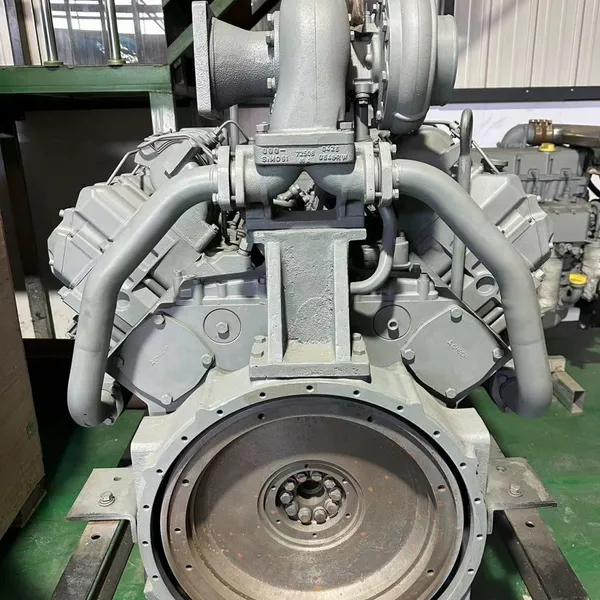 Read More
-
Quality Inspection Points for 6CTA8.3-C260 Engine Shipments
November 16, 2026An engine that had passed every bench check arrived at a port after six weeks in a container and would not turn over. The cranksha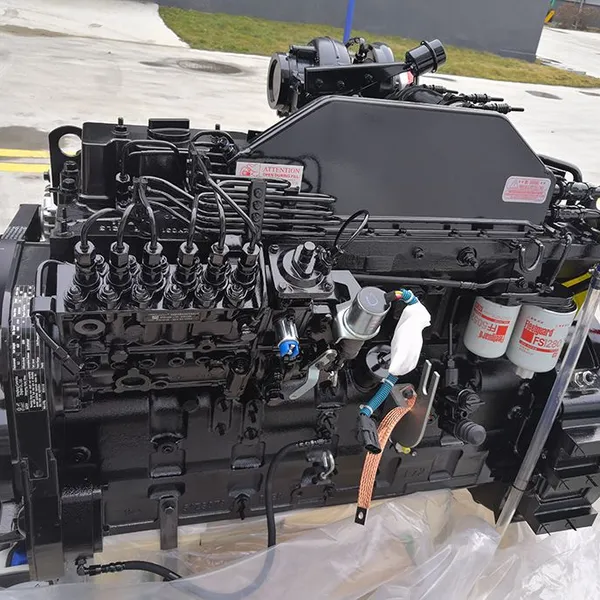 Read More
-
VOLVO D8H Engines in Quarry Equipment in South America
November 16, 2026Quarry work in South America rarely means one machine. It means a line: a feed, a primary crusher, a screen deck and the conveyors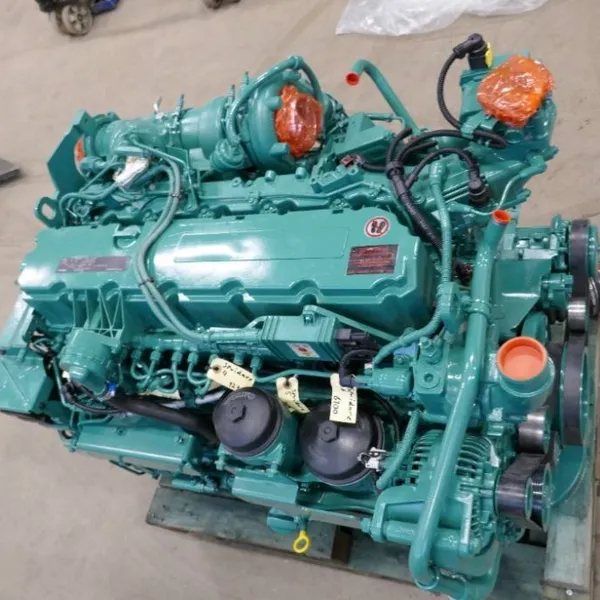 Read More
-
VOLVO D8H Engines in Heavy Trucks: Eastern European Haulage
November 13, 2026A D8H engine in heavy trucks works under conditions that differ from every other setting the unit appears in. The vehicle spends i Read More

Contact Us
Recommended Products
-
 New 129 kW QSB6.7 Diesel Engine Excavator Construction Machinery Electric Start Water-Cooled Core Including Motor PumpUS$ 1888.00 - 3888.00MOQ: 1 Unit
-
Wholesale Diesel Engine Genuine 4 Stroke Direct Injection Doosan DL08 Engine for SaleUS$ 4558.00 - 4800.00MOQ: 1 Unit
-
Factory Price DOOSAN DL06 Construction Machinery Motor 6 Cylinder 115kw Water-Cooled With Core Components Engine and PumpUS$ 4752.00 - 5000.00MOQ: 1 Unit
-
Factory Price 4 Stroke 115kw Doosan DB58 Complete Engine Assy for Dx220 ExcavatorUS$ 3450.00 - 3650.00MOQ: 1 Unit
-
Factory Manufacture 123kw 4 Stroke Volvo D6e Machinery Engine for Construction MachineryUS$ 7500.00MOQ: 1 Unit
-
New BF6M2012C 4-stroke Original Water-cooled Diesel EngineUS$ 4500.00 - 5400.00MOQ: 1 Unit
-
Original Water Cooled 4 Stroke 6 Cylinder DEUTZ TCD2012062V Machinery EnginesUS$ 4888.00 - 5081.00MOQ: 1 Unit
-
Factory Outlet 6 Cylinder 250HP 2200rpm 6C8.3-C250 Construction Machinery Engines for CuminsUS$ 34627.00 - 36450.00MOQ: 1 Unit
-
1104D-44TA Diesel Engine 83kw New Water-Cooled Machine With Electric Start and Pump Good Price Per UnitUS$ 3700.00 - 4200.00MOQ: 1 Unit
-
Original Water Cooled 4 Stroke DEUTZ TCD 2013 L06 2V Machinery Engines for SaleUS$ 7070.00 - 7443.00MOQ: 1 Unit
-
Excavator Engine Assy QSL8.9 Complete Engine Assembly CUMMINS Qsl 9 Diesel EngineUS$ 4300.00 - 4600.00MOQ: 1 Unit
-
Genuine Vovo D4d EAE2 Diesel Engine for VOLVO EC140 ExcavatorNegotiableMOQ: 1 Unit
-
Factory Outlet 6 Cylinder 250HP 2200rpm 6C8.3-C250 Construction Machinery Engines for CuminsUS$ 4700.00 - 5100.00MOQ: 1 Unit
-
Good Price 153kw 4 Stroke Electric Start D7E Diesel Engine for Construction MachineryUS$ 8350.00MOQ: 1 Unit
-
WEICHAI 178kw 4 Stroke WD10G240E203 Diesel Engine for SEM660D SEM660B Wheel LoaderUS$ 3920.00 - 4127.00MOQ: 1 Unit
-
Dongfeng Shanghai SC11CB220G2B1 6-Cylinder Diesel Engine 162kw (220hp) SDEC 3306 New Condition Core Included Farm MachineryUS$ 6500.00MOQ: 1 Unit
-
ISUZU 4 Cylinder Diesel Engine 4BG1 Machinery Engines for Kobelco SK135 ExcavatorUS$ 6800.00MOQ: 1 Unit
-
130Hp Diesel Engine YC4D130 Yuchai Diesel Motor Price for TruckUS$ 3400.00 - 3600.00MOQ: 1 Unit
-
Shanghai SDEC SC9D220G2 162KW Diesel Engine for SEM922 SEM921 GraderUS$ 5320.00 - 5600.00MOQ: 1 Unit
-
Factory Outlet Sinotruk D1242 Engine Assembly for Construction IndustryUS$ 4615.00 - 4858.00MOQ: 1 Unit