
 Business License

VOLVO D8H Engines in Quarry Equipment in South America
Quarry work in South America rarely means one machine. It means a line: a feed, a primary crusher, a screen deck and the conveyors that join them, all of which have to run when the plant runs. A VOLVO D8H engine quarry equipment installation is usually a stationary or semi mobile drive inside that line rather than the engine of a single mobile unit.
This page follows the line rather than the machine. It explains what a feed, a jaw and a cone ask of a drive, sets the heat and the thin air of inland sites against the output a unit can hold, works through a duty that follows the plant rather than an operator, and closes on the service and parts questions that come with distance.
Buyers here arrive from three directions. A plant is being built and the drives have to be chosen, a plant is running and a drive has failed, or a plant is being moved and the equipment has to be recommissioned at a new site. Jining Pinbo Import and Export Co Ltd asks for the site conditions with every enquiry for that reason, since a drive sized for one altitude and one temperature is not the same drive at another.
1. VOLVO D8H Engine Quarry Equipment: The Line Rather Than the Loader
A mobile machine carries its engine to the work, and the engine's load follows the operator. A plant does the opposite: the engine stands still while the material comes to it, and the load follows a production target set somewhere else. That single difference changes what is asked of the unit.
The first consequence is availability. A wheel loader that stops is a machine that stops. A crusher that stops takes the feed, the screens and the conveyors with it, and the loss is measured in tonnes per hour rather than in one machine's output.
The second is the working point. A plant drive usually runs at one governed speed for the length of a shift, which suits an engine arranged for steady duty and asks for a governor that holds its setting under a varying load.
The third is time. Hours accumulate with the plant rather than with a shift pattern, and a season of heavy demand can add running time faster than any maintenance plan assumes. Recording hours against throughput is what keeps the intervals honest, and on a D8H engine crushing site the two records belong on one sheet.
2. D8H Engine Crushing Site: What a Feed, a Jaw and a Cone Ask of a Unit
Each position in a line presents a different problem to its drive. A D8H engine crushing site is made up of several of them, and the same unit class can appear at more than one.
A feeder takes its load from a hopper that may be full, so it starts against material and needs torque available at low speed. A jaw crusher lifts its moving plate against a chamber that may be blocked, which asks for a high starting effort and tolerance of short shocks. A cone crusher runs loaded continuously once the chamber is full, and its demand is a steady one that turns into heat rather than into shock.
Screens and conveyors are lighter but never still. A screen runs at a fixed speed with a load that varies as material passes, and a conveyor takes a standing load at every start. Both reward an engine that holds its speed rather than one that recovers it late.
| Position | Load character | What the drive has to tolerate |
|---|---|---|
| Feeder | Heavy start from a standing load | Torque at low speed |
| Jaw crusher | High starting effort, short shocks | Flywheel effect and shock absorption |
| Cone crusher | Continuous and roughly steady | Heat rejection over hours |
| Screen and conveyor | Fixed speed, load arriving and leaving | Speed held under a varying demand |
Reading the table against the plant is what identifies which of the drives is doing the real work, and that reading is the one Jining Pinbo Import and Export works from when a drive is proposed, since it points to the position whose service records deserve the closest attention.
3. South America Quarry Engine: Altitude, Heat and Dust in One Package
Site conditions in this region combine three effects that each reduce what an engine can hold. A South America quarry engine works where the air is thinner than at sea level, where the middle of the day is hot, and where the air reaching the intake carries a load of dust for most of the season.
Altitude reduces the mass of air drawn into the cylinders, and every unit loses output as a result. The correction is real and calculable, and the figure that matters to a plant is the one corrected to the site rather than the one printed at reference conditions.
Heat works on the same quantity from a different direction. A hot day thins the air again and also reduces the margin in the cooling package, so the two effects arrive together in the middle of the afternoon.
Dust is the third. A loaded air cleaner restricts the intake, and a restricted intake costs output in exactly the way altitude does. Two sites at the same height can behave differently for that reason alone, and the air cleaner becomes a service item whose interval is read from the site rather than from a manual.
4. D8H Engine Crushing Site: Duty That Runs While the Plant Runs
The duty on a crushing site follows the production plan rather than a duty cycle diagram. During a campaign the plant may run flat out for weeks; between campaigns it may stand for a month. That pattern is harder on a unit than steady running, and it is worth planning around.
Within a running day the load is not constant. Feeding stops while a blockage is cleared, screens are stopped for wire changes, and the whole line pauses while a loader comes forward. Each of those pauses puts the unit back to idle and asks it to pick the load up again.
Start and stop frequency is a separate question from total hours. A plant that starts and stops often accumulates fewer hours but more thermal cycles than one that runs continuously, and the two are recorded differently for a reason.
What the unit needs from all this is a cooling system sized for the hottest shift and a governor that does not fight the load. Both are settled at specification, which is why the production plan belongs in the enquiry rather than in a later conversation.
5. South America Quarry Engine: Power at a Fixed Point and What It Changes
A drive that holds one speed all day is a different problem from a drive that sweeps a range. A South America quarry engine in that role spends its life near a single working point, and the reading of its data should follow suit.
Consumption is read at the working point rather than at rated output. A figure taken at full output describes a condition the plant may never occupy, and comparing two units on that basis decides very little. The useful comparison is the fuel used at the speed and load the plant actually runs, which is the figure a VOLVO D8H engine quarry equipment enquiry should ask for.
The governor then decides how well the working point is held. Under a load that rises and falls, a governor that responds quickly keeps the speed steady and passes small disturbances through the driveline. One that responds slowly lets the speed wander. Neither is wrong in general, but the plant has a preference, and it comes from the equipment driven rather than from the engine.
A unit run well below its band is not automatically the economical choice. A larger build held at part load carries its own penalties, and a correctly rated unit working near its design point is usually the better arrangement.
6. D8H Engine Crushing Site: Service Windows Around a Production Target
Maintenance on a D8H engine crushing site is fitted around production rather than the other way round. A campaign has a target, a customer and a delivery date, and a service that takes a line down for a day has a cost that is easy to calculate and easy to ignore during planning.
The response is to move service into the pauses that already exist. Scheduled stops for screen wire, crusher liner changes and conveyor repairs are known in advance, and a filter change or an oil sample can be attached to them without adding downtime.
Intervals on this kind of site are usually set by condition rather than by the calendar. Dust loading, fuel quality and the length of the shifts all move the useful interval, and an oil sample taken at a planned stop is what tells a plant whether its interval is right or merely familiar.
The one item that cannot be deferred is filtration on the intake and fuel sides. Both protect components whose replacement costs far more than the filter, and both are cheap to hold on site.
7. South America Quarry Engine: Parts Across Distance and Terrain
A South America quarry engine is usually a long way from the nearest city, and the road between them may be unsealed and steep. That distance turns a parts question into a scheduling question, because a part that would arrive tomorrow in a workshop arrives next week at a plant.
The practical division is between what a plant holds and what it orders. Consumables, filters, belts, hoses and the small items that fail without warning belong on a shelf. Larger assemblies that fail rarely and cost a great deal to hold belong against a known lead time, with the contact and the route established before they are needed.
The arithmetic behind the division is straightforward. A part on a shelf costs its price and the space it occupies. A part that has to be ordered while the plant stands costs its price plus the value of everything the plant was producing.
Pinbo Power also keeps a parts note beside each drive order, so that a plant asking for a replacement a season later is sent the item that suits the unit it received rather than one that suits the family name.
8. VOLVO D8H Engine Quarry Equipment: Records Kept by the Plant
A plant records things differently from a fleet, and the difference is worth using. A VOLVO D8H engine quarry equipment file built around production rather than around the machine will hold throughput, running hours, fuel issued and the reason for every stop.
Those four entries together describe the duty more completely than an hour meter can. Throughput against hours shows whether the plant is working hard or waiting, and fuel against throughput shows whether the unit is being run efficiently. The stop reasons show whether the losses come from the drive or from the equipment around it.
The file also travels. A plant that is moved to a new site takes its equipment and its history with it, and a drive that arrives with a record is treated differently from one that arrives bare. Recommissioning at a new altitude begins from the record rather than from an assumption.
The habit worth keeping is simple. Whatever the plant records about its own production is also the most useful record of the engine, and keeping the two together costs nothing once the discipline is in place.
9. Frequently Asked Questions
9.1 What does a VOLVO D8H engine quarry equipment drive have to handle?
It has to hold a working point for hours, tolerate the shocks that come from a crusher chamber and cope with starting against material. A feeder presents a standing load at every start, a jaw crusher adds short shocks as rock enters the chamber, and a cone crusher turns the demand into a continuous heat load, while screens and conveyors ask for speed that holds when material arrives and leaves. What those positions share is a demand that lasts as long as the plant runs, which is why availability matters more here than peak output. A drive that stops takes the rest of the line with it and the cost is measured in tonnes.
9.2 How do South America site conditions change what the engine can hold?
Three effects arrive together. Altitude thins the air, so each cylinder draws less mass and the unit produces less output than the same build at sea level, while heat thins the air again during the middle of the day and reduces the margin inside the cooling package at the same time. Dust loads the air cleaner, and a restricted intake costs output in the same way altitude does. The practical consequence is that the figure to plan against is the one corrected to the site rather than the one printed at reference conditions, and the air cleaner interval belongs to the site rather than to the manual.
9.3 What spare parts should a quarry plant hold for a drive like this?
The split is between what is used often and what fails rarely. Consumables, filters, belts, hoses and the small items that fail without warning belong on a shelf on site, because the plant is usually far from a city and the road may be poor. Larger assemblies that fail rarely and are expensive to hold belong against a known lead time, with the contact and the route established in advance. The arithmetic behind the division is simple: a part on a shelf costs its price and the space it takes, while a part that has to be ordered while the plant stands costs its price plus the value of everything the line was producing.
9.4 What should a quarry plant record about a stationary drive?
Four entries describe the duty more completely than an hour meter can, and they are easiest to keep on one sheet: the tonnes produced, the hours the drive ran, the fuel drawn, and the reason for each stop. Read against one another they answer questions that no single entry can, since output measured against hours separates a plant that is working from one that is waiting, while fuel measured against output indicates whether the unit is running near its design point. A plant that logs fuel without output, for instance, cannot tell whether a rise in consumption came from the drive or from the material. Jining Pinbo Import and Export asks for that record when a plant is recommissioned at a new site.
Recently Posted
-
Export Packing and Shipping for DEUTZ BF6M1015 Engines
November 16, 2026A pump station took delivery of an engine that looked sound on the outside of the crate and had a rusted cylinder bore inside it.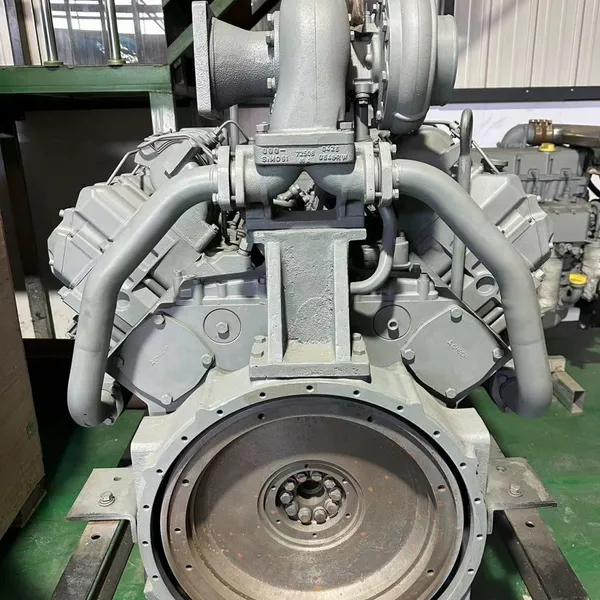 Read More
-
Quality Inspection Points for 6CTA8.3-C260 Engine Shipments
November 16, 2026An engine that had passed every bench check arrived at a port after six weeks in a container and would not turn over. The cranksha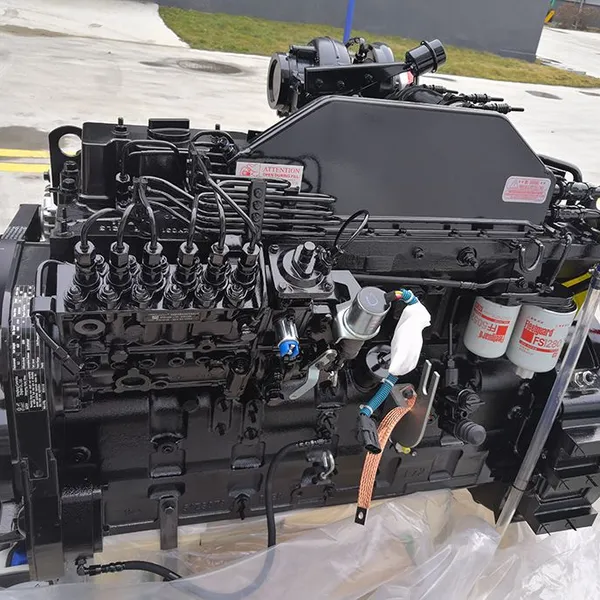 Read More
-
VOLVO D8H Engines in Heavy Trucks: Eastern European Haulage
November 13, 2026A D8H engine in heavy trucks works under conditions that differ from every other setting the unit appears in. The vehicle spends i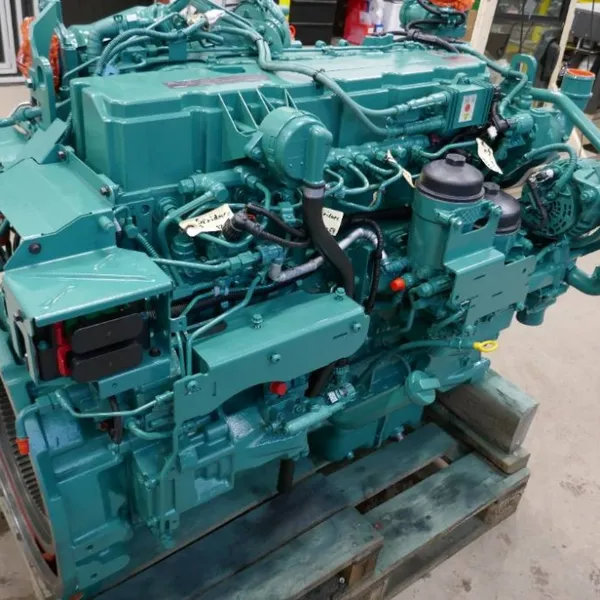 Read More
-
VOLVO D7E Engines in Material Handling Equipment in Northern Europe
November 13, 2026A VOLVO D7E engine material handling installation looks unremarkable on a specification sheet and demanding in practice, because t Read More

Contact Us
Recommended Products
-
 New 129 kW QSB6.7 Diesel Engine Excavator Construction Machinery Electric Start Water-Cooled Core Including Motor PumpUS$ 1888.00 - 3888.00MOQ: 1 Unit
-
Wholesale Diesel Engine Genuine 4 Stroke Direct Injection Doosan DL08 Engine for SaleUS$ 4558.00 - 4800.00MOQ: 1 Unit
-
Factory Price DOOSAN DL06 Construction Machinery Motor 6 Cylinder 115kw Water-Cooled With Core Components Engine and PumpUS$ 4752.00 - 5000.00MOQ: 1 Unit
-
Factory Price 4 Stroke 115kw Doosan DB58 Complete Engine Assy for Dx220 ExcavatorUS$ 3450.00 - 3650.00MOQ: 1 Unit
-
Factory Manufacture 123kw 4 Stroke Volvo D6e Machinery Engine for Construction MachineryUS$ 7500.00MOQ: 1 Unit
-
New BF6M2012C 4-stroke Original Water-cooled Diesel EngineUS$ 4500.00 - 5400.00MOQ: 1 Unit
-
Original Water Cooled 4 Stroke 6 Cylinder DEUTZ TCD2012062V Machinery EnginesUS$ 4888.00 - 5081.00MOQ: 1 Unit
-
Factory Outlet 6 Cylinder 250HP 2200rpm 6C8.3-C250 Construction Machinery Engines for CuminsUS$ 34627.00 - 36450.00MOQ: 1 Unit
-
1104D-44TA Diesel Engine 83kw New Water-Cooled Machine With Electric Start and Pump Good Price Per UnitUS$ 3700.00 - 4200.00MOQ: 1 Unit
-
Original Water Cooled 4 Stroke DEUTZ TCD 2013 L06 2V Machinery Engines for SaleUS$ 7070.00 - 7443.00MOQ: 1 Unit
-
Excavator Engine Assy QSL8.9 Complete Engine Assembly CUMMINS Qsl 9 Diesel EngineUS$ 4300.00 - 4600.00MOQ: 1 Unit
-
Genuine Vovo D4d EAE2 Diesel Engine for VOLVO EC140 ExcavatorNegotiableMOQ: 1 Unit
-
Factory Outlet 6 Cylinder 250HP 2200rpm 6C8.3-C250 Construction Machinery Engines for CuminsUS$ 4700.00 - 5100.00MOQ: 1 Unit
-
Good Price 153kw 4 Stroke Electric Start D7E Diesel Engine for Construction MachineryUS$ 8350.00MOQ: 1 Unit
-
WEICHAI 178kw 4 Stroke WD10G240E203 Diesel Engine for SEM660D SEM660B Wheel LoaderUS$ 3920.00 - 4127.00MOQ: 1 Unit
-
Dongfeng Shanghai SC11CB220G2B1 6-Cylinder Diesel Engine 162kw (220hp) SDEC 3306 New Condition Core Included Farm MachineryUS$ 6500.00MOQ: 1 Unit
-
ISUZU 4 Cylinder Diesel Engine 4BG1 Machinery Engines for Kobelco SK135 ExcavatorUS$ 6800.00MOQ: 1 Unit
-
130Hp Diesel Engine YC4D130 Yuchai Diesel Motor Price for TruckUS$ 3400.00 - 3600.00MOQ: 1 Unit
-
Shanghai SDEC SC9D220G2 162KW Diesel Engine for SEM922 SEM921 GraderUS$ 5320.00 - 5600.00MOQ: 1 Unit
-
Factory Outlet Sinotruk D1242 Engine Assembly for Construction IndustryUS$ 4615.00 - 4858.00MOQ: 1 Unit