
 Business License

Quality Inspection Points for 6CTA8.3-C260 Engine Shipments
An engine that had passed every bench check arrived at a port after six weeks in a container and would not turn over. The crankshaft had a light rust bloom on three journals, the aftercooler core had collected condensation, and the battery cable had rubbed through its insulation against a crate batten. The 6CTA8.3-C260 engine inspection had been done correctly at the workshop; the protection added afterwards had not been checked by anyone before the doors closed.
A shipment is a second process with its own failure modes, and it starts the moment the bench work ends. Most of the damage that reaches a buyer happens in the gap between a completed test and a sealed crate.
This article sets out the 6CTA8.3-C260 engine inspection points that matter, the engine shipment quality check that protects the result, and the C260 engine pre shipment test sequence that produces a record a buyer can compare against a plate.
1. 6CTA8.3-C260 Engine Inspection: Where the Process Starts
Inspection starts with identity rather than with condition, because a sound engine with the wrong plate is still the wrong engine.
The model string is read against the order, character by character, including the aftercooler letter and the rating suffix. The serial number is logged, and the plate is photographed in the same frame as the block casting number.
Condition work comes next. A 6CTA8.3-C260 engine inspection that begins with a compression test and skips the identity step produces a document that cannot be used in a claim, because it does not establish which unit was tested.
The order of the two steps is not a matter of preference. Identity first, condition second, and both recorded against the same reference number on the same day.
2. The Engine Shipment Quality Check: Documents and Identity
A shipment fails on paperwork more often than on hardware, and the engine shipment quality check has to cover both.
The documents that travel with the unit include the packing list, the inspection record, the parts list for any item shipped loose, and the lifting and installation sheet. Each one is checked against the order once, and then checked against the crate label after packing rather than before.
Crate labelling is where the two checks meet. A crate carrying a serial number that does not match the record inside creates an argument that takes longer to settle than any mechanical fault.
The table below lists the items that are verified twice, once at the bench and once at the crate, because they are the ones that travel loose or get separated.
| Item | Bench check | Crate check |
|---|---|---|
| Serial plate | Read and photographed | Matched to crate label |
| Loose fittings | Counted against the parts list | Counted again in the crate |
| Document set | Assembled and signed | Placed in a sealed pouch |
| Lifting points | Inspected for damage | Left clear of battens |
Jining Pinbo Import and Export Co Ltd runs the crate check as a separate pass with a different pair of hands, because the person who packed the crate is the least likely to spot what was left out of it.
3. Visual Inspection Points Before the Crate Closes
Visual inspection is quick, cheap and catches the failures that a test cell cannot detect.
Look for fresh oil at the rear seal, coolant staining at the head gasket joint, and any sign that the exhaust manifold has been hot. Wipe the underside of the block and check again after an hour, because a slow weep shows up on a clean surface.
Then check the items that attach to the engine rather than the engine itself. Mounting feet, lifting eyes, the turbocharger heat shield and every hose clip belong on the list, since they are the parts most often disturbed during handling.
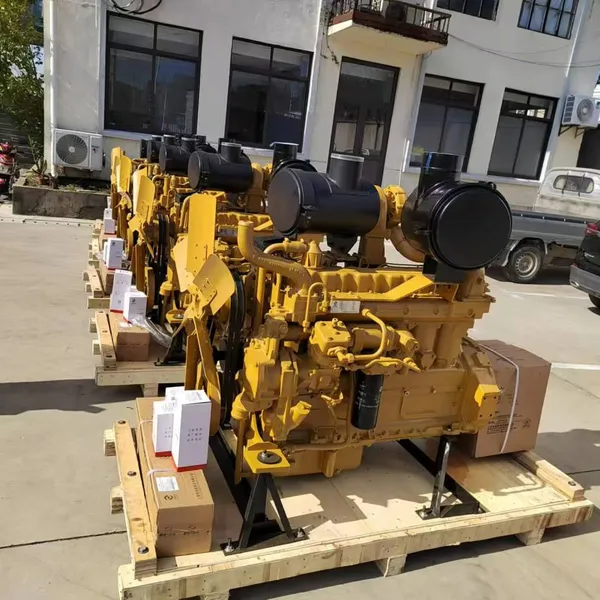
Finally, check the ports. Every open port on a shipped engine should be blanked, and the blanking should be secure against a hand pull, because a missing cap lets a container's worth of humid air into a bore that has been carefully protected.
Condition checks on the accessories deserve the same effort as the checks on the engine itself. A starter motor, an alternator and a wiring loom that were tested separately can still be damaged by the way they are packed against the block. Photograph the finished engine from four sides before the crate is closed, because those images settle most condition arguments on arrival.
4. C260 Engine Pre Shipment Test: Run, Record, Compare
A C260 engine pre shipment test exists to produce comparable numbers, not to prove that the engine runs.
The engine is started, brought to operating temperature and held at a defined load point long enough for the readings to stabilise. Oil pressure, coolant temperature, exhaust temperature and blowby are recorded at that point rather than wherever the needle happened to stop.
The numbers then go against the reference values for the same rating band, and a deviation is investigated before the unit is released rather than after it is shipped. A pre shipment test with no reference column is a set of observations, and observations cannot be compared with anything.
The test also settles questions that a buyer would otherwise raise on arrival. A record showing normal blowby at a known hour reading removes an argument about the engine's condition before it starts. Pinbo Import and Export keeps the reference values for each rating band on file, which is what makes the comparison possible rather than nominal.
5. Cylinder, Turbo and Injection Checks in the Engine Inspection
The mechanical checks that carry the most weight are the three that a buyer cannot repeat after the engine is in a container.
Compression is measured across all six cylinders and recorded as a set, because a single low cylinder and a uniformly low set point at different faults. The spread across the set matters as much as the absolute figure.
Turbocharger shaft play is checked axially and radially, and the compressor housing is inspected for dust erosion. An engine can pass a compression test and still be fitted with a turbocharger that will be noisy within a month.
Injection checks follow the pump type. A mechanical pump is set and sealed against the ordered rating, while an electronic unit is checked against its calibration record. In both cases the setting is confirmed against the plate rather than against the order form, because the plate is what the buyer will read.
6. Packing and Preservation Inside the Engine Shipment Quality Check
Preservation is the part of the engine shipment quality check that decides whether the work done on the bench survives the voyage.
Internal protection depends on the journey. A short sea leg and a dry season demand less than a six week crossing with a monsoon at each end, and the corrosion protection should be chosen for the longer of the two conditions rather than the average.
External protection follows the crate design. The engine is bolted to a steel or heavy timber base, the base is braced against racking, and every surface that could rub against a batten is separated by a pad rather than by hope.
Moisture control belongs to the same chapter. Desiccant packs and a sealed liner are inexpensive next to a stripped and rebuilt turbocharger, and they are the two items most often left out when a shipment is rushed. Pinbo Power treats both as mandatory on any crossing longer than four weeks rather than as optional additions.
The table below lists the preservation items that are checked last, immediately before the crate is closed, because they are the ones that cannot be added afterwards.
| Item | Purpose | Checked by |
|---|---|---|
| Port blanking caps | Keep humid air out of bores and ducts | Bench fitter |
| Desiccant and liner | Control condensation in transit | Packing team |
| Anti-rust film on journals | Protect machined surfaces | Bench fitter |
| Rub pads at battens | Prevent chafe damage | Packing team |
7. Loading and Securing After the C260 Engine Pre Shipment Test
Securing is the step where a completed C260 engine pre shipment test can be undone in a few minutes of careless handling.
The crate is lifted by the marked points, set down on a level surface, and restrained against fore and aft movement as well as sideways movement. A container floor that is dry and clean protects the crate, while a wet floor under a timber base starts the rot that appears as a damaged base on arrival.
Weight distribution is checked against the load plan, because an engine crate is dense and a badly placed one changes the handling of the whole container. Strapping is tensioned once, checked after the first lift, and checked again before the doors are closed.
Photographs of the loaded and secured crate are part of the record. They resolve most claims about transit damage before they become claims at all.
8. Records That Travel With a 6CTA8.3-C260 Engine Inspection
The record is the deliverable that a buyer relies on months later, when the machine is in service and a question arises.
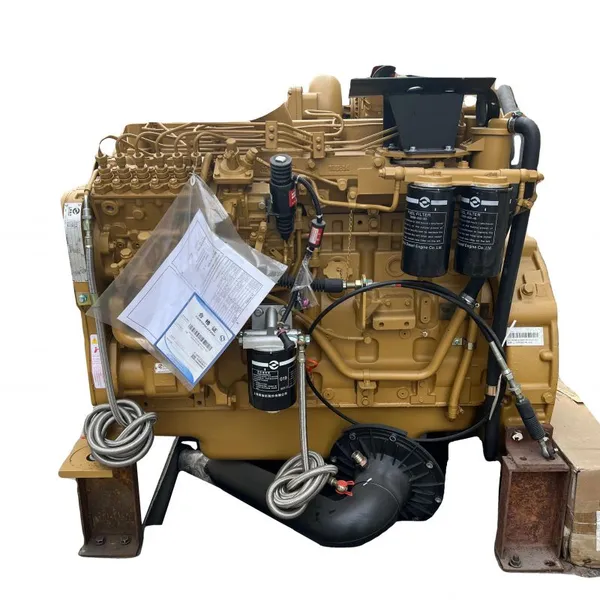
A complete 6CTA8.3-C260 engine inspection record carries the plate photograph, the serial number, the compression set, the turbocharger readings, the rating band confirmation and the preservation items used. Each entry is signed and dated, and the whole set is filed against the order number.
Pinbo Power sends the record in a sealed pouch inside the crate as well as by message, so that the workshop has a copy at the point of unpacking rather than in an office several hours away.
The value of the record shows up at the next service. A workshop comparing current readings against the shipping figures can see a trend before it becomes a fault, and that comparison is what a documented handover makes possible.
9. Frequently Asked Questions
9.1 Why does a 6CTA8.3-C260 engine inspection need to start with the plate?
A 6CTA8.3-C260 engine inspection has to establish which unit was tested before it records what the unit does. The model string carries the aftercooler letter and the rating suffix, and those two fields decide whether the engine suits the machine it was ordered for. A test result attached to the wrong serial number is worthless in a claim, however thorough the measurement was. Read and photograph the plate first, then work through the condition checks against that same reference number on the same day.
9.2 What does an engine shipment quality check add that a bench test cannot?
The engine shipment quality check covers the period the bench never sees. Internal protection, moisture control, crate bracing and port blanking all decide whether the tested condition survives the voyage. Roughly six weeks in a container exposes an engine to condensation cycles that no test cell reproduces, and a single missing cap can undo a carefully preserved bore. Treat packing as part of the inspection rather than as a separate task that follows it, and check it before the doors close.
9.3 How long should a C260 engine pre shipment test run before readings are taken?
A C260 engine pre shipment test should run until coolant temperature and oil pressure have stabilised and held for several minutes at the defined load point. Readings taken during warm up describe a different engine from one taken at operating temperature, so a short run produces numbers that cannot be compared with anything. Record the load point alongside every figure. Ten minutes of stable readings is worth more than an hour of drifting ones, and the record proves which of the two you had.
9.4 Which records should a buyer expect with a shipped engine?
A buyer should expect the plate photograph, the serial number, the compression set, the turbocharger readings, the rating band confirmation and a list of the preservation items used. Those records let a workshop compare its first service readings against the shipping figures and spot a trend early. Ask for them in the packing list rather than in a separate message, because documents that travel inside the crate are the ones that reach the workshop. A supplier who cannot provide them is worth questioning.
Recently Posted
-
Export Packing and Shipping for DEUTZ BF6M1015 Engines
November 16, 2026A pump station took delivery of an engine that looked sound on the outside of the crate and had a rusted cylinder bore inside it. Read More
-
VOLVO D8H Engines in Quarry Equipment in South America
November 16, 2026Quarry work in South America rarely means one machine. It means a line: a feed, a primary crusher, a screen deck and the conveyors Read More
-
VOLVO D8H Engines in Heavy Trucks: Eastern European Haulage
November 13, 2026A D8H engine in heavy trucks works under conditions that differ from every other setting the unit appears in. The vehicle spends i Read More
-
VOLVO D7E Engines in Material Handling Equipment in Northern Europe
November 13, 2026A VOLVO D7E engine material handling installation looks unremarkable on a specification sheet and demanding in practice, because t Read More

Contact Us
Recommended Products
-
 New 129 kW QSB6.7 Diesel Engine Excavator Construction Machinery Electric Start Water-Cooled Core Including Motor PumpUS$ 1888.00 - 3888.00MOQ: 1 Unit
-
Wholesale Diesel Engine Genuine 4 Stroke Direct Injection Doosan DL08 Engine for SaleUS$ 4558.00 - 4800.00MOQ: 1 Unit
-
Factory Price DOOSAN DL06 Construction Machinery Motor 6 Cylinder 115kw Water-Cooled With Core Components Engine and PumpUS$ 4752.00 - 5000.00MOQ: 1 Unit
-
Factory Price 4 Stroke 115kw Doosan DB58 Complete Engine Assy for Dx220 ExcavatorUS$ 3450.00 - 3650.00MOQ: 1 Unit
-
Factory Manufacture 123kw 4 Stroke Volvo D6e Machinery Engine for Construction MachineryUS$ 7500.00MOQ: 1 Unit
-
New BF6M2012C 4-stroke Original Water-cooled Diesel EngineUS$ 4500.00 - 5400.00MOQ: 1 Unit
-
Original Water Cooled 4 Stroke 6 Cylinder DEUTZ TCD2012062V Machinery EnginesUS$ 4888.00 - 5081.00MOQ: 1 Unit
-
Factory Outlet 6 Cylinder 250HP 2200rpm 6C8.3-C250 Construction Machinery Engines for CuminsUS$ 34627.00 - 36450.00MOQ: 1 Unit
-
1104D-44TA Diesel Engine 83kw New Water-Cooled Machine With Electric Start and Pump Good Price Per UnitUS$ 3700.00 - 4200.00MOQ: 1 Unit
-
Original Water Cooled 4 Stroke DEUTZ TCD 2013 L06 2V Machinery Engines for SaleUS$ 7070.00 - 7443.00MOQ: 1 Unit
-
Excavator Engine Assy QSL8.9 Complete Engine Assembly CUMMINS Qsl 9 Diesel EngineUS$ 4300.00 - 4600.00MOQ: 1 Unit
-
Genuine Vovo D4d EAE2 Diesel Engine for VOLVO EC140 ExcavatorNegotiableMOQ: 1 Unit
-
Factory Outlet 6 Cylinder 250HP 2200rpm 6C8.3-C250 Construction Machinery Engines for CuminsUS$ 4700.00 - 5100.00MOQ: 1 Unit
-
Good Price 153kw 4 Stroke Electric Start D7E Diesel Engine for Construction MachineryUS$ 8350.00MOQ: 1 Unit
-
WEICHAI 178kw 4 Stroke WD10G240E203 Diesel Engine for SEM660D SEM660B Wheel LoaderUS$ 3920.00 - 4127.00MOQ: 1 Unit
-
Dongfeng Shanghai SC11CB220G2B1 6-Cylinder Diesel Engine 162kw (220hp) SDEC 3306 New Condition Core Included Farm MachineryUS$ 6500.00MOQ: 1 Unit
-
ISUZU 4 Cylinder Diesel Engine 4BG1 Machinery Engines for Kobelco SK135 ExcavatorUS$ 6800.00MOQ: 1 Unit
-
130Hp Diesel Engine YC4D130 Yuchai Diesel Motor Price for TruckUS$ 3400.00 - 3600.00MOQ: 1 Unit
-
Shanghai SDEC SC9D220G2 162KW Diesel Engine for SEM922 SEM921 GraderUS$ 5320.00 - 5600.00MOQ: 1 Unit
-
Factory Outlet Sinotruk D1242 Engine Assembly for Construction IndustryUS$ 4615.00 - 4858.00MOQ: 1 Unit