
 Business License

KTTA19-C700 Engines in Standby Power Systems: Eastern European Facilities
A processing plant lost its incoming supply during a winter storm and the standby set did what it had been bought to do, which was to carry the critical load for the hours the repair took. The engine had run perhaps forty hours in the previous year, and those forty hours were the whole point of the installation.
Standby duty is unusual among engine applications because the engine is bought for the hours it does not run. It sits at rest for most of the year, then has to accept load within seconds of a signal, and it must do so on the first attempt after months of standing.
These notes on KTTA19-C700 engine standby power describe what that role asks of the unit in an Eastern European facility, from the start and the load step to fuel storage, the test regime and the room the engine lives in.
1. KTTA19-C700 Engine Standby Power: What the Role Requires
KTTA19-C700 engine standby power is defined by a sequence that lasts less than a minute and is repeated perhaps a handful of times a year.
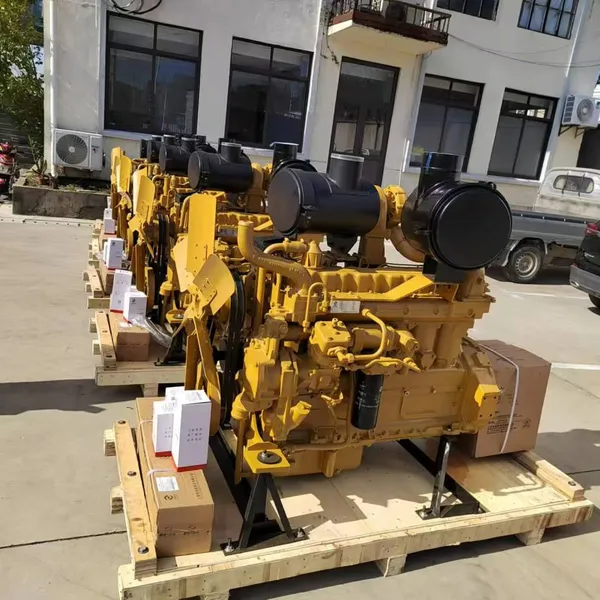
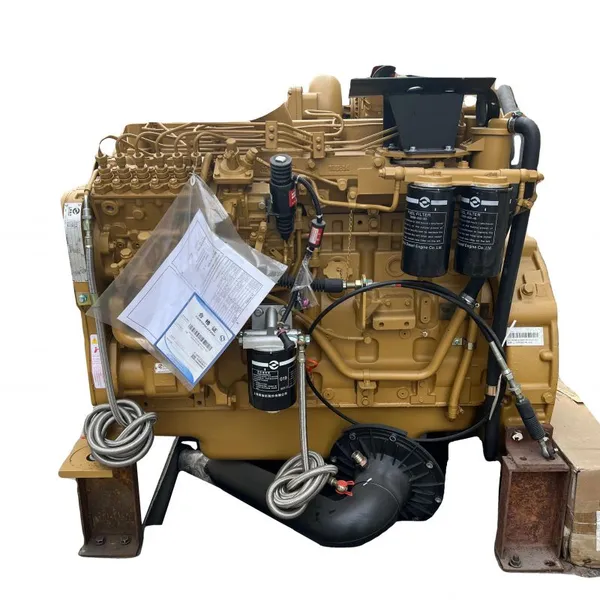
The engine is a six cylinder inline diesel of roughly nineteen litres, turbocharged and aftercooled, driving a generator at a governed speed so that the output frequency stays fixed. In a fifty hertz market that means a generator speed in the region of fifteen hundred revolutions per minute, held steady regardless of the load.
Three requirements follow from the role. The unit has to start reliably from cold, accept a block of load without stalling, and hold frequency and voltage while the load changes around it. Everything else in the specification supports those three.
The consequence for a facility is that standby duty rewards preparation rather than output. A set that starts on the first attempt carries a site through an outage, and one that does not is a set that fails whatever its rating.
2. KTTA19 Engine Facility Use: The Start and the Load Step
KTTA19 engine facility use in an outage begins with a start signal and a load step, and both are decided before the installation is commissioned.
The start depends on a battery bank, a starter and a fuel system that are all ready at the moment of demand. A battery left to stand for months loses charge, so a maintenance charger and a periodic start test belong to the installation rather than to a service schedule drawn up later.
The load step is where the class of the rating shows. A facility with motor loads and uninterruptible supplies on the critical board presents a step that the engine must absorb while the governor recovers the frequency.
The step should be defined when the installation is planned and confirmed when it is commissioned. A standby set that meets a documented step figure is a set a facility can rely on, and one that has never been tested against a figure is a set that will be measured by the first real outage.
3. Eastern Europe Backup Power Engine Conditions: Cold and Grid Quality
An Eastern Europe backup power engine meets two conditions that shape the installation more than the engine itself: cold winters and a supply that goes away.
Cold affects the start. A cold engine room lowers the battery's available current, thickens the lubricating oil and slows combustion on the first revolutions. Coolant mix matched to the lowest temperature the room will reach, a heater on the block where the site justifies it, and a battery sized for a cold morning all belong in the plan.
Grid quality shapes the duty. A facility that sees short interruptions and voltage dips may start its standby set more often than a site on a steadier supply, and short frequent runs at light load have their own consequences for an engine that was specified for rare long ones.
| Condition | Effect on a standby installation | Planning response |
|---|---|---|
| Cold engine room | Harder cold start, less battery current | Coolant mix, block heater, battery sizing |
| Fuel at low temperature | Clouding and waxing risk | Fuel suited to the season, stored dry |
| Frequent short outages | More starts, more light load running | Test and service plan set by starts, not hours |
| Long outage | Sustained running at load | Fuel volume sufficient for the expected duration |
Pinbo Power asks for the winter temperature range and the expected outage duration on a standby enquiry, since both change what the set has to be built to carry.
4. KTTA19 Engine Facility Use: Fuel Storage and Quality
KTTA19 engine facility use also depends on fuel that a facility may have stored for months before the engine needs it.
Standby sets consume very little fuel, so a tank can stand for a long period between fills. Over that time water can settle and microbial growth can develop at the boundary between fuel and water, and both travel to the injection system when the engine finally runs.
The response is a storage routine. The tank should be kept as full as practical, water drawn off at intervals, and the fuel treated for the season the facility actually experiences. Draining a sample before a test run shows the state of the tank without disturbing the installation.
Filter changes then follow the tests rather than the calendar, because a set that runs forty hours a year does not wear its filters out with use. Filters on a standby set fail with time and contamination rather than with running hours, which is why the test result is the useful signal.
5. KTTA19-C700 Engine Standby Power: The Test Regime
KTTA19-C700 engine standby power is measured by the regime that tests it, and the regime is what turns a silent engine into a known one.
A test is worth more when it includes three things: a start on the first attempt, a run at load rather than at idle, and a check of the readings against the last record. Load is what a facility needs, and a set that is started and idled but never loaded has not been tested for its purpose.
The run should last long enough to bring the engine to temperature and to let the readings settle. A short idle warms the outside of the engine and leaves moisture in the exhaust, which is why the load test is preferred over a brief start when the site can accept the interruption.
The record from each test belongs with the installation. A small log of start results, load and readings gives a facility the trend it needs, and it is what a technician reads first when a set behaves differently from the way it did at commissioning.
6. Eastern Europe Backup Power Engine: Room, Air and Exhaust
An Eastern Europe backup power engine lives in a room that was often designed for something else, and the room decides as much as the engine does.
Combustion needs a supply of air and the radiator needs to reject heat, so the room has to pass both. Louvres, ducts and the fan arrangement belong in the design, and a room that is tight for air will show its shortcoming as soon as the engine runs at load.
Exhaust routing has to suit the building. The pipe leaves at high temperature, and where it passes near combustible material the clearance and the insulation are part of the installation rather than an optional extra.
Attention to the room also protects the engine. A space that stays dry and free of dust keeps the battery, the control panel and the fuel system in better condition through a long idle period, which is where most standby faults begin.
7. KTTA19-C700 Engine Standby Power: Records and Spares
KTTA19-C700 engine standby power benefits from a spare set held against the parts that age rather than the parts that wear.
A standby engine does not wear out its consumables on hours, so the items to hold are the ones that deteriorate with time: belts, hoses, gaskets, batteries and the filters that stand in contact with fuel and coolant. Holding those against the unit means an outage repair does not wait for a delivery.
Records follow the same logic. The build, the rating class and the accessory list should be kept with the installation, together with the test log, so the set is described by what it is rather than by what the order intended.
Jining Pinbo Import and Export keeps the build and the accessory list against each order, so a facility asking for a part or a rating figure years later is answered from the set it actually holds. Pinbo Import and Export recommends keeping the matching file with the plant rather than in a purchasing office, because the person who runs the test is the person who needs it.
8. KTTA19 Engine Facility Use: Standby Against Prime Duty
KTTA19 engine facility use should not be confused with continuous generation, because the two duty patterns are different even where the engine is the same.
A standby set is expected to start on demand and run for a bounded period, while a prime or continuous set is expected to carry load as its normal work. The class of the rating follows the pattern, and a set bought for one pattern should not be worked in the other without checking that the rating covers it.
A facility that finds itself running its standby set for long hours is a facility whose power arrangements have changed, and the right response is to review the application rather than to keep running on a rating chosen for rare outages.
Jining Pinbo Import and Export Co Ltd writes the intended duty into the order file, so a site whose role changes can be measured against the engine it already has. Pinbo Power reads the duty description as a working part of the specification rather than as background to it.
9. Frequently Asked Questions
9.1 What does KTTA19-C700 engine standby power involve?
KTTA19-C700 engine standby power turns on a short sequence that is repeated a handful of times a year. The engine is a six cylinder inline diesel of roughly nineteen litres, turbocharged and aftercooled, driving a generator at a governed speed so the output frequency stays fixed. In a fifty hertz market that means a generator speed in the region of fifteen hundred revolutions per minute. Three requirements follow: a reliable cold start, an accepted load step, and steady frequency and voltage while the load moves.
9.2 How does KTTA19 engine facility use differ from continuous generation?
KTTA19 engine facility use in a standby installation is a bounded duty, while continuous generation is the normal work of the engine. A standby set is expected to start on demand and run for the period an outage lasts, and it may accumulate very few hours in a year. A prime or continuous set carries load as its routine pattern. The class of the rating follows the pattern, so a set bought for one duty should not be worked in the other without confirming that its rating covers it.
9.3 What conditions does an Eastern Europe backup power engine meet?
An Eastern Europe backup power engine meets cold winters and a supply that goes away. Cold lowers the available battery current, thickens the lubricating oil and slows combustion on the first revolutions, so coolant mix, block heating and battery sizing belong in the plan. Grid quality then shapes the duty, since a facility seeing short interruptions and dips may start its set more often than a site on a steadier supply. Frequent short runs have their own consequences for an engine specified for rare long ones.
9.4 How should a standby set be tested?
A standby set should be tested with a start on the first attempt, a run at load rather than at idle, and a check of the readings against the previous record. Load is what the facility needs, so a set that is started and idled but never loaded has not been tested for its purpose. The run should last long enough to bring the engine to temperature and let the readings settle. Each test belongs in a small log, since that record is what a technician reads first when the set behaves differently.
Recently Posted
-
Export Packing and Shipping for DEUTZ BF6M1015 Engines
November 16, 2026A pump station took delivery of an engine that looked sound on the outside of the crate and had a rusted cylinder bore inside it. Read More
-
Quality Inspection Points for 6CTA8.3-C260 Engine Shipments
November 16, 2026An engine that had passed every bench check arrived at a port after six weeks in a container and would not turn over. The cranksha Read More
-
VOLVO D8H Engines in Quarry Equipment in South America
November 16, 2026Quarry work in South America rarely means one machine. It means a line: a feed, a primary crusher, a screen deck and the conveyors Read More
-
VOLVO D8H Engines in Heavy Trucks: Eastern European Haulage
November 13, 2026A D8H engine in heavy trucks works under conditions that differ from every other setting the unit appears in. The vehicle spends i Read More

Contact Us
Recommended Products
-
 New 129 kW QSB6.7 Diesel Engine Excavator Construction Machinery Electric Start Water-Cooled Core Including Motor PumpUS$ 1888.00 - 3888.00MOQ: 1 Unit
-
Wholesale Diesel Engine Genuine 4 Stroke Direct Injection Doosan DL08 Engine for SaleUS$ 4558.00 - 4800.00MOQ: 1 Unit
-
Factory Price DOOSAN DL06 Construction Machinery Motor 6 Cylinder 115kw Water-Cooled With Core Components Engine and PumpUS$ 4752.00 - 5000.00MOQ: 1 Unit
-
Factory Price 4 Stroke 115kw Doosan DB58 Complete Engine Assy for Dx220 ExcavatorUS$ 3450.00 - 3650.00MOQ: 1 Unit
-
Factory Manufacture 123kw 4 Stroke Volvo D6e Machinery Engine for Construction MachineryUS$ 7500.00MOQ: 1 Unit
-
New BF6M2012C 4-stroke Original Water-cooled Diesel EngineUS$ 4500.00 - 5400.00MOQ: 1 Unit
-
Original Water Cooled 4 Stroke 6 Cylinder DEUTZ TCD2012062V Machinery EnginesUS$ 4888.00 - 5081.00MOQ: 1 Unit
-
Factory Outlet 6 Cylinder 250HP 2200rpm 6C8.3-C250 Construction Machinery Engines for CuminsUS$ 34627.00 - 36450.00MOQ: 1 Unit
-
1104D-44TA Diesel Engine 83kw New Water-Cooled Machine With Electric Start and Pump Good Price Per UnitUS$ 3700.00 - 4200.00MOQ: 1 Unit
-
Original Water Cooled 4 Stroke DEUTZ TCD 2013 L06 2V Machinery Engines for SaleUS$ 7070.00 - 7443.00MOQ: 1 Unit
-
Excavator Engine Assy QSL8.9 Complete Engine Assembly CUMMINS Qsl 9 Diesel EngineUS$ 4300.00 - 4600.00MOQ: 1 Unit
-
Genuine Vovo D4d EAE2 Diesel Engine for VOLVO EC140 ExcavatorNegotiableMOQ: 1 Unit
-
Factory Outlet 6 Cylinder 250HP 2200rpm 6C8.3-C250 Construction Machinery Engines for CuminsUS$ 4700.00 - 5100.00MOQ: 1 Unit
-
Good Price 153kw 4 Stroke Electric Start D7E Diesel Engine for Construction MachineryUS$ 8350.00MOQ: 1 Unit
-
WEICHAI 178kw 4 Stroke WD10G240E203 Diesel Engine for SEM660D SEM660B Wheel LoaderUS$ 3920.00 - 4127.00MOQ: 1 Unit
-
Dongfeng Shanghai SC11CB220G2B1 6-Cylinder Diesel Engine 162kw (220hp) SDEC 3306 New Condition Core Included Farm MachineryUS$ 6500.00MOQ: 1 Unit
-
ISUZU 4 Cylinder Diesel Engine 4BG1 Machinery Engines for Kobelco SK135 ExcavatorUS$ 6800.00MOQ: 1 Unit
-
130Hp Diesel Engine YC4D130 Yuchai Diesel Motor Price for TruckUS$ 3400.00 - 3600.00MOQ: 1 Unit
-
Shanghai SDEC SC9D220G2 162KW Diesel Engine for SEM922 SEM921 GraderUS$ 5320.00 - 5600.00MOQ: 1 Unit
-
Factory Outlet Sinotruk D1242 Engine Assembly for Construction IndustryUS$ 4615.00 - 4858.00MOQ: 1 Unit