
 Business License

F3L912 Engines in Eastern European Farm Equipment: Service Realities
A farm cooperative in eastern Europe rebuilt three F3L912 units in one winter and had two of them back in the workshop by the following harvest. The rebuilds were done to the same standard. What differed was the work the machines were asked to do and the fuel that reached them.
Service literature assumes clean fuel, a moderate working temperature and a maintenance schedule that is followed on the hour. Field conditions in the region rarely match all three at once.
This article sets out what F3L912 engine service Eastern Europe really involves, describes how the Eastern European farm equipment engine population shapes that work, and gives an account of F3L912 engine maintenance reality for buyers, workshops and operators in the region.
1. Why F3L912 Engine Service in Eastern Europe Differs from the Manual
F3L912 engine service Eastern Europe differs from the manual because the manual is written for a controlled environment. It assumes fuel within specification, ambient temperatures that stay in a moderate band, and a service schedule measured in hours that a busy season does not always allow.
The F3L912 is an air cooled three cylinder unit of roughly three litres, and that design is an advantage in this setting. There is no coolant to freeze, no radiator to clog, and no hose to split in a cold snap.
The same design asks more of the operator. Air cooling depends on clean fins and an unobstructed air path, so dust and chaff matter more than they would on a liquid cooled engine.
Pinbo Power supplies this family to several markets, and the pattern is consistent. Units that fail early are usually units that were run with blocked cooling or contaminated fuel rather than units that wore out.
The table below places the four field factors against their effects. Read it as a diagnosis order rather than as a list of faults.
| Field factor | What it does | First sign |
|---|---|---|
| Dust and chaff on the fins | Reduces cooling capacity | Temperature rise under load |
| Fuel outside specification | Increases wear and injector deposits | Uneven running, smoke |
| Cold soak overnight | Hard starting, oil drain back | Longer cranking |
| Long hours in season | Compresses the service interval | Deferred maintenance |
Working through that order costs an hour and can save a season. Each item is visible without dismantling the engine, and a workshop that checks them in this order usually finds the cause before it reaches the injection system.
2. Eastern European Farm Equipment Engine Populations and Their Age
The Eastern European farm equipment engine population is unusual in two ways. A large share of the fleet predates current emission stages, and much of it is maintained by independent workshops rather than through dealers.
Older machines stay in service longer here than in markets where replacement finance is easier to arrange. A tractor that would be traded in elsewhere is rebuilt instead, sometimes more than once.
That keeps demand steady for engines and service parts rather than for whole machines. It also means a buyer is often matching a replacement to a machine whose original build is no longer catalogued.
The result is a market where condition matters as much as specification. Two units of the same model can sit years apart in condition, and the hour meter records less than the work the machine has done.
An Eastern European farm equipment engine retained in this way becomes a known quantity to the workshop that has serviced it. That history is worth as much as the plate.
3. Cold Starts and the Eastern European Farm Equipment Engine Duty Cycle
Winter starting shapes the Eastern European farm equipment engine duty cycle more than any other single factor.
A cold engine needs more fuel and more cranking to reach a running temperature, and repeated cold starts put wear on the starter and the battery as well as the engine.
Air cooled units warm up quickly once running, which suits a pattern of short winter jobs separated by long idle periods. The advantage is lost if the machine is stopped and restarted through the day.
Battery condition belongs in the same conversation. A battery that turns an engine in autumn may not turn it at the first hard frost, and the failure usually arrives on the morning the machine is needed.
Planning a service for the shoulder season, before the cold arrives, avoids most of this. Filters, belts and a battery are inexpensive against a day lost at the start of a working window.
4. F3L912 Engine Maintenance Reality in Dust and Frost
F3L912 engine maintenance reality in the field comes down to cooling, filtration and oil quality, and the three interact.
Air ducting and cooling fins have to be cleared on a schedule set by the site rather than by the manual. In a dry harvest a build-up forms in days rather than weeks.
Filtration follows the same logic. In a workshop, filters are replaced on hours, while in the field they are replaced when restriction becomes a problem, which is already late.
Oil quality decides how much the first two matter. An oil held past its interval carries abrasive material through the bearings, and the damage appears long after the oil is changed.
Keeping a written log at every service is the practical answer. It shows the interval the machine actually ran, not the interval someone remembers.
5. Air Cooling and F3L912 Engine Service in Eastern Europe
Air cooling is the F3L912 engine service Eastern Europe workshops rely on, and it changes what a service visit involves.
There is no coolant circuit to check, so a routine service is shorter than on a liquid cooled engine. That advantage disappears if the air path is treated as a fixture rather than as a service item.
Cooling air passes over the fins, through the shrouds and out. A shroud left off after a repair lets air bypass the fins, and the engine runs hotter without any visible change.
Cold weather adds a second consideration. The engine reaches temperature quickly, but warming the cabin and the hydraulics may take longer, and operators sometimes idle the machine to speed that up.
Idling for long periods, before an engine reaches load, is where the worst of the wear gathers. It is also a point a service conversation is easiest to have. Jining Pinbo Import and Export raises it with buyers for that reason.
6. Parts Supply and F3L912 Engine Maintenance Reality
Parts supply decides F3L912 engine maintenance reality as much as the engine does. A machine waiting on an injector is a machine not working.
Common service items for the 912 series are widely stocked, and the three cylinder version shares many of them with the four cylinder sibling, which helps availability.
Build specific items are the exception. A pump or a manifold matched to a particular application can take longer to place, and that is where a parts list held in advance pays for itself.
Buyers in the region often keep a set of filters, a water pump and a set of injectors against the season. The practice costs little against a week of downtime.
Where a build specific part is involved, the lead time runs in weeks rather than days. Placing that item with the engine order avoids the gap between a machine arriving and the part that completes it arriving.
That is the case for ordering consumables with the engine rather than after it. Pinbo Import and Export ships service kits with the unit, so the first season runs without a second shipment.
7. Fuel Quality and the Eastern European Farm Equipment Engine
Fuel quality is the factor that Eastern European farm equipment engine operators mention most often, and it affects wear more than most mechanical faults do.
Fuel outside specification can carry water, particulate and sulphur at levels an injection system does not tolerate well. The damage is gradual and shows first as uneven running.
Water is the most damaging of the three because it separates, settles and reaches the pump in slugs. A water separator and a regular drain are inexpensive against a pump rebuild.
Sulphur has a second effect. It raises acid formation in the lubricating oil, so the oil degrades faster than the hour meter suggests, and the service interval should shorten accordingly.
Storing fuel in a clean tank and taking delivery in a consistent grade removes most of the risk. It is also the single improvement that returns most for the outlay.
8. What F3L912 Engine Service in Eastern Europe Really Demands
What F3L912 engine service Eastern Europe really demands is a schedule that follows the site rather than the manual, and a workshop willing to write it down.
Set cooling and filtration intervals against the conditions the machine works in, not against a general table. Note the fuel source and adjust the oil interval when quality is variable.
Keep the log with the machine and record the work done at each visit. Over two seasons that record shows which machines need attention before a failure rather than after it.
Buy service items in sets and hold them through the season, so a repair does not wait on the post. Jining Pinbo Import and Export Co Ltd supplies the engine with the consumables that go with it, which removes one of the ordering steps.
A workshop that works this way turns an unpredictable engine into a planned cost.
9. Frequently Asked Questions
9.1 Why does F3L912 engine service in Eastern Europe differ from the manual?
This is where F3L912 engine service Eastern Europe departs most from the schedule printed with the machine. The manual assumes fuel within specification, moderate ambient temperatures and a regular service interval, and field conditions rarely supply all three. Dust and chaff load the cooling fins faster on an air cooled unit, and variable fuel quality shortens the useful life of the lubricating oil. Setting the service interval against the site rather than against a general table is the practical answer, and it costs nothing to adopt.
9.2 How does the Eastern European farm equipment engine fleet shape parts demand?
The Eastern European farm equipment engine fleet is older on average than in markets where replacement finance is easier to arrange, so machines are rebuilt rather than traded in. That keeps demand steady for engines, service kits and build specific parts rather than for whole units. Because many of these machines are maintained by independent workshops, consumables tend to be bought in sets ahead of the season. A supplier who can ship the engine together with its service items removes one of the ordering steps a farm workshop would otherwise carry.
9.3 What does F3L912 engine maintenance reality mean for oil and filter intervals?
F3L912 engine maintenance reality means treating the interval as a starting point rather than as a rule. Where fuel quality varies, oil degrades faster than the hour meter suggests and the interval should shorten to match. Where the machine works in dust, the air filter and the cooling fins need attention between services rather than at them. Keeping a written log at each visit shows what the interval should be for that machine, and two seasons of notes will usually place it.
9.4 What should a workshop stock for F3L912 engine service in Eastern Europe?
A workshop taking on F3L912 engine service Eastern Europe work benefits from holding a small stock against the season. Filters, a water pump, a set of injectors and a spare battery cover most of what stops a machine in the field. Cooling shrouds and ducting are worth keeping as well, because a repair that leaves the air path open costs cooling capacity quietly. Buying those items with the engine rather than after it is the simplest way to have them on the shelf.
Recently Posted
-
Export Packing and Shipping for DEUTZ BF6M1015 Engines
November 16, 2026A pump station took delivery of an engine that looked sound on the outside of the crate and had a rusted cylinder bore inside it.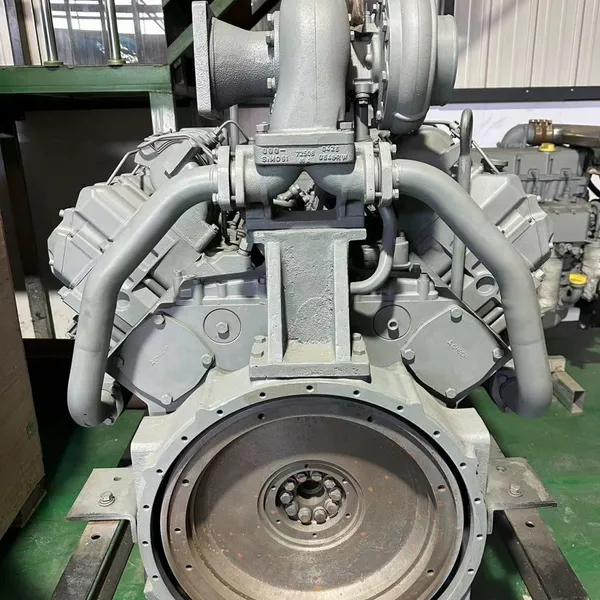 Read More
-
Quality Inspection Points for 6CTA8.3-C260 Engine Shipments
November 16, 2026An engine that had passed every bench check arrived at a port after six weeks in a container and would not turn over. The cranksha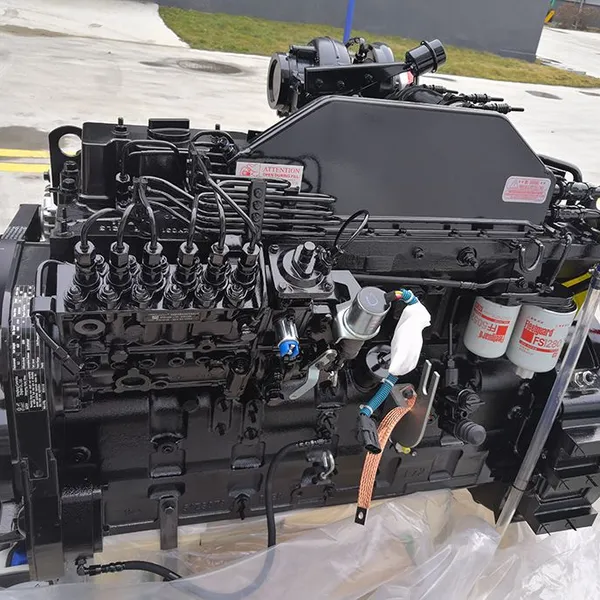 Read More
-
VOLVO D8H Engines in Quarry Equipment in South America
November 16, 2026Quarry work in South America rarely means one machine. It means a line: a feed, a primary crusher, a screen deck and the conveyors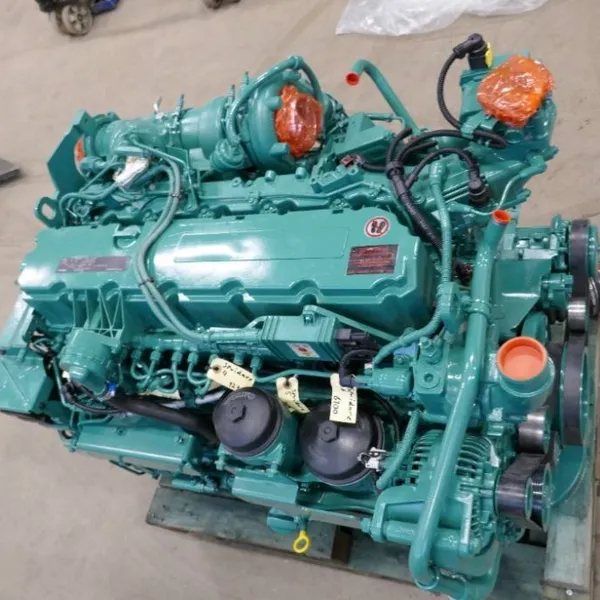 Read More
-
VOLVO D8H Engines in Heavy Trucks: Eastern European Haulage
November 13, 2026A D8H engine in heavy trucks works under conditions that differ from every other setting the unit appears in. The vehicle spends i Read More

Contact Us
Recommended Products
-
 New 129 kW QSB6.7 Diesel Engine Excavator Construction Machinery Electric Start Water-Cooled Core Including Motor PumpUS$ 1888.00 - 3888.00MOQ: 1 Unit
-
Wholesale Diesel Engine Genuine 4 Stroke Direct Injection Doosan DL08 Engine for SaleUS$ 4558.00 - 4800.00MOQ: 1 Unit
-
Factory Price DOOSAN DL06 Construction Machinery Motor 6 Cylinder 115kw Water-Cooled With Core Components Engine and PumpUS$ 4752.00 - 5000.00MOQ: 1 Unit
-
Factory Price 4 Stroke 115kw Doosan DB58 Complete Engine Assy for Dx220 ExcavatorUS$ 3450.00 - 3650.00MOQ: 1 Unit
-
Factory Manufacture 123kw 4 Stroke Volvo D6e Machinery Engine for Construction MachineryUS$ 7500.00MOQ: 1 Unit
-
New BF6M2012C 4-stroke Original Water-cooled Diesel EngineUS$ 4500.00 - 5400.00MOQ: 1 Unit
-
Original Water Cooled 4 Stroke 6 Cylinder DEUTZ TCD2012062V Machinery EnginesUS$ 4888.00 - 5081.00MOQ: 1 Unit
-
Factory Outlet 6 Cylinder 250HP 2200rpm 6C8.3-C250 Construction Machinery Engines for CuminsUS$ 34627.00 - 36450.00MOQ: 1 Unit
-
1104D-44TA Diesel Engine 83kw New Water-Cooled Machine With Electric Start and Pump Good Price Per UnitUS$ 3700.00 - 4200.00MOQ: 1 Unit
-
Original Water Cooled 4 Stroke DEUTZ TCD 2013 L06 2V Machinery Engines for SaleUS$ 7070.00 - 7443.00MOQ: 1 Unit
-
Excavator Engine Assy QSL8.9 Complete Engine Assembly CUMMINS Qsl 9 Diesel EngineUS$ 4300.00 - 4600.00MOQ: 1 Unit
-
Genuine Vovo D4d EAE2 Diesel Engine for VOLVO EC140 ExcavatorNegotiableMOQ: 1 Unit
-
Factory Outlet 6 Cylinder 250HP 2200rpm 6C8.3-C250 Construction Machinery Engines for CuminsUS$ 4700.00 - 5100.00MOQ: 1 Unit
-
Good Price 153kw 4 Stroke Electric Start D7E Diesel Engine for Construction MachineryUS$ 8350.00MOQ: 1 Unit
-
WEICHAI 178kw 4 Stroke WD10G240E203 Diesel Engine for SEM660D SEM660B Wheel LoaderUS$ 3920.00 - 4127.00MOQ: 1 Unit
-
Dongfeng Shanghai SC11CB220G2B1 6-Cylinder Diesel Engine 162kw (220hp) SDEC 3306 New Condition Core Included Farm MachineryUS$ 6500.00MOQ: 1 Unit
-
ISUZU 4 Cylinder Diesel Engine 4BG1 Machinery Engines for Kobelco SK135 ExcavatorUS$ 6800.00MOQ: 1 Unit
-
130Hp Diesel Engine YC4D130 Yuchai Diesel Motor Price for TruckUS$ 3400.00 - 3600.00MOQ: 1 Unit
-
Shanghai SDEC SC9D220G2 162KW Diesel Engine for SEM922 SEM921 GraderUS$ 5320.00 - 5600.00MOQ: 1 Unit
-
Factory Outlet Sinotruk D1242 Engine Assembly for Construction IndustryUS$ 4615.00 - 4858.00MOQ: 1 Unit