
 Business License

DEUTZ F3L912 Engines in Agricultural Machinery: Working Conditions in Africa
A farm irrigation pump in southern Africa was rebuilt twice in three seasons, and the block came back each time with the same pattern of wear. The unit sat in a steel enclosure with no shade, drawing dust through a short intake, and it ran for long stretches unattended. The engine was sound and the rebuilds were done properly, and the installation had never allowed for the conditions around it.
Air cooled engines earn their reputation in exactly this kind of work, and they also fail in it when the installation ignores the airflow the design depends on.
This article looks at the DEUTZ F3L912 engine in agriculture across parts of Africa, sets out the duty an Africa farm machinery engine typically faces, and records F3L912 engine working conditions from dryland and highland farms. It is written for equipment dealers, farm engineers and buyers specifying replacement units.
1. Why DEUTZ F3L912 Engines Suit Agriculture in Africa
The DEUTZ F3L912 engine in agriculture suits a working environment where water is scarce, service visits are infrequent and the machine has to keep going.
It is a three cylinder air cooled unit of roughly 2.8 litres, and the absence of a cooling system removes several of the parts that fail first in remote service. There is no radiator to clog, no coolant to top up and no hose to split, and the whole cooling path is a blower and a set of finned surfaces.
The design is also simple to repair with basic tools. Cylinder heads and cylinders are individually removable, which means a single damaged cylinder can be dealt with without stripping the whole engine.
Those qualities matter where the nearest dealer is a long drive away. An engine that can be kept running with a modest toolkit and a stock of common parts is worth more to a farm than one with a higher output figure and a longer list of support systems.
Jining Pinbo Import and Export Co Ltd supplies the 912 series into agricultural markets for exactly this reason, and the enquiries that come with it are usually about keeping a machine in service rather than about performance.
2. Africa Farm Machinery Engine Duty Cycles
An Africa farm machinery engine rarely works the way a machine manual assumes it will.
A tractor in a European fleet may run a few hundred hours in a season across a range of tasks. A tractor on a dryland farm can run from first light until dark, on one implement, at a near constant load, for weeks at a time.
Long steady duty is easier on an engine than hard cycling, and it still consumes service life at a rate that surprises owners who count calendar years rather than hours.
The table below sets out the duty patterns a farm engine typically meets, with the demand each one places on the unit.
| Duty pattern | Typical demand | Main risk |
|---|---|---|
| Irrigation pumping | Long hours at steady load | Dust into the intake and cooling fins |
| Tillage and ploughing | Heavy cyclical load | Exhaust temperature and oil breakdown |
| Haulage and transport | Road work at moderate load | Long intervals between oil changes |
| Standby pumping | Idle for days, then full load | Battery and starting condition |
A schedule written for the first row will be wrong for the second, and most farms run several of these duties on the same machine across a year.
3. F3L912 Engine Working Conditions: Heat, Dust and Fuel
The F3L912 engine working conditions that shorten life in these markets are consistent enough to list.
Ambient heat is the first. An air cooled engine rejects its heat directly to the passing air, so the temperature of that air sets the margin the engine has. Shade and unrestricted airflow around the cylinder fins are worth more than any accessory.
Dust is the second and the more damaging of the two. Fine dust that reaches the intake acts as an abrasive inside the cylinder, and dust packed between cooling fins insulates the cylinder rather than cooling it. An engine can be running hot and looking clean at the same time.
Fuel quality is the third. Where delivered fuel carries water or particulate, filtration moves from a maintenance item to a design requirement, and a water separator ahead of the main filter is a reasonable addition on any machine working far from a supply point.
None of the three can be removed by choosing a different engine. They can be managed by specifying the machine around them.
4. A DEUTZ F3L912 Engine in Agriculture: Air Cooling on Farm Work
Air cooling changes the way a machine is maintained as well as the way it is built, and the DEUTZ F3L912 engine in agriculture illustrates the shift.
An air cooled engine runs at a higher and more variable metal temperature than a liquid cooled one, which raises the importance of oil quality. Oil carries part of the heat load in any engine, and on an air cooled unit a thin or contaminated oil has less margin to work with.
The cooling fan and the fin stack take the place of the radiator and the coolant circuit, and both need attention. Fins packed with chaff or dust will reduce cooling even while the engine sounds normal, and cleaning them is a routine task rather than a repair.
Valve clearance also deserves a place on the schedule. Clearance closes as the cylinder head expands with heat, and a setting that is correct when cold will tighten as the engine warms.
Dealers who service these units in the field tend to carry the same short list of parts: filters, injectors, gaskets and a set of cylinder studs.
5. F3L912 Engine Working Conditions During Harvest Season
Harvest is where the F3L912 engine working conditions become hardest and where preparation pays back most.
Machines run longer days for a shorter period, and the cost of a breakdown during those weeks is far above the cost of the same breakdown at any other time. Filters, belts and oil should be changed before the season starts rather than during it.
Dust peaks in the same weeks. Air cleaner servicing moves from a monthly task to a daily one on a machine working in a dry crop, and a spare element kept in the cab is worth carrying.
Temperature also peaks, and an engine that was comfortable in a mild month can run hot in a hot one. An infrared check on the cylinder fins and the oil pan after a hard day costs a few minutes and identifies a cooling problem before it becomes a failure.
Fuel consumption rises with the load, so fuel storage and filtration have to keep pace with a machine drawing far more per day than it does off season.
6. Service and Parts for an Africa Farm Machinery Engine
Spare parts supply decides how long a machine is out of service, and it is a design consideration rather than an afterthought.
The 912 series is widely supported, and the parts a working unit consumes are predictable: filters, injectors and their nozzles, gaskets, valve train components and cylinder kits. A dealer who holds those items shortens every future repair.
A modest on farm stock pays for itself in this environment. A set of filters, an injector nozzle, a fuel lift pump and a spare belt will cover a large share of the faults that stop a machine during a working season.
Documentation matters as much as parts. A written service record with hour readings lets a dealer diagnose over the telephone and dispatch the right part on the first attempt rather than the second.
Pinbo Power keeps the common service items for the 912 series with the engines so an order arrives complete rather than requiring a second shipment. Pinbo Import and Export reviews that service list with the dealer at the order stage, which is the point at which the list can still be changed.
7. Matching a DEUTZ F3L912 Engine in Agriculture to Implement Load
Matching this engine to a farm machine is a question about the implement rather than about the tractor.
A plough, a disc harrow and a trailer impose very different loads. Heavy tillage in dry soil pulls the hardest, and a machine working that implement on long days needs the rating and the cooling margin to match.
The pump duty on an irrigation set is simpler to size. The flow and head of the pump give a power requirement directly, and an allowance for suction lift and pipe friction completes the figure.
Where a machine is used for several duties across a year, the sizing should follow the hardest of them rather than the average. An engine sized on the average will work inside its band for most of the season and outside it during the weeks that matter most.
Jining Pinbo Import and Export asks which implement the machine works and how many hours a day it runs, because those two answers move the recommendation more than the model string does.
8. F3L912 Engine Working Conditions in Dry and Wet Seasons
The F3L912 engine working conditions shift with the season, and the maintenance schedule has to shift with them.
In the dry season the dominant problem is dust and heat, and the work is cleaning: intake elements, cooling fins, oil coolers and the space around the engine. In the wet season the dominant problem is water, both in the fuel and around a machine left standing in the open.
Water in fuel is worth treating seriously in the wet months. A separator ahead of the filter, drained at every refuel, prevents the pump and injector damage that otherwise follows a few weeks of contaminated deliveries.
Standing machines need attention of a different kind. An engine left idle for weeks in humid conditions benefits from a check of the intake path and from running to working temperature at intervals rather than being started and stopped cold.
Farms that keep the same routine through both seasons tend to see the same faults returning each year, which is the clearest sign that the schedule reflects the calendar rather than the conditions.
9. Frequently Asked Questions
9.1 Why is the DEUTZ F3L912 engine in agriculture still widely used?
The DEUTZ F3L912 engine in agriculture suits farms where service is infrequent and conditions are hard. Air cooling removes the radiator, the coolant and the hoses, which are the parts most likely to fail in remote service, and the resulting engine can be kept running with basic tools. Individually removable cylinders and heads make a partial repair practical rather than a full rebuild. For a machine that pumps water or works an implement all day, that simplicity is worth more than a higher output figure that needs more support around it.
9.2 What conditions shorten the life of an Africa farm machinery engine?
An Africa farm machinery engine is shortened most by dust and by heat, and the two usually arrive together. Fine dust drawn into the intake acts as an abrasive inside the cylinders, and dust packed between cooling fins holds heat in rather than letting it out. Delivered fuel that carries water or particulate adds a third cause by damaging the pump and injectors. None of those is a fault in the engine, and each of them is decided by the intake specification, the airflow around the machine and the filtration fitted ahead of the fuel system.
9.3 How often should F3L912 engine working conditions change the service interval?
The F3L912 engine working conditions should set the interval rather than a fixed table. A machine drawing dusty air in a dry season loads its air cleaner far faster than the same machine in a mild month, and an irrigation pump running long days at steady load consumes oil life faster than a machine doing short transport runs. The practical approach is to set a base interval and then shorten it for dust, heat and long hours. Water in the fuel justifies draining the separator at every refuel rather than on a calendar at all.
9.4 Can a DEUTZ F3L912 engine in agriculture be sized for several implements?
A DEUTZ F3L912 engine in agriculture can serve several implements on one machine, and the sizing should follow the hardest duty rather than the average of them. Tillage in dry soil pulls harder than haulage, and a machine working a plough on long days needs the cooling margin that goes with the higher load. Sizing on the average leaves the engine inside its band for most of the year and outside it during the weeks when a breakdown costs most. The implement and the daily hours are therefore the two questions worth answering before any model is recommended.
Recently Posted
-
Export Packing and Shipping for DEUTZ BF6M1015 Engines
November 16, 2026A pump station took delivery of an engine that looked sound on the outside of the crate and had a rusted cylinder bore inside it.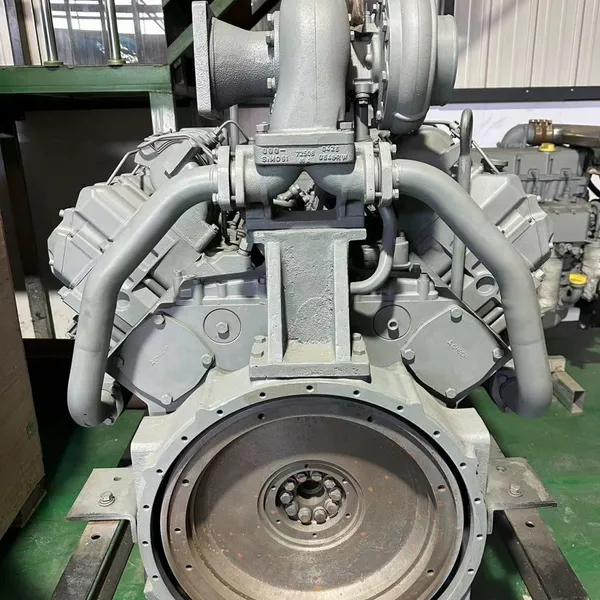 Read More
-
Quality Inspection Points for 6CTA8.3-C260 Engine Shipments
November 16, 2026An engine that had passed every bench check arrived at a port after six weeks in a container and would not turn over. The cranksha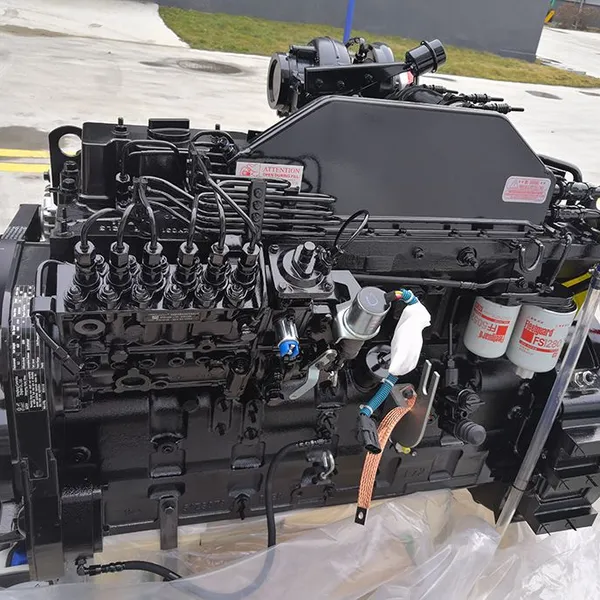 Read More
-
VOLVO D8H Engines in Quarry Equipment in South America
November 16, 2026Quarry work in South America rarely means one machine. It means a line: a feed, a primary crusher, a screen deck and the conveyors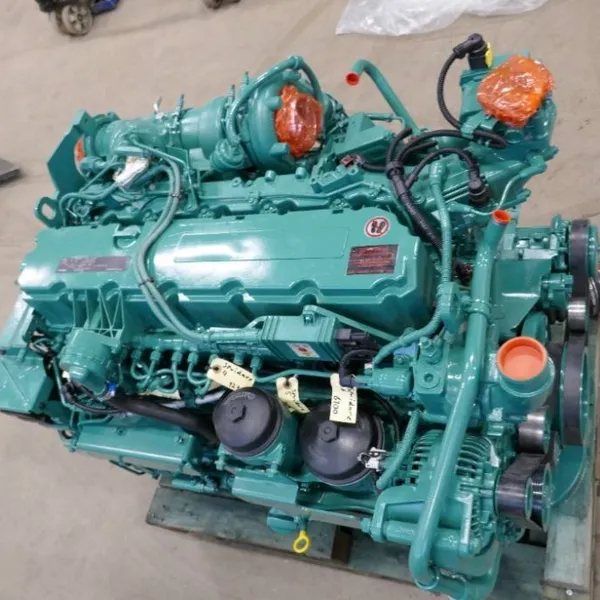 Read More
-
VOLVO D8H Engines in Heavy Trucks: Eastern European Haulage
November 13, 2026A D8H engine in heavy trucks works under conditions that differ from every other setting the unit appears in. The vehicle spends i Read More

Contact Us
Recommended Products
-
 New 129 kW QSB6.7 Diesel Engine Excavator Construction Machinery Electric Start Water-Cooled Core Including Motor PumpUS$ 1888.00 - 3888.00MOQ: 1 Unit
-
Wholesale Diesel Engine Genuine 4 Stroke Direct Injection Doosan DL08 Engine for SaleUS$ 4558.00 - 4800.00MOQ: 1 Unit
-
Factory Price DOOSAN DL06 Construction Machinery Motor 6 Cylinder 115kw Water-Cooled With Core Components Engine and PumpUS$ 4752.00 - 5000.00MOQ: 1 Unit
-
Factory Price 4 Stroke 115kw Doosan DB58 Complete Engine Assy for Dx220 ExcavatorUS$ 3450.00 - 3650.00MOQ: 1 Unit
-
Factory Manufacture 123kw 4 Stroke Volvo D6e Machinery Engine for Construction MachineryUS$ 7500.00MOQ: 1 Unit
-
New BF6M2012C 4-stroke Original Water-cooled Diesel EngineUS$ 4500.00 - 5400.00MOQ: 1 Unit
-
Original Water Cooled 4 Stroke 6 Cylinder DEUTZ TCD2012062V Machinery EnginesUS$ 4888.00 - 5081.00MOQ: 1 Unit
-
Factory Outlet 6 Cylinder 250HP 2200rpm 6C8.3-C250 Construction Machinery Engines for CuminsUS$ 34627.00 - 36450.00MOQ: 1 Unit
-
1104D-44TA Diesel Engine 83kw New Water-Cooled Machine With Electric Start and Pump Good Price Per UnitUS$ 3700.00 - 4200.00MOQ: 1 Unit
-
Original Water Cooled 4 Stroke DEUTZ TCD 2013 L06 2V Machinery Engines for SaleUS$ 7070.00 - 7443.00MOQ: 1 Unit
-
Excavator Engine Assy QSL8.9 Complete Engine Assembly CUMMINS Qsl 9 Diesel EngineUS$ 4300.00 - 4600.00MOQ: 1 Unit
-
Genuine Vovo D4d EAE2 Diesel Engine for VOLVO EC140 ExcavatorNegotiableMOQ: 1 Unit
-
Factory Outlet 6 Cylinder 250HP 2200rpm 6C8.3-C250 Construction Machinery Engines for CuminsUS$ 4700.00 - 5100.00MOQ: 1 Unit
-
Good Price 153kw 4 Stroke Electric Start D7E Diesel Engine for Construction MachineryUS$ 8350.00MOQ: 1 Unit
-
WEICHAI 178kw 4 Stroke WD10G240E203 Diesel Engine for SEM660D SEM660B Wheel LoaderUS$ 3920.00 - 4127.00MOQ: 1 Unit
-
Dongfeng Shanghai SC11CB220G2B1 6-Cylinder Diesel Engine 162kw (220hp) SDEC 3306 New Condition Core Included Farm MachineryUS$ 6500.00MOQ: 1 Unit
-
ISUZU 4 Cylinder Diesel Engine 4BG1 Machinery Engines for Kobelco SK135 ExcavatorUS$ 6800.00MOQ: 1 Unit
-
130Hp Diesel Engine YC4D130 Yuchai Diesel Motor Price for TruckUS$ 3400.00 - 3600.00MOQ: 1 Unit
-
Shanghai SDEC SC9D220G2 162KW Diesel Engine for SEM922 SEM921 GraderUS$ 5320.00 - 5600.00MOQ: 1 Unit
-
Factory Outlet Sinotruk D1242 Engine Assembly for Construction IndustryUS$ 4615.00 - 4858.00MOQ: 1 Unit