
 Business License

Container Loading and Customs Documents for VOLVO D8H Engines
Two decisions shape how smoothly a heavy engine reaches its buyer, and both are made before the unit is lifted. One is how it is stowed inside its box. The other is how it is described on paper. A VOLVO D8H engine container loading plan settled at the last minute and a document set written from memory are the two most common sources of delay on shipments of this class.
This page takes the two together, because they meet at the same moment. It covers the choice of container, the distribution of weight across the floor, the way a heavy unit is secured against movement, the sequence in which the box is filled, and the entries on the papers that have to agree with the goods. Engine export clearance is treated here as something prepared in advance rather than chased on the day.
Three parties work through the same decisions. A buyer taking delivery at a port, a forwarder assembling a load and a supplier crating a unit all need the same points agreed in writing. Pinbo Import and Export settles them before the crate is closed, because a discrepancy found at the quay costs more to correct than one found in the warehouse.
1. VOLVO D8H Engine Container Loading: Why the Box Is Chosen Before the Crate
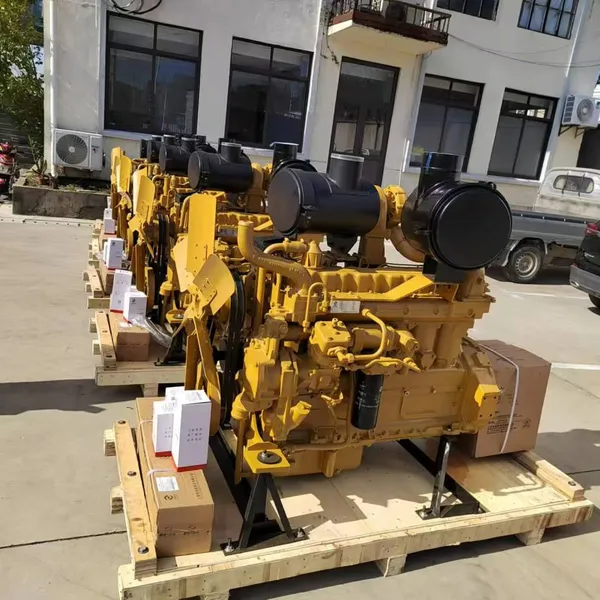
A VOLVO D8H engine container loading plan starts with the box rather than with the crate, and the order matters. The container is a fixed size bought on a schedule, while the crate is built for the shipment, so the crate is the thing that has to fit.
Four measurements decide the choice, and the first is the height of the unit with its crate, which has to clear the door, the narrowest opening in most containers. The footprint has to leave room for bracing on all sides. The mass has to sit within what the container floor and the handling equipment at both ends can take. And the crated unit has to be able to enter and leave without being tipped.
The common arrangements are a standard container for units that fit within the door, an open top where the unit must be lowered in from above, and a flat rack where the unit is too tall or too wide for a box at all. Each carries different handling requirements at the port of loading and at the destination, and the receiving end should know which one is coming.
Lashing and lifting points belong to this decision too. A crate cannot be secured to a container that offers nothing to secure it to, and a unit that has to be lifted out on arrival needs a plan for doing so.
2. D8H Customs Documents: The Entries That Must Agree With the Goods
D8H customs documents fail for one reason more often than any other, and it is not an obscure rule. The documents disagree with each other or with the unit in the box.
Three entries carry most of the risk. The description of the goods, which has to identify the engine in the same terms as the plate on the unit. The quantity and weight, which have to be the same on the packing list, the loading record and the invoice. And the value, which has to be stated consistently and in the same currency across the set.
The unit's own identity is what ties the set together. A build number read from the plate and carried onto the invoice and the packing list gives officials a way to match the paper to the object, and it gives the buyer a way to check the shipment without opening anything.
The correction point is the warehouse. A document drafted early and read against the machine before the container is sealed costs nothing to fix. The same discrepancy discovered at the destination stops the cargo and takes days to resolve.
3. Engine Export Clearance: Weight, Distribution and the Floor That Carries It
An engine is a concentrated load, and engine export clearance work on the physical side is largely about spreading it. A crate weighing several tonnes resting on a small footprint will press hard on a container floor that was designed for a distributed load.
Three measures deal with it. The load is placed over the strongest part of the floor, usually above the cross members rather than between them. Timbers or a spreader base are fitted under the crate so that the mass reaches the floor across a wider area. And the unit is positioned so that the weight sits as evenly as possible between the container's ends rather than all at one end.
The distribution matters again when the container is lifted, and it matters to whoever unloads it. A load biased to one end shifts the handling effort to one point, and a crate that has moved during the voyage is harder to free than one that has not moved at all.
The figures to record are the gross weight of the crated unit, the weight of any accompanying cases and the position of the centre of mass within the box. Those three belong on the loading record alongside the photographs, and Pinbo Power files it against the order number.
4. VOLVO D8H Engine Container Loading: Securing a Heavy Unit Against Movement
Securing is not a matter of tightening straps until they feel firm. A VOLVO D8H engine container loading plan that relies on friction alone will be defeated by the motion of a vessel, because a heavy mass that starts to move will continue once it has begun.
The working principle is to block the unit so it cannot start, and then to lash it so it cannot be lifted. Blocking means timber or steel placed against the crate along the directions in which it could slide or tip. Lashing means straps or chains taken to the container's own anchor points at an angle rather than horizontally.
Two details are commonly missed. The first is vertical movement, since a vessel pitches as well as rolls and a crate that is blocked sideways can still lift. The second is the crate itself, because the crate base is not a securing system, and a well lashed crate on a base that can shift is not secured.
Inspection belongs at the end of loading rather than at the beginning. Straps loosen as a load settles, so the final check is made once everything is in place and the doors are about to close.
5. D8H Customs Documents: Origin, Classification and the Invoice Line
D8H customs documents carry two entries that are written once and then govern the shipment. One is the origin of the goods. The other is their classification under the tariff used at the destination.
Origin is established by the papers the supplier's side can provide and by the rules of the destination market. It is worth settling early, because the evidence required varies and cannot always be produced after the fact.
Classification follows from the description rather than the other way around. A description that is specific about what the goods are, what they are used for and what they are made of supports a classification that holds. A vague description invites the official at the destination to decide, and their decision is not the one the buyer budgeted for.
The invoice line is where the two meet, and Jining Pinbo Import and Export Co Ltd prepares that line from the plate for that reason. It should state the product in the terms used on the plate, add the build number for identification, and stay consistent with every other document in the set. A buyer who reads the draft invoice against the machine before dispatch has done the most useful check available to them.
6. Engine Export Clearance: Sequence Inside the Box and Access on Arrival
Loading order is settled by the unloading order, and engine export clearance is smoother when that rule is respected. Whatever has to come out first should go in last.
An engine shipment usually carries more than one item. There is the unit, and there are often smaller cases holding the loose parts, a spares kit or accessories that were packed separately. Their positions inside the box decide how long the receiving team spends moving one thing to reach another.
Access matters at both ends. The unit needs enough clearance for the lifting gear to reach its points, which means nothing heavy should be stacked across the top of it. And the door area needs to be clear enough for the crate to travel straight out rather than at an angle.
Marks belong to this part of the work as well. Every case should carry the same marks as the packing list, so that a container holding several items can be checked from the outside before anything is moved.
7. VOLVO D8H Engine Container Loading: Photos, Seals and the Record of the Load
The record of a load is made while the load is being made, and photographs are the least expensive part of it. A VOLVO D8H engine container loading file that holds images of the crated unit before closing, the bracing in place and the sealed doors gives everyone a version of events that can be compared later.
Three details complete the file. The seal number, recorded against the container number rather than kept separately. The loading record with the weights and the position of the centre of mass. And a copy of the load plan, showing where each item was placed.
The reason for the discipline is narrow and practical. When a crate is found damaged on arrival, the first questions are always whether the unit was loaded in the condition described and how it was secured. A photographic record answers both without argument, and its absence turns a claim into a discussion.
That file is held with the shipping documents by Jining Pinbo Import and Export, so a query arriving weeks later is settled from paper rather than from recollection.
8. D8H Customs Documents: What Clearance at the Destination Needs From the Buyer
The last stage of a D8H customs documents process belongs to the buyer rather than to the supplier, and its requirements are set by the destination market. Knowing them early is what keeps a shipment moving on arrival.
Four items normally sit on the buyer's side. Registration with the relevant authority, so that the importer is recognised, together with payment of the duties and taxes assessed on the goods. Any inspection the destination requires, which may involve presenting the unit or its papers, and the appointment of an agent if the buyer is not handling the formalities directly.
The supplier's contribution to all of this is information delivered early enough to be used. A copy of the invoice, a statement of the description and the build number, and confirmation of the packing arrangement allow the buyer to prepare before the vessel berths rather than after.
The habit worth keeping is a short list of what the buyer's own market asks for, agreed at the time of order and checked against the draft papers. Almost every clearance delay begins with an item nobody put on that list.
9. Frequently Asked Questions
9.1 What decides the container for a VOLVO D8H engine container loading plan?
Four measurements decide it, and the crate is built to suit the box rather than the other way around. The crated height has to clear the container door, which is usually the narrowest opening. The footprint has to leave space for bracing on every side, and the mass has to sit within the limits of the container floor and the handling equipment at both ends. The crated unit also has to enter and leave without being tipped, so a standard box suits a unit that clears the door, an open top suits one lowered from above, and a flat rack suits a unit too tall or too wide for a box.
9.2 Why do D8H customs documents have to agree with each other?
Because the set is read as a whole, and an official who finds two documents disagreeing cannot release the cargo on the strength of the third. Three entries cause most of the trouble: what the goods are, what they weigh and how many there are, and what they are worth. Each of those should be written the same way on every paper in the file. A build number copied from the plate onto the invoice and the packing list gives the whole set a single point of reference, which makes the comparison quick for everyone who has to make it.
9.3 How is a heavy engine secured inside a container?
By blocking it so it cannot start to move, and then lashing it so it cannot be lifted. Blocking uses timber or steel placed against the crate along the directions in which it could slide or tip. Lashing uses straps or chains taken to the container's own anchor points at an angle rather than horizontally. Two details are often missed, the first being vertical movement, since a vessel pitches as well as rolls, and the second the crate base, which is not itself a securing system, so a final check belongs at the end of loading, when straps have loosened as the load settles and the doors are about to close.
9.4 What does clearance at the destination require from the buyer?
Clearance is the buyer's own stage, because the rules applied at the destination belong to that market rather than to the seller's. The importer has to be recognised by the authority that will release the goods, the duties and taxes assessed on the entry have to be paid, and any physical inspection the destination calls for has to be arranged and attended. Where a buyer does not handle those formalities directly, an agent is appointed to act in their name. What the supplier owes is timing rather than paperwork: the invoice, the goods description with its build number and the packing arrangement should reach the buyer well before the vessel berths.
Recently Posted
-
How EU Stage Standards Influence DEUTZ BF6M1015 Replacement Demand
November 20, 2026An equipment dealer bought three used machines of the same model at different times and found that the engines under them were not Read More
-
Emission Regulation Updates and Their Effect on 6CTA8.3-C260 Class Engines
November 20, 2026A contractor working on two sites either side of a border moved a wheel loader between them and found that the same machine was tr Read More
-
Supply Chain and Stock Planning for VOLVO D7E Engines
November 19, 2026VOLVO D7E engine stock planning begins with a fact that fleets accept slowly: a spare part and a complete engine are two different Read More
-
Packing and Dispatch for Compact Kubota V3300 Engines
November 19, 2026A compact industrial engine travels differently from a large one, and Kubota V3300 engine packing is shaped by that difference. A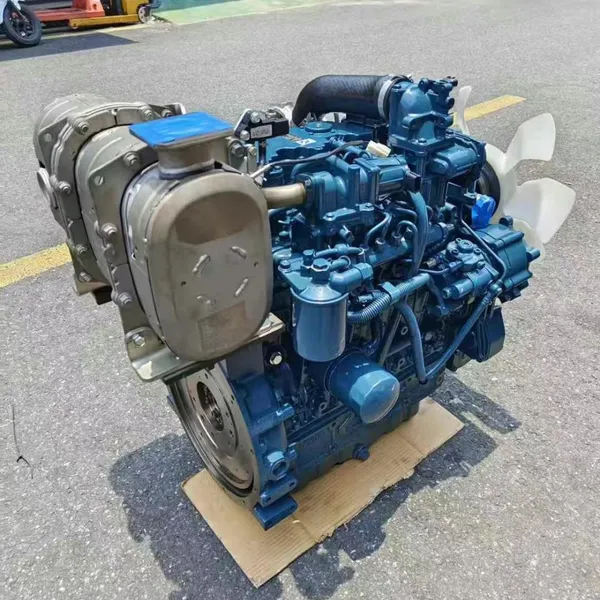 Read More

Contact Us
Recommended Products
-
 New 129 kW QSB6.7 Diesel Engine Excavator Construction Machinery Electric Start Water-Cooled Core Including Motor PumpUS$ 1888.00 - 3888.00MOQ: 1 Unit
-
Wholesale Diesel Engine Genuine 4 Stroke Direct Injection Doosan DL08 Engine for SaleUS$ 4558.00 - 4800.00MOQ: 1 Unit
-
Factory Price DOOSAN DL06 Construction Machinery Motor 6 Cylinder 115kw Water-Cooled With Core Components Engine and PumpUS$ 4752.00 - 5000.00MOQ: 1 Unit
-
Factory Price 4 Stroke 115kw Doosan DB58 Complete Engine Assy for Dx220 ExcavatorUS$ 3450.00 - 3650.00MOQ: 1 Unit
-
Factory Manufacture 123kw 4 Stroke Volvo D6e Machinery Engine for Construction MachineryUS$ 7500.00MOQ: 1 Unit
-
New BF6M2012C 4-stroke Original Water-cooled Diesel EngineUS$ 4500.00 - 5400.00MOQ: 1 Unit
-
Original Water Cooled 4 Stroke 6 Cylinder DEUTZ TCD2012062V Machinery EnginesUS$ 4888.00 - 5081.00MOQ: 1 Unit
-
Factory Outlet 6 Cylinder 250HP 2200rpm 6C8.3-C250 Construction Machinery Engines for CuminsUS$ 34627.00 - 36450.00MOQ: 1 Unit
-
1104D-44TA Diesel Engine 83kw New Water-Cooled Machine With Electric Start and Pump Good Price Per UnitUS$ 3700.00 - 4200.00MOQ: 1 Unit
-
Original Water Cooled 4 Stroke DEUTZ TCD 2013 L06 2V Machinery Engines for SaleUS$ 7070.00 - 7443.00MOQ: 1 Unit
-
Excavator Engine Assy QSL8.9 Complete Engine Assembly CUMMINS Qsl 9 Diesel EngineUS$ 4300.00 - 4600.00MOQ: 1 Unit
-
Genuine Vovo D4d EAE2 Diesel Engine for VOLVO EC140 ExcavatorNegotiableMOQ: 1 Unit
-
Factory Outlet 6 Cylinder 250HP 2200rpm 6C8.3-C250 Construction Machinery Engines for CuminsUS$ 4700.00 - 5100.00MOQ: 1 Unit
-
Good Price 153kw 4 Stroke Electric Start D7E Diesel Engine for Construction MachineryUS$ 8350.00MOQ: 1 Unit
-
WEICHAI 178kw 4 Stroke WD10G240E203 Diesel Engine for SEM660D SEM660B Wheel LoaderUS$ 3920.00 - 4127.00MOQ: 1 Unit
-
Dongfeng Shanghai SC11CB220G2B1 6-Cylinder Diesel Engine 162kw (220hp) SDEC 3306 New Condition Core Included Farm MachineryUS$ 6500.00MOQ: 1 Unit
-
ISUZU 4 Cylinder Diesel Engine 4BG1 Machinery Engines for Kobelco SK135 ExcavatorUS$ 6800.00MOQ: 1 Unit
-
130Hp Diesel Engine YC4D130 Yuchai Diesel Motor Price for TruckUS$ 3400.00 - 3600.00MOQ: 1 Unit
-
Shanghai SDEC SC9D220G2 162KW Diesel Engine for SEM922 SEM921 GraderUS$ 5320.00 - 5600.00MOQ: 1 Unit
-
Factory Outlet Sinotruk D1242 Engine Assembly for Construction IndustryUS$ 4615.00 - 4858.00MOQ: 1 Unit