
 Business License

Supply Chain and Stock Planning for VOLVO D7E Engines
VOLVO D7E engine stock planning begins with a fact that fleets accept slowly: a spare part and a complete engine are two different decisions wearing the same coat. One is an operating expense settled by a shelf and a lead time, and the other ties up capital in an asset that may sit for a season or be needed twice in a month. Treating them as one decision produces either an idle crate or a machine standing for six weeks.
This article separates the two. It sets out where lead time actually accumulates in a D7E engine supply chain, describes the conditions under which holding a complete unit pays, explains how to forecast from a fleet rather than from a calendar, works through reorder points and safety margins, and closes on the review that keeps a plan current. Engine availability lead time is treated here as something a buyer can measure and shorten rather than as a figure a supplier announces.
Three readers find this material useful. A fleet expanding its machine count wants to know what to hold, and a maintenance manager is rebuilding a plan after a machine stood for weeks. A dealer is deciding how much finished stock to carry against the orders it expects. Pinbo Power keeps the fleet profile beside the order for that reason, because a stocking plan written without it describes a warehouse rather than a workshop.
1. VOLVO D7E Engine Stock Planning: Two Decisions That Look Like One
The first decision is about parts, and it repeats. Filters, belts, sensors and the consumables on the interval list are drawn down steadily, and their cost is met from operating budget without a second thought. The question is how many to hold rather than whether to hold any.
The second decision is about complete units, and it does not repeat. A whole engine is bought to cover a replacement that has not yet happened, and its justification rests on how often such a replacement is likely and what a machine standing costs while it waits. The arithmetic is different in kind from the first decision, and mixing the two is what leads a fleet to hold a crate it never opens.
The distinction survives contact with a workshop because the two items behave differently. A part on a shelf ages slowly and stays interchangeable across machines of one type. A complete unit ages too, its release may not suit every machine in the fleet, and it occupies floor space that a working area could use.
A VOLVO D7E engine stock planning exercise that separates the two columns produces a shorter list than most fleets expect, and a more useful one.
2. D7E Engine Supply Chain: Where the Lead Time Actually Sits
Lead time is usually quoted as one number and actually accumulates across several stages. A D7E engine supply chain should be measured stage by stage, because the stage that dominates differs with the situation rather than with the supplier.
The first stage is confirmation, in which the build, the rating and the release are agreed. It can be the longest stage of all when the machine details are incomplete, since a supplier that has to ask three questions waits for three answers before doing anything. The second stage is preparation at the supplier, covering assembly or picking, the matching of the dress items and any verification of identity.
The third stage is packing, inspection and documentation, and it is short and fixed once it starts. The fourth is transport, which includes booking, departure frequency and sailing or road time. The fifth is destination clearance and onward delivery, which is where a plan most often slips through no fault of the goods.
| Stage | What it covers | What shortens it |
|---|---|---|
| Confirmation | Build, rating and release agreed | A complete first enquiry with machine details |
| Preparation | Assembly, picking and identity checks | Ordering against a plan rather than against an event |
| Packing and documents | Crate, preservation and paperwork | Standard practice once the order is released |
| Transport | Booking, departure and time under way | Choosing a corridor with a regular service |
| Destination | Clearance and onward delivery | Documents that match the destination requirements |
Read that way, engine availability lead time becomes something a buyer can influence rather than something that is simply imposed. Two of the five stages sit largely within the buyer's control.
3. VOLVO D7E Engine Stock Planning: When Holding a Whole Unit Pays
Holding a complete unit pays in a narrow set of conditions, and it is worth stating them plainly rather than treating finished stock as a virtue. The first is a fleet large enough that replacements arrive often enough to be predicted.
The second is a machine whose stoppage costs more than the capital tied up in a unit sitting on the floor. That condition appears where a single machine carries a whole operation, where a rental contract carries a penalty for late delivery, or where the replacement window is fixed by a customer's schedule rather than by the workshop.
The third is a supply route with irregular departures or long transit, where the difference between ordering early and ordering late is measured in weeks rather than days. The fourth is a machine of a type the fleet expects to keep for years, so that a held unit will eventually be used rather than sold on.
Where none of those conditions holds, a plan built around lead time and confirmed specifications usually serves better than a crate. Pinbo Import and Export discusses both routes with a fleet before it quotes, since the answer depends on the fleet rather than on the engine.
4. D7E Engine Supply Chain: Forecasting From the Fleet Rather Than the Calendar
A D7E engine supply chain plan built on the calendar is a plan built on wishful thinking. Demand for complete units comes from the condition of the fleet rather than from the month, and it appears in a pattern that a fleet already holds the data to predict.
Four inputs do most of the work. The first is the age distribution of the machines, read as hours rather than years, since a fleet of one model bought in three batches will reach its replacement windows in three waves. The second is the rate at which each machine accumulates hours, which turns a life in hours into a date.
The third is the working season, because a fleet that runs hard for part of a year will reach its intervals and its failures inside that period rather than spread across twelve months. The fourth is the record of unplanned stoppages, which shows whether the fleet's engines are failing earlier or later than the manual suggests.
Those four together convert a vague expectation into a rolling forecast that can be shared with a supplier. A forecast that is roughly right and given early is worth more than an exact order placed late.
5. Engine Availability Lead Time: The Reorder Point and the Safety Margin
A reorder point is the level at which a new order should be placed, and it is set by two variables rather than one. The first is the expected demand during the lead time, and the second is the variation in that demand and in the lead time itself.
The safety margin exists because both variables move. A fleet expecting one replacement in a quarter may meet two if a season is hard, and a route that normally takes five weeks may take seven if a departure is missed. The margin is the buffer that absorbs that movement without a machine standing.
Engine availability lead time enters the calculation directly, since a longer lead time raises the expected demand during the wait and therefore the level at which ordering should start. It also raises the cost of being wrong, which is why shortening the confirmation stage is worth more than negotiating a rate on freight.
Two habits keep the figure honest. Measure the actual lead time achieved on past orders rather than the one quoted, and review the reorder point whenever the fleet size or the corridor changes. Both are small tasks that prevent a large surprise.
6. D7E Engine Supply Chain: Talking Slots With a Supplier
A supplier prepares engines against a schedule, and a buyer who shares a schedule rather than placing single orders gets better service from the same arrangement. That is the practical content of managing a D7E engine supply chain over a year.
The first item to agree is a rolling forecast, given in months ahead with the understanding that later months will move. A forecast allows preparation to be planned in advance rather than started on receipt of a firm order, and it shortens the preparation stage without asking anyone to hold uncommitted stock.
The second item is the treatment of changes. A buyer should know at what point a change becomes a cost, whether that point is a date or a stage of preparation, and what happens to a cancelled order. That understanding prevents both sides from discovering the boundary during a dispute.
The third is consolidation. Two units travelling together through one corridor usually cost less and arrive together, which suits a fleet replacing engines in pairs rather than singly.
A supplier who knows the fleet and the corridor can offer alternatives that a single order never reveals, and Pinbo Power works with buyers on that basis rather than order by order.
7. VOLVO D7E Engine Stock Planning: Capital Against Downtime Risk
Every stock decision trades capital against risk, and the trade is worth writing down rather than settling by instinct. The cost of holding a complete unit includes the money tied up in it, the floor space it occupies, the insurance, and the small chance that the machine it was bought for is sold before it is needed.
The cost of not holding it includes the days a machine stands, the labour that waits while it stands, the penalty or lost contract that follows, and the premium paid for an urgent order. A fleet that writes both columns for its own machines usually finds that the answer differs between machine types rather than between makes of engine.
A VOLVO D7E engine stock planning decision made this way often ends in a mixed arrangement: parts held in depth, one complete unit held for the machine that cannot stop, and the rest covered by a forecast and a known lead time.
That arrangement is worth reviewing rather than defending. As a fleet grows, the point at which a second unit becomes worth holding arrives sooner than most workshops expect, and as a fleet shrinks the reverse happens just as quietly.
8. Engine Availability Lead Time: Reviewing a Plan That Has Aged
A stocking plan ages whether or not anyone attends to it. The machine list changes, engines are replaced ahead of schedule after a hard season, and the corridor a fleet uses may shift as rates and schedules change. Any of those makes an old plan wrong in a way that is invisible until a machine stops.
A short review covers the ground. Read the past twelve months of actual lead time against the figure the plan assumed. Read the unplanned stoppages against the forecast that predicted them. Check the age distribution of the fleet against the replacement waves it was meant to produce.
Then adjust one thing at a time rather than rebuilding the plan. A reorder point moved by a few weeks, or a margin raised for the machine that carries the operation, usually does more good than a wholesale revision that nobody follows afterwards.
The point of the exercise is modest and worth stating. Engine availability lead time can be measured, forecast and partly controlled, and a plan that does those three things is the difference between a replacement that is scheduled and one that is survived. Jining Pinbo Import and Export Co Ltd works with buyers on a rolling basis for that reason, so the fleet profile stays current rather than being restated at every order.
9. Frequently Asked Questions
9.1 What does VOLVO D7E engine stock planning involve?
It involves two separate decisions that are often confused. The first is how many wearing parts to hold, which repeats steadily and is settled by consumption and lead time. The second is whether to hold a complete engine, which depends on how often replacements are expected, what a stopped machine costs and how irregular the supply route is. Parts are an operating cost and complete units tie up capital, so a plan should present them in two columns and read together they produce a shorter list than most fleets expect.
9.2 Where does lead time accumulate in a D7E engine supply chain?
It accumulates across five stages rather than sitting in one. Confirmation covers the agreeing of build, rating and release, and it is often the longest stage when machine details are incomplete, while preparation covers assembly, picking and identity checks. Packing and documentation are short and fixed once started. Transport covers booking, departure frequency and time under way, and destination covers clearance and onward delivery, so the buyer influences two of the five stages directly and those are the two worth working on first.
9.3 How can engine availability lead time be reduced?
The reduction comes mainly from the early stages rather than from transport. A complete first enquiry with the machine details, the duty and photographs gives a supplier what it needs to build without a round of questions, which removes the most common cause of delay. Ordering against a rolling forecast rather than against an event lets preparation begin earlier without anyone holding uncommitted stock. Choosing a corridor with a regular service shortens transport and makes it predictable, and documents that match the destination prevent the last stage from slipping.
9.4 When is it worth holding a complete engine instead of parts?
Four conditions justify it. The fleet needs to be large enough that replacements arrive often enough to be predicted, a stopped machine has to cost more than the capital tied up in a stored unit, the supply route has to be irregular or long enough that ordering late means waiting weeks, and the machine has to be one the fleet expects to keep for years so the unit will eventually be used. Where none of those conditions holds, a plan built on lead time and confirmed specifications usually serves the fleet better than a crate on the floor.
Recently Posted
-
Inspection and Test Records for KTTA19-C700 Engines
November 18, 2026A buyer received a nineteen litre engine with nothing in the crate beyond a packing list and asked for the run note taken before d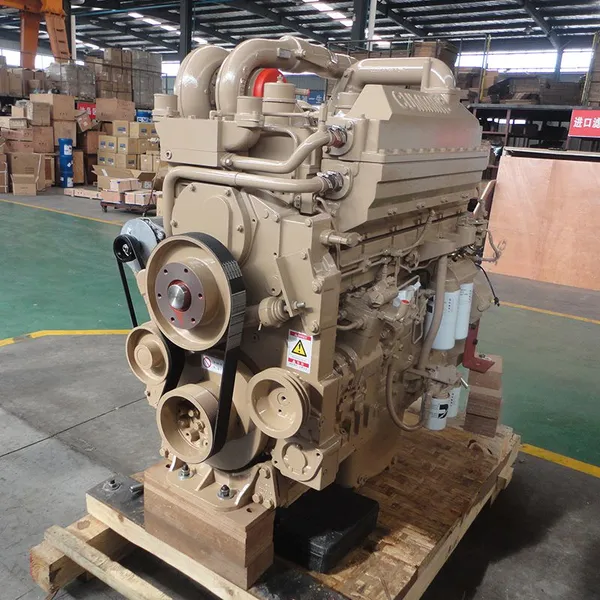 Read More
-
Warranty Terms and Service Support for KTA38-M2 Marine Engines
November 18, 2026A vessel suffered a bearing failure within the first months of service and the claim that followed took far longer to settle than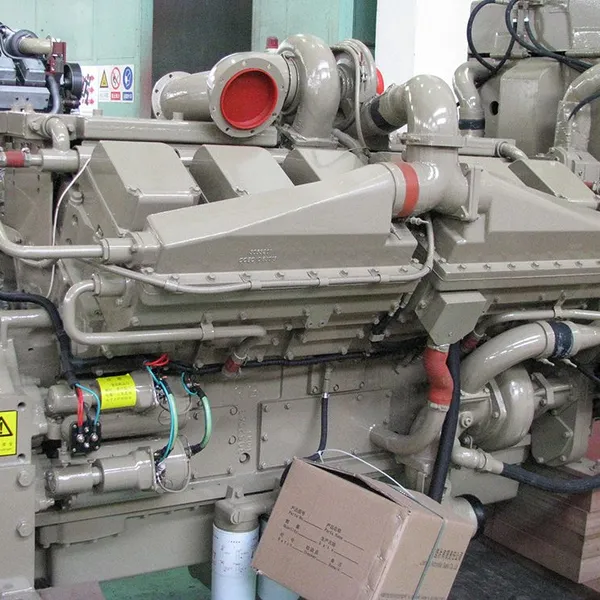 Read More
-
Handling and Crate Standards for KTA38-M2 Marine Engines
November 18, 2026A marine engine arrived at a shipyard with a bent exhaust connection and a cracked corner on its crate, and the damage had happene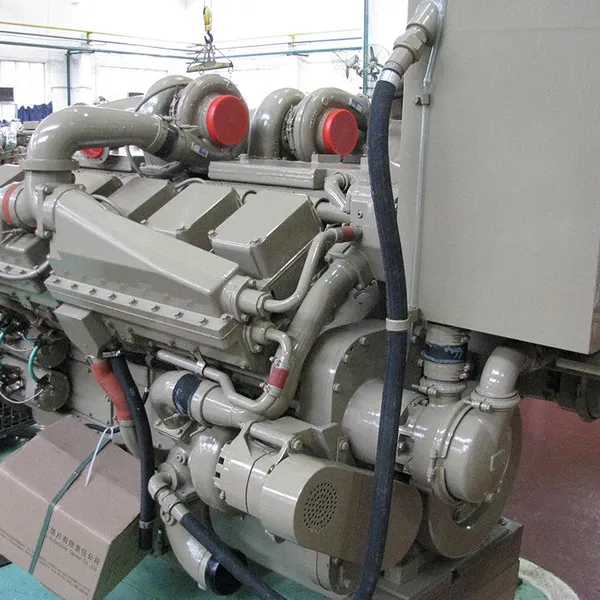 Read More
-
Ocean Freight and Documentation for Doosan DL08 Engine Orders
November 17, 2026An engine that had cleared export without difficulty sat at the destination port for eleven days while two documents were correcte Read More

Contact Us
Recommended Products
-
 New 129 kW QSB6.7 Diesel Engine Excavator Construction Machinery Electric Start Water-Cooled Core Including Motor PumpUS$ 1888.00 - 3888.00MOQ: 1 Unit
-
Wholesale Diesel Engine Genuine 4 Stroke Direct Injection Doosan DL08 Engine for SaleUS$ 4558.00 - 4800.00MOQ: 1 Unit
-
Factory Price DOOSAN DL06 Construction Machinery Motor 6 Cylinder 115kw Water-Cooled With Core Components Engine and PumpUS$ 4752.00 - 5000.00MOQ: 1 Unit
-
Factory Price 4 Stroke 115kw Doosan DB58 Complete Engine Assy for Dx220 ExcavatorUS$ 3450.00 - 3650.00MOQ: 1 Unit
-
Factory Manufacture 123kw 4 Stroke Volvo D6e Machinery Engine for Construction MachineryUS$ 7500.00MOQ: 1 Unit
-
New BF6M2012C 4-stroke Original Water-cooled Diesel EngineUS$ 4500.00 - 5400.00MOQ: 1 Unit
-
Original Water Cooled 4 Stroke 6 Cylinder DEUTZ TCD2012062V Machinery EnginesUS$ 4888.00 - 5081.00MOQ: 1 Unit
-
Factory Outlet 6 Cylinder 250HP 2200rpm 6C8.3-C250 Construction Machinery Engines for CuminsUS$ 34627.00 - 36450.00MOQ: 1 Unit
-
1104D-44TA Diesel Engine 83kw New Water-Cooled Machine With Electric Start and Pump Good Price Per UnitUS$ 3700.00 - 4200.00MOQ: 1 Unit
-
Original Water Cooled 4 Stroke DEUTZ TCD 2013 L06 2V Machinery Engines for SaleUS$ 7070.00 - 7443.00MOQ: 1 Unit
-
Excavator Engine Assy QSL8.9 Complete Engine Assembly CUMMINS Qsl 9 Diesel EngineUS$ 4300.00 - 4600.00MOQ: 1 Unit
-
Genuine Vovo D4d EAE2 Diesel Engine for VOLVO EC140 ExcavatorNegotiableMOQ: 1 Unit
-
Factory Outlet 6 Cylinder 250HP 2200rpm 6C8.3-C250 Construction Machinery Engines for CuminsUS$ 4700.00 - 5100.00MOQ: 1 Unit
-
Good Price 153kw 4 Stroke Electric Start D7E Diesel Engine for Construction MachineryUS$ 8350.00MOQ: 1 Unit
-
WEICHAI 178kw 4 Stroke WD10G240E203 Diesel Engine for SEM660D SEM660B Wheel LoaderUS$ 3920.00 - 4127.00MOQ: 1 Unit
-
Dongfeng Shanghai SC11CB220G2B1 6-Cylinder Diesel Engine 162kw (220hp) SDEC 3306 New Condition Core Included Farm MachineryUS$ 6500.00MOQ: 1 Unit
-
ISUZU 4 Cylinder Diesel Engine 4BG1 Machinery Engines for Kobelco SK135 ExcavatorUS$ 6800.00MOQ: 1 Unit
-
130Hp Diesel Engine YC4D130 Yuchai Diesel Motor Price for TruckUS$ 3400.00 - 3600.00MOQ: 1 Unit
-
Shanghai SDEC SC9D220G2 162KW Diesel Engine for SEM922 SEM921 GraderUS$ 5320.00 - 5600.00MOQ: 1 Unit
-
Factory Outlet Sinotruk D1242 Engine Assembly for Construction IndustryUS$ 4615.00 - 4858.00MOQ: 1 Unit