
 Business License

Inspection and Test Records for KTTA19-C700 Engines
A buyer received a nineteen litre engine with nothing in the crate beyond a packing list and asked for the run note taken before dispatch. It existed, it ran to three pages, and it answered a question that had been open for weeks.
A test and a record are different things, and the difference shows up later rather than at the time. The test happens once, on a floor, in front of people who will not be there in five years. The record is what survives them.
This page sets out what a KTTA19-C700 engine test records sheet contains, how an engine inspection documentation trail is built from a run rather than from a form, and what a KTTA19 pre delivery test can and cannot establish about the unit being shipped.
1. KTTA19-C700 Engine Test Records: A Record Is Not the Test
KTTA19-C700 engine test records are worth more than the test itself, because a test that nobody wrote down belongs to the workshop that performed it rather than to the owner of the engine.
The unit is an inline six of around nineteen litres, charged in two stages and cooled after compression, and in most installations it drives a generator at a governed speed. Its shape matters less here than its size, because a heavy unit of this kind can be observed at start and at load step on a workshop floor and cannot be observed that way again once it is bolted into a machine room.
A record turns one observation into something usable. An oil pressure reading taken before dispatch becomes a baseline, and a baseline is what gives a later reading a direction rather than a value.
There is a second reason for the file, and it concerns who does the work. These units are usually installed by a third party rather than by the supplier, and an installer who has never seen the engine before arrives with questions. A set of notes answers most of them before the first spanner is taken out of the box.
At Jining Pinbo Import and Export Co Ltd the record is written while the engine is still on the floor, because a note reconstructed after dispatch describes a memory rather than a unit.
2. KTTA19 Pre Delivery Test: What a Run Check Can and Cannot Show
A KTTA19 pre delivery test is a run check rather than a performance measurement, and being clear about which of the two it is prevents a good deal of argument later.
The check starts the engine, brings it to temperature and observes it at idle and at its governed speed. It can show whether the unit starts readily, whether it runs evenly, whether the governor responds to a change in demand, and whether any visible fault appears in the exhaust or in the fluids.
It cannot show how the engine will behave in a set that has not been built yet. Output under load depends on the alternator, the fuel system, the cooling arrangement and the site itself, and none of those are present beside the bench.
It also cannot speak to long term wear. A short run under controlled conditions says nothing about how the unit will behave after a thousand hours at a remote site, and a buyer who reads a run note as a promise about the next five years is reading it for something it does not carry.
What the check does do well is catch the faults that are easy to correct at the works and difficult to correct in the field. A loose connection, a weeping joint, a sensor that reads nothing and a governor that hesitates are all visible on a bench and all invisible in a crate.
3. Engine Inspection Documentation: The Sheet That Carries the Detail
Engine inspection documentation begins as a sheet with the items listed down one side and the observation written beside each one, and its usefulness turns on how honestly those observations are entered.
A sheet worth keeping carries four things for each item: what was checked, what was seen, when it was done, and who did it. An entry that records a range rather than a reading, or a tick rather than a note, still has value as a check but less value as a baseline.
The items themselves are drawn from the unit rather than from a general list. For an inline six of this size they include the external condition of the castings, the tightness of the joints and covers, the state of the wiring and the sensors, and the fit of the items sent with the engine such as the starter, the filters and the guards.
The sheet then moves to the running items: starting behaviour, the readings taken at idle and at governed speed, and any observation about smoke, noise or leakage.
The difference between a checklist and a record is worth stating plainly. A checklist proves that a step was taken, while a record states what was found, and the second of those can be set beside a later reading.
4. KTTA19 Pre Delivery Test: Readings Taken at the Run
A KTTA19 pre delivery test produces a small set of readings, and the set is small because a short run under light conditions cannot produce more.
Oil pressure comes first. A figure at idle and a figure at governed speed together describe the lubrication system far better than a single reading does, because the relationship between the two is what moves when a pump or a bearing begins to go.
Coolant temperature at the end of the run is the second, and it means something when read alongside the ambient temperature at the time. A run on a cold morning and a run in a warm workshop produce different figures from the same healthy engine, and a record that omits the ambient condition cannot be compared with anything.
The governed speed itself belongs on the sheet, because it fixes the duty the unit was checked against. A generator engine held at fifteen hundred revolutions per minute for a fifty hertz supply and one held at eighteen hundred for a sixty hertz supply are checked at different points, and a note that omits the speed leaves the reader guessing.
The remaining observations are descriptive rather than numeric: smoke at start and under a brief load, the sound of the engine across its speed range, and the absence of leaks after the run rather than before it.
5. Engine Inspection Documentation: What Travels With the Unit
Engine inspection documentation that stays in a supplier's office has done half of its work, and the half a buyer can use is the part that travels with the engine.
Four items normally accompany a unit of this size. The packing list identifies what is in the crate, including the loose items sent with the engine. The run note records the observations taken before dispatch. A photograph of the data plate fixes the identity of the unit, and an interface sheet gives the connection information a fitter needs before the engine is set down.
The interface sheet is the one buyers request least and use most. Flange sizes, water and oil connection points, the electrical connections and the mounting pattern all belong on it, and a fitter who has them stops work once instead of twice.
The crate marking belongs to the same family of documents, because it is the first record anyone reads. A case number, a weight, a centre of gravity mark and an instruction about lifting points all save an argument at the unloading bay.
Pinbo Import and Export sends those items with every unit, because an engine sitting in a crate is difficult to inspect and a folder of documents is not.
6. KTTA19-C700 Engine Test Records: Reading a Record Months Later
KTTA19-C700 engine test records are usually read months and years after they were written, and how they are read decides whether they help anyone.
The first comparison is against the engine's own earlier figures rather than against a published limit. A pressure that has fallen from its delivery value describes a trend, while the same pressure compared with a manual figure describes a position with no direction attached.
The second comparison is against the conditions. Two readings taken at different ambient temperatures describe different things about the same engine, so a record carrying conditions is a record that can be compared honestly.
The third is against the duty. An engine running at a fixed governed speed for long periods accumulates wear differently from one started and loaded many times, and the readings that matter shift with the pattern.
A fourth comparison becomes possible in a fleet. Where several units of the same build are in service, a reading that stands apart from its sisters is worth a second look even when it sits inside every published limit.
A file holding delivery readings, conditions and duty notes gives a workshop a starting point. A file holding an invoice and a packing list leaves it to guess.
7. Engine Inspection Documentation: What to Ask For Before Dispatch
Engine inspection documentation should be requested before dispatch rather than after arrival, because the material is far easier to obtain while the engine is still standing on a floor.
A buyer should ask for the run note in writing, the data plate photograph, the packing list and the interface sheet as one set. Asking for them one at a time tends to produce partial answers, and partial answers are how a crate arrives without a file.
It is worth stating what the engine will drive and where it will work. A supplier who knows the unit is bound for a generator set on a remote site will take the readings in a form that suits that use, and will add the parts list for the consumables the site will need first.
Timing matters as well as content. A request that arrives after the crate is closed costs days, because the engine has to be uncrated to photograph a plate or to re-take a reading that could have been taken in minutes while the unit was still on the floor.
Jining Pinbo Import and Export gathers those requests into one list before the crate is closed, so the documents and the engine leave together.
8. KTTA19-C700 Engine Test Records: Keeping the File With the Engine
KTTA19-C700 engine test records belong with the engine rather than in the office that sold it, and the rule is worth stating because it is broken so often.
The file follows the unit through its life. It goes to the person who unpacks it, then to the workshop that installs it, then to whoever keeps the machine room. In a fleet it travels with the maintenance log, and at a resale it travels with the machine.
Two further items improve it over time. The first is a photograph of the unit as installed, which settles most disputes about connections and clearances. The second is a note of any change made after installation, such as a different filter, a revised setting or a replaced component.
Pinbo Power sends the file in printed form and in a form that can be copied into a machine book, because a document that has to be typed out again will not survive a change of shift.
Kept that way, a few pages of notes do work that a conversation cannot do. They answer questions at a time when the people who took the readings have moved on.
9. Frequently Asked Questions
9.1 What do KTTA19-C700 engine test records include?
KTTA19-C700 engine test records include the observations taken during a run check rather than any measurement of full performance under load. They normally carry oil pressure at idle and at governed speed, coolant temperature read alongside the ambient temperature, and written notes on starting behaviour, smoke and any leakage seen after the run. A data plate photograph, a packing list and an interface sheet usually travel with the engine as well. Together those items form a baseline against which later readings can be compared.
9.2 What is the purpose of engine inspection documentation?
Engine inspection documentation records what was checked, what was seen, when it was done and who did it, and its purpose is to make the unit's condition at delivery knowable years afterwards. A sheet carrying ticks has value as a check but less as a baseline, because a later workshop cannot compare a tick with a reading. The documentation also covers the loose items sent with the engine and the state of the wiring and connections. Filled in honestly rather than quickly, it turns an afternoon on a workshop floor into a permanent reference.
9.3 What can a KTTA19 pre delivery test establish?
A KTTA19 pre delivery test establishes that the unit starts readily, runs evenly and holds a governed speed under light conditions. It can show whether the governor responds, whether the lubrication system builds pressure, and whether the exhaust or the fluids reveal a visible fault that is cheaper to correct at the works than in the field. It cannot show how the engine will behave under load in a set that has not been built, because the alternator, the cooling arrangement and the site conditions are absent. It also says nothing about long term wear.
9.4 How should a record be read months after delivery?
A record should be read against the engine's own earlier figures rather than against a published limit, since a pressure that has moved from its delivery value shows a trend. A single reading set beside a manual figure shows a position instead, with no direction attached to it. Conditions matter as well, because two readings taken at different ambient temperatures describe different things about the same engine. Duty notes complete the picture, since a unit running for long periods at fixed speed wears differently from one started and loaded often.
Recently Posted
-
Ocean Freight and Documentation for Doosan DL08 Engine Orders
November 17, 2026An engine that had cleared export without difficulty sat at the destination port for eleven days while two documents were correcte Read More
-
Warranty and After-Sales Support for Doosan DL06 Engines
November 17, 2026A fleet submitted a claim on an engine that had failed inside the stated period and had the claim refused, not because the failure Read More
-
Spare Parts Availability and Lead Times for DEUTZ F3L912 Engines
November 17, 2026A workshop ordered a fan belt for an air cooled engine and waited three weeks for a part it had expected in three days. When the i Read More
-
Export Packing and Shipping for DEUTZ BF6M1015 Engines
November 16, 2026A pump station took delivery of an engine that looked sound on the outside of the crate and had a rusted cylinder bore inside it.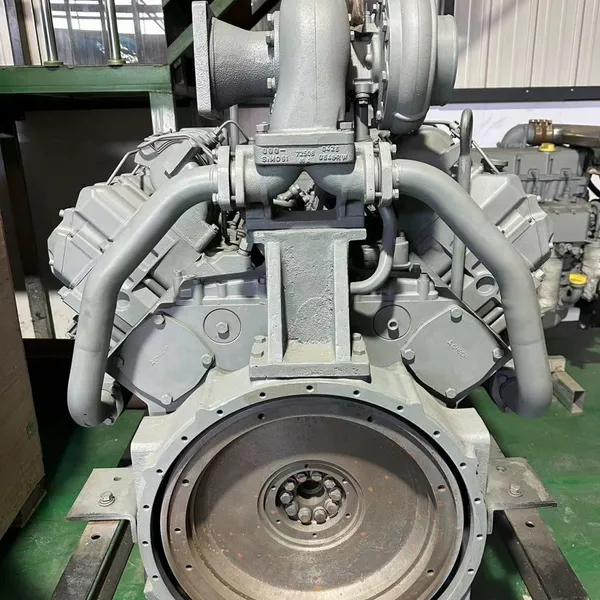 Read More

Contact Us
Recommended Products
-
 New 129 kW QSB6.7 Diesel Engine Excavator Construction Machinery Electric Start Water-Cooled Core Including Motor PumpUS$ 1888.00 - 3888.00MOQ: 1 Unit
-
Wholesale Diesel Engine Genuine 4 Stroke Direct Injection Doosan DL08 Engine for SaleUS$ 4558.00 - 4800.00MOQ: 1 Unit
-
Factory Price DOOSAN DL06 Construction Machinery Motor 6 Cylinder 115kw Water-Cooled With Core Components Engine and PumpUS$ 4752.00 - 5000.00MOQ: 1 Unit
-
Factory Price 4 Stroke 115kw Doosan DB58 Complete Engine Assy for Dx220 ExcavatorUS$ 3450.00 - 3650.00MOQ: 1 Unit
-
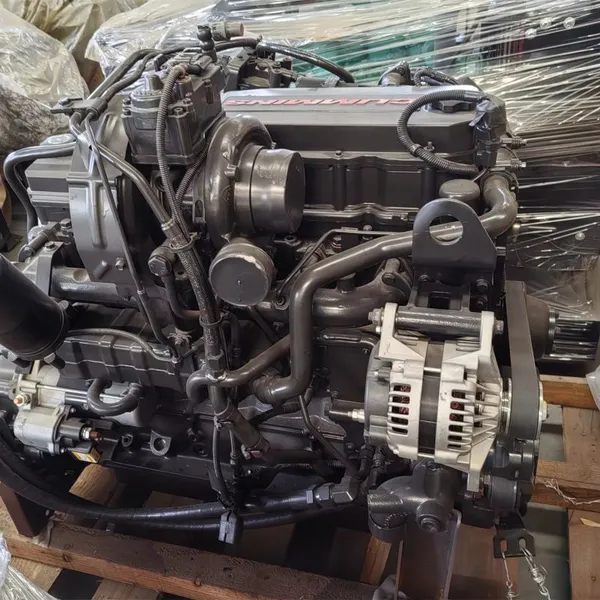
Factory Manufacture 123kw 4 Stroke Volvo D6e Machinery Engine for Construction MachineryUS$ 7500.00MOQ: 1 Unit
-
New BF6M2012C 4-stroke Original Water-cooled Diesel EngineUS$ 4500.00 - 5400.00MOQ: 1 Unit
-
Original Water Cooled 4 Stroke 6 Cylinder DEUTZ TCD2012062V Machinery EnginesUS$ 4888.00 - 5081.00MOQ: 1 Unit
-
Factory Outlet 6 Cylinder 250HP 2200rpm 6C8.3-C250 Construction Machinery Engines for CuminsUS$ 34627.00 - 36450.00MOQ: 1 Unit
-
1104D-44TA Diesel Engine 83kw New Water-Cooled Machine With Electric Start and Pump Good Price Per UnitUS$ 3700.00 - 4200.00MOQ: 1 Unit
-
Original Water Cooled 4 Stroke DEUTZ TCD 2013 L06 2V Machinery Engines for SaleUS$ 7070.00 - 7443.00MOQ: 1 Unit
-
Excavator Engine Assy QSL8.9 Complete Engine Assembly CUMMINS Qsl 9 Diesel EngineUS$ 4300.00 - 4600.00MOQ: 1 Unit
-
Genuine Vovo D4d EAE2 Diesel Engine for VOLVO EC140 ExcavatorNegotiableMOQ: 1 Unit
-
Factory Outlet 6 Cylinder 250HP 2200rpm 6C8.3-C250 Construction Machinery Engines for CuminsUS$ 4700.00 - 5100.00MOQ: 1 Unit
-
Good Price 153kw 4 Stroke Electric Start D7E Diesel Engine for Construction MachineryUS$ 8350.00MOQ: 1 Unit
-
WEICHAI 178kw 4 Stroke WD10G240E203 Diesel Engine for SEM660D SEM660B Wheel LoaderUS$ 3920.00 - 4127.00MOQ: 1 Unit
-
Dongfeng Shanghai SC11CB220G2B1 6-Cylinder Diesel Engine 162kw (220hp) SDEC 3306 New Condition Core Included Farm MachineryUS$ 6500.00MOQ: 1 Unit
-
ISUZU 4 Cylinder Diesel Engine 4BG1 Machinery Engines for Kobelco SK135 ExcavatorUS$ 6800.00MOQ: 1 Unit
-
130Hp Diesel Engine YC4D130 Yuchai Diesel Motor Price for TruckUS$ 3400.00 - 3600.00MOQ: 1 Unit
-
Shanghai SDEC SC9D220G2 162KW Diesel Engine for SEM922 SEM921 GraderUS$ 5320.00 - 5600.00MOQ: 1 Unit
-
Factory Outlet Sinotruk D1242 Engine Assembly for Construction IndustryUS$ 4615.00 - 4858.00MOQ: 1 Unit