
 Business License

Ocean Freight and Documentation for Doosan DL08 Engine Orders
An engine that had cleared export without difficulty sat at the destination port for eleven days while two documents were corrected, and the delay cost more than the freight on the crate. Nothing was wrong with the machine, and the shipment was held on paperwork alone.
Freight and documents are decided in the same week as the engine, and they are the parts of an order a buyer rarely inspects. That is exactly why they are worth settling in writing before the booking is made rather than after a vessel has sailed.
This article sets out how Doosan DL08 engine ocean freight is arranged, what DL08 engine documentation should contain, and which engine export documents a buyer should hold before the consignment leaves the port of loading.
1. Doosan DL08 Engine Ocean Freight: Booking the Shipment
Doosan DL08 engine ocean freight begins with a booking decision rather than a rate, because the freight terms shape every document that follows.
The first choices are the port of loading and the sailing. An engine of this size leaves from a small number of ports, and the sailing that suits a buyer is often set by the route rather than by the date. Pinbo Import and Export ships through Qingdao, Shanghai and Tianjin, which gives a buyer a choice of routes when a particular sailing matters.
The second choice is who arranges the freight. Under one arrangement the seller books the vessel and carries the cost to a named destination, and under another the buyer books it and takes control of the route. Each changes who holds the bill of lading and who answers a question at the destination.
A buyer should settle that point before the order is placed, because changing it later means reissuing documents that may already have been presented.
2. Doosan DL08 Engine Ocean Freight: Choosing the Container
Doosan DL08 engine ocean freight usually moves in a container, and the choice of container follows the unit and the packing rather than the rate.
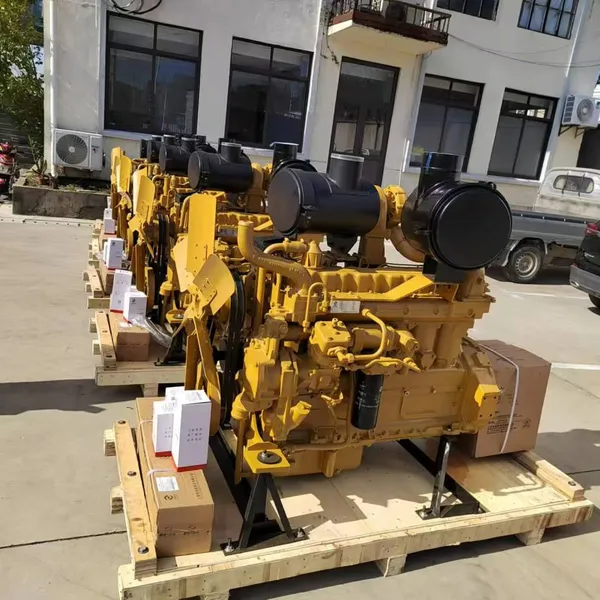
A complete engine on its base commonly travels in a standard container where the dimensions allow, and as a packed unit or break bulk where they do not. The decision turns on the height of the package on its skid, since a unit that stands above the door height cannot be loaded in one piece without special arrangement.
Partially stripped units travel more easily, because removing an external component brings the package back inside the envelope of a standard box. That is a decision with a consequence, since an engine shipped in pieces has to be reassembled at the destination rather than unloaded and run.
Where several units travel together, a full container reduces the number of times each crate is handled and lowers the risk of transit damage. Pinbo Power quotes the mode with the order and confirms the packing level with the buyer, because the two are decided together rather than one after the other.
3. DL08 Engine Documentation: The Set That Travels With the Unit
DL08 engine documentation should travel as one set rather than arriving in separate envelopes, because a document that reaches the destination late holds the cargo while it waits.
The set begins with the packing list, which should describe each item by engine number rather than by crate. That link is what allows a receiving team to match a box to a record without opening it, and it is the first thing a customs officer or a surveyor will ask for.
The commercial papers follow: the invoice, the contract reference and any document the buyer's bank requires under the agreed payment terms. Where payment runs through a letter of credit, the required list is decided by the credit and not by the seller, so it should be read before dispatch rather than after.
The transport document and the supporting papers complete the set. The table below sets the documents against the question each one answers.
| Document | Question it answers |
|---|---|
| Packing list by engine number | What is in each crate and which unit it is |
| Commercial invoice | What was sold and on what terms |
| Bill of lading | Who may claim the goods and where |
| Origin paperwork | Where the goods were produced |
| Insurance certificate | Who carries the risk in transit |
A set that answers all five questions from one file keeps a consignment moving when a port asks for something at short notice.
4. Engine Export Documents: Commercial Papers and the Bill of Lading
Engine export documents centre on the bill of lading, because that single paper controls who can collect the goods.
The bill names the shipper, the consignee and the port of discharge, and it is issued against the cargo once it is loaded. A buyer should confirm the consignee details and the description of the goods before the vessel sails, since a correction after loading is slow and, on some routes, not possible without reissuing the document.
The description on the bill should match the invoice and the packing list in wording as well as in figure. A difference between the three is the most common reason a consignment is held for inspection, and it is a difference that costs nothing to avoid.
Where the goods move under a negotiable bill, the original set has to reach the buyer in time to present it. That is a timing question rather than a wording one, and it is one reason a buyer should confirm the payment terms and the document route together before dispatch.
5. Engine Export Documents: Origin and Insurance Papers
Engine export documents also include the supporting papers that a customs authority or a bank may ask for, and these are the ones most often left until the last week.
A certificate of origin states where the goods were produced, and its form and its issuer depend on the destination market. Some markets require a specific format for a tariff preference, and a document in the wrong format is treated as absent.
Insurance follows the agreed terms. Where the risk passes at the port of loading, the buyer usually arranges cover, and where it passes at the destination the seller usually does. Whichever applies, the cover should be in place before the vessel sails rather than before the crate is opened.
Any inspection or test record taken before dispatch belongs in the same file, since a buyer at a distance has that record in place of a visit. Pinbo Import and Export prepares that material alongside the papers so the two move together from the warehouse.
6. DL08 Engine Documentation: Linking the Number to the File
DL08 engine documentation earns its value at the point where a number on a paper has to be matched to a number on a plate.
The engine number is the thread that runs through the whole set. It appears on the plate, on the packing list, on the dispatch photographs and on the internal record, and where it is carried consistently a later question can be answered without a search.
A file built around that number also supports a claim when one is raised. Photographs of the unit on its base, the bracing in place and the crate sealed show what left the warehouse, and a receiving team that holds those images can compare condition on arrival rather than from memory.
Keeping the number consistent is a small discipline with a large effect. Jining Pinbo Import and Export Co Ltd holds the file against the order number and the engine number together, so a question raised a season later is answered against the unit that was shipped.
7. Doosan DL08 Engine Ocean Freight: Terms and Risk
Doosan DL08 engine ocean freight is governed by the terms of sale, and those terms decide where the risk sits and who pays for each stage.
The common arrangements pass the risk at the port of loading, at the port of discharge or at the buyer's premises, and each carries a different set of costs and responsibilities. A buyer should read the term as a division of tasks rather than as a price, since the same price can sit under two different arrangements.
The point where risk passes should match the insurance cover that has been arranged. A gap between the two leaves a period in which the goods are travelling uninsured, and that gap usually appears at the point a claim is made.
Terms also decide who clears the goods at each end. Import clearance and the duties that follow belong to the buyer in most arrangements, and a buyer who has not appointed a clearing agent before the vessel sails will find the consignment waiting at a cost it does not control.
8. Engine Export Documents: Clearance at the Destination
Engine export documents finish their work at the destination, where a missing paper decides how long a consignment sits and who pays for the delay.
Import clearance needs the transport document, the commercial invoice, the packing list and whatever origin or insurance papers the market requires. A complete set presented at once clears faster than a set assembled in stages, because each gap stops the process until it is closed.
Storage charges at the destination accumulate against the consignee from the day the cargo lands, and they rise by the day. That is why the document route matters as much as the document list, since a set that is complete but late produces the same cost as a set that is incomplete.
Pinbo Power sends a scanned copy of the full set to the buyer at dispatch, which lets the receiving team prepare the clearance in advance and confirm the documents are as expected before the vessel arrives.
9. Frequently Asked Questions
9.1 How is Doosan DL08 engine ocean freight arranged?
Doosan DL08 engine ocean freight is arranged by choosing the port of loading, the sailing and the party that books the vessel, and those three decisions belong before the order is confirmed. An engine of this size leaves from a limited number of ports, so the route often sets the date rather than the other way round. Whether the seller or the buyer books the freight changes who holds the bill of lading and who answers a question at the destination. Changing that arrangement afterwards means reissuing documents that may already have been presented.
9.2 What should DL08 engine documentation contain?
DL08 engine documentation should travel as one set and should contain the packing list, the commercial invoice, the transport document, any origin or insurance papers the destination requires, and the internal dispatch record. The packing list should describe items by engine number rather than by crate, so a receiving team can match a box to a record without opening it. Where payment runs through a letter of credit, the list of required documents is set by the credit, and it should be read before dispatch rather than after.
9.3 Which engine export documents cause the most delays when they are wrong?
Engine export documents cause most delays when the bill of lading is issued with details that do not match the invoice and the packing list. A difference in the description of the goods or in a figure is the commonest reason a consignment is held for inspection, and it is a difference that costs nothing to avoid. Origin paperwork in the wrong format for the destination market is the second cause, since a document that does not match the required form is treated as absent. Confirming all three before the vessel sails prevents both.
9.4 Who carries the risk during transit?
The party carrying the risk during transit is set by the terms of sale rather than by the freight rate. Common arrangements pass the risk at the port of loading, at the port of discharge or at the buyer's premises, and each divides the tasks differently. The point where risk passes should match the insurance cover that has been arranged, because a gap between the two leaves goods travelling uninsured. That gap usually appears at the point a claim is made, which is why the terms and the cover are read together before dispatch.
Recently Posted
-
Warranty and After-Sales Support for Doosan DL06 Engines
November 17, 2026A fleet submitted a claim on an engine that had failed inside the stated period and had the claim refused, not because the failure Read More
-
Spare Parts Availability and Lead Times for DEUTZ F3L912 Engines
November 17, 2026A workshop ordered a fan belt for an air cooled engine and waited three weeks for a part it had expected in three days. When the i Read More
-
Export Packing and Shipping for DEUTZ BF6M1015 Engines
November 16, 2026A pump station took delivery of an engine that looked sound on the outside of the crate and had a rusted cylinder bore inside it. Read More
-
Quality Inspection Points for 6CTA8.3-C260 Engine Shipments
November 16, 2026An engine that had passed every bench check arrived at a port after six weeks in a container and would not turn over. The cranksha Read More

Contact Us
Recommended Products
-
 New 129 kW QSB6.7 Diesel Engine Excavator Construction Machinery Electric Start Water-Cooled Core Including Motor PumpUS$ 1888.00 - 3888.00MOQ: 1 Unit
-
Wholesale Diesel Engine Genuine 4 Stroke Direct Injection Doosan DL08 Engine for SaleUS$ 4558.00 - 4800.00MOQ: 1 Unit
-
Factory Price DOOSAN DL06 Construction Machinery Motor 6 Cylinder 115kw Water-Cooled With Core Components Engine and PumpUS$ 4752.00 - 5000.00MOQ: 1 Unit
-
Factory Price 4 Stroke 115kw Doosan DB58 Complete Engine Assy for Dx220 ExcavatorUS$ 3450.00 - 3650.00MOQ: 1 Unit
-
Factory Manufacture 123kw 4 Stroke Volvo D6e Machinery Engine for Construction MachineryUS$ 7500.00MOQ: 1 Unit
-
New BF6M2012C 4-stroke Original Water-cooled Diesel EngineUS$ 4500.00 - 5400.00MOQ: 1 Unit
-
Original Water Cooled 4 Stroke 6 Cylinder DEUTZ TCD2012062V Machinery EnginesUS$ 4888.00 - 5081.00MOQ: 1 Unit
-
Factory Outlet 6 Cylinder 250HP 2200rpm 6C8.3-C250 Construction Machinery Engines for CuminsUS$ 34627.00 - 36450.00MOQ: 1 Unit
-
1104D-44TA Diesel Engine 83kw New Water-Cooled Machine With Electric Start and Pump Good Price Per UnitUS$ 3700.00 - 4200.00MOQ: 1 Unit
-
Original Water Cooled 4 Stroke DEUTZ TCD 2013 L06 2V Machinery Engines for SaleUS$ 7070.00 - 7443.00MOQ: 1 Unit
-
Excavator Engine Assy QSL8.9 Complete Engine Assembly CUMMINS Qsl 9 Diesel EngineUS$ 4300.00 - 4600.00MOQ: 1 Unit
-
Genuine Vovo D4d EAE2 Diesel Engine for VOLVO EC140 ExcavatorNegotiableMOQ: 1 Unit
-
Factory Outlet 6 Cylinder 250HP 2200rpm 6C8.3-C250 Construction Machinery Engines for CuminsUS$ 4700.00 - 5100.00MOQ: 1 Unit
-
Good Price 153kw 4 Stroke Electric Start D7E Diesel Engine for Construction MachineryUS$ 8350.00MOQ: 1 Unit
-
WEICHAI 178kw 4 Stroke WD10G240E203 Diesel Engine for SEM660D SEM660B Wheel LoaderUS$ 3920.00 - 4127.00MOQ: 1 Unit
-
Dongfeng Shanghai SC11CB220G2B1 6-Cylinder Diesel Engine 162kw (220hp) SDEC 3306 New Condition Core Included Farm MachineryUS$ 6500.00MOQ: 1 Unit
-
ISUZU 4 Cylinder Diesel Engine 4BG1 Machinery Engines for Kobelco SK135 ExcavatorUS$ 6800.00MOQ: 1 Unit
-
130Hp Diesel Engine YC4D130 Yuchai Diesel Motor Price for TruckUS$ 3400.00 - 3600.00MOQ: 1 Unit
-
Shanghai SDEC SC9D220G2 162KW Diesel Engine for SEM922 SEM921 GraderUS$ 5320.00 - 5600.00MOQ: 1 Unit
-
Factory Outlet Sinotruk D1242 Engine Assembly for Construction IndustryUS$ 4615.00 - 4858.00MOQ: 1 Unit