
 Business License

Packing and Dispatch for Compact Kubota V3300 Engines
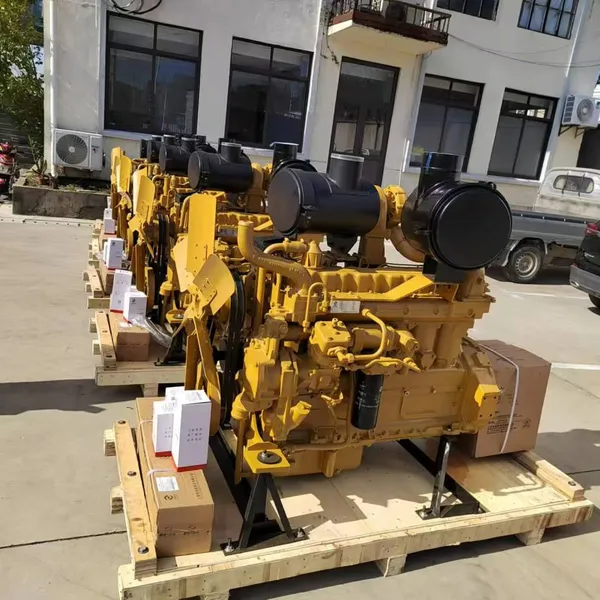
A compact industrial engine travels differently from a large one, and Kubota V3300 engine packing is shaped by that difference. A unit of this size weighs little enough to be moved by a small forklift, lifted by hand on a pallet, and packed with other goods in a groupage container, and those three facts change what a case has to do. This page sets out how a unit is protected, how a V3300 engine dispatch is prepared, and what makes a compact engine export crate different from a case built for a machine several times the weight.
The engine itself is the four cylinder industrial diesel described elsewhere in this series, and the packing question is simple to state: keep moisture away, keep the unit from moving, and make the contents findable at the other end. Pinbo Power treats the case as part of the product for that reason, because a sound engine in a failed case arrives as a damaged engine.
1. Kubota V3300 Engine Packing: Why a Small Unit Is Packed Differently
Weight decides most of it. A unit of this class can be handled with modest equipment, so the case does not need to carry the mass that a large engine demands. What the case does need to carry is protection against the journey, and a light case travelling in a shared container meets more handling events than a heavy one shipped on its own.
Shared space is the second fact. A compact engine is often consolidated with other goods, which means it is loaded and unloaded more than once, transferred between vehicles, and stored in a groupage terminal between legs. Each of those events is a chance for a case to be set down hard, stood on its side or buried under something heavier.
Value density is the third. A compact engine occupies little space for its worth, which makes it easy to handle and equally easy to lose inside a consolidated shipment. Marking and documentation therefore carry more weight than they do on a large unit, where the crate announces itself.
2. V3300 Engine Dispatch: Weight, Handling and the Case for Consolidation
A V3300 engine dispatch can take one of two shapes, and the choice is made on the buyer's needs rather than on cost alone. A unit can travel in its own case on a dedicated booking, or it can share a container with other goods on the same route.
| Dispatch shape | What it suits | What the buyer has to accept |
|---|---|---|
| Own case, dedicated booking | A single unit needed by a known date | A higher freight figure for the space used |
| Consolidated container | One or two units alongside other goods | More handling and a schedule set by the group |
| Case packed with spares | A first order for a machine going into service | Careful separation of parts inside one case |
The weight of a unit in this class makes the first option affordable rather than extravagant, and the second option workable rather than risky. What decides between them is usually the date the engine is needed and the amount of other cargo moving that way in the same month.
Consolidation brings a discipline of its own. A case that shares a container has to survive the handling of everyone else's freight as well as its own, and it has to be identifiable from the outside without being opened. A buyer who accepts consolidation accepts a schedule set by others and a unit that may be moved several times before it reaches its destination. A V3300 engine dispatch arranged in that order usually arrives on the date the buyer expected rather than on the date the vessel happened to load.
3. Compact Engine Export Crate: Keeping Moisture and Rust Away
Moisture is the first enemy of a compact engine in transit, and a compact engine export crate has to deal with more of it than its size suggests. A sea voyage passes through warm and cold air in turn, and every change in temperature produces condensation on surfaces that were colder than the air around them.
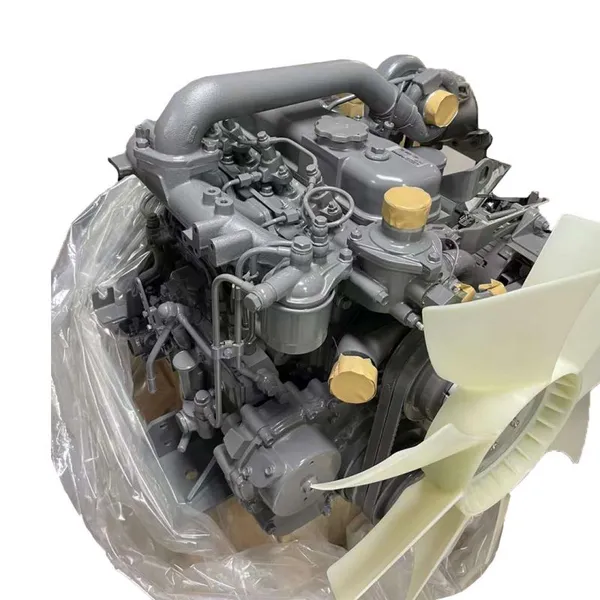
The answer has three parts. The case is lined or the unit is bagged so that the engine does not sit in moving air, the space inside is controlled with a desiccant rather than left open, and the machined surfaces are protected with a coating that can be removed at the other end. Taking any one of the three away leaves the other two doing more work than they were chosen for.
The parts that suffer first are the exposed ones: the flywheel face, the coupling, the shaft ends and any unpainted machined surface. Those are also the surfaces a fitter measures and touches first on arrival, so damage there is noticed immediately and repairs are visible to everyone in the workshop.
Ventilation openings deserve a thought as well. A case sealed completely and a case left open both create problems, and the usual answer is a case that can breathe through a filtered opening rather than one that is airtight. The choice belongs to whoever packs regularly on a route, since the right answer depends on the route and the season. A compact engine export crate is judged at the other end by how the unit looks when it is opened rather than by how solid it felt when it closed.
4. V3300 Engine Dispatch: Securing the Unit Inside the Case
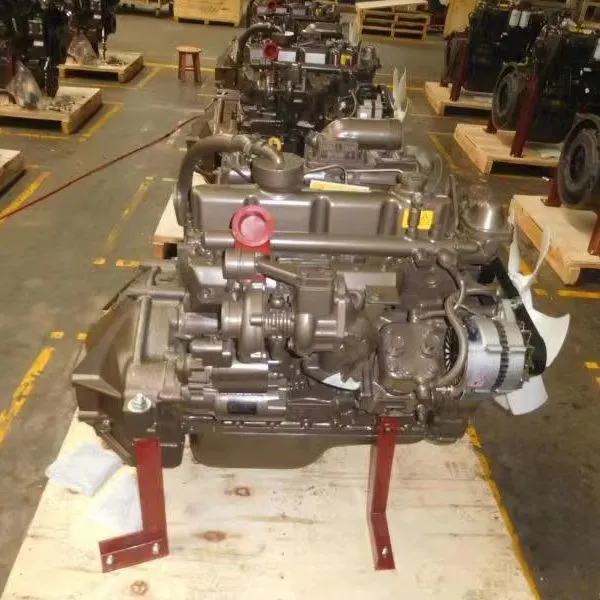
Securing a compact engine is a question of stopping small movements rather than of holding great weight. The unit is blocked at its mounting feet, restrained against travel along and across the case, and prevented from turning on its own axis, since a case that is tilted once will let a single loose unit shift.
The points that touch the engine matter as much as the blocking itself. Packing timber bears against a casting rather than against a pipe, a sensor or an injection line, and anything that cannot take a load is either removed and packed separately or protected by a clearance. A case that grips the engine firmly and still crushes a fitting has failed at the second job while passing the first.
Loose items inside the case are the other half of the work. Tools, gaskets, filters and small parts travel in a separate inner box fixed to the case rather than resting beside the engine, and anything that can move belongs in that box rather than in the space around the unit.
5. Kubota V3300 Engine Packing: The Small Parts and Consumables List
Compact engine packing usually includes more than the engine. A first order for a machine going into service often travels with the filters for the first service, gaskets for the connections that will be made, and the small items that a workshop would otherwise have to source separately.
That list should be agreed before packing rather than assembled during it. Each item has to be named, counted and placed, and the person at the receiving end has to be able to check the list against what is in the case without dismantling the packing to do so.
The consumables deserve a line of their own, because they are easy to add and easy to forget. Coolant, lubricant, sealant and the protective coating used on machined surfaces are not part of the engine, and a workshop that receives a unit with no note of what was applied has to guess what to remove before it starts. A short note inside the case removes that guess.
Jining Pinbo Import and Export Co Ltd lists those items against the order number rather than relying on a packing memory, so the record of what travelled and the record of what was ordered can be compared from one sheet when a question is raised later.
6. Compact Engine Export Crate: Marks, Labels and the Two-Consignee Case
Marks on a compact engine case do more work than marks on a large crate, because the case may be handled several times before it is opened. The shipping marks, the case number, the weight and the destination have to be legible from a distance and again after a wet passage across a quay.
One situation deserves special attention. A single case occasionally carries goods for two receiving parties, usually because a machine builder and its end customer are both waiting on the same shipment. Where that happens, the case has to be marked with both identities, the contents have to be separated inside it, and the documents have to show clearly which items belong to whom.
The separation can be done with an inner divider, a labelled inner box and a clear content list on the outside of the case. What it cannot be done with is a note inside the lid, because a lid note is found after everything has been unpacked and the point has been lost.
A case carrying two consignees is also a case with two chances of a customs question, and the paperwork has to support the split rather than explain it later. Settling that at the packing stage costs a little time and prevents a delay that would otherwise be argued at a port.
7. V3300 Engine Dispatch: What Is Checked Before the Case Closes
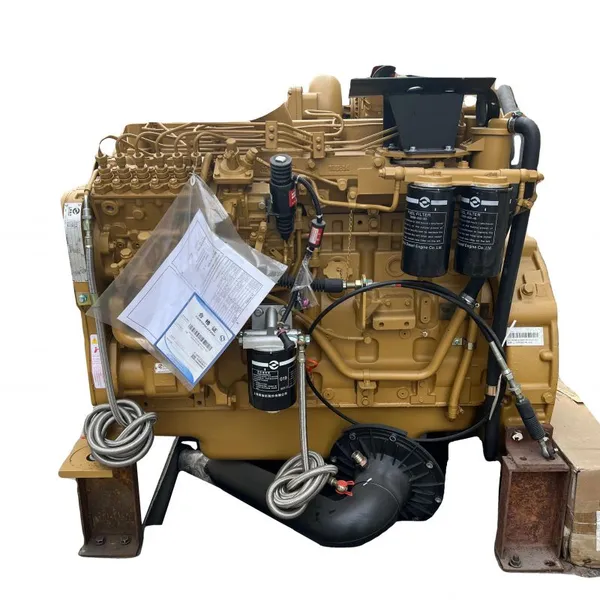
A dispatch check is short and specific. The engine is matched against its order, the identification on the plate is compared with the file, the accessories in the inner box are counted against the list, and the protective coating and the desiccant are confirmed to be in place.
Photographs belong to that check. Images of the unit in the case before the lid goes on, of the marks recorded against the case number, and of the closed case show what was dispatched in a way that a description cannot, and they resolve most questions raised at the other end without an argument.
The last item is the paperwork. The commercial documents, the packing list and the record of the check should travel in a form the buyer can hold, and a copy kept by the supplier should be filed against the order number. A dispatch that closes without those three is complete at the gate and incomplete as a record. V3300 engine dispatch is checked against that file at Pinbo Power for the same reason, so the note of what travelled matches the note of what was ordered.
8. Kubota V3300 Engine Packing: Opening the Case at the Other End
The receiving check mirrors the dispatch check, and it takes place before the case and the packing are thrown away. The unit is compared against the packing list, the visible condition is recorded with photographs, and any discrepancy is raised while the evidence still exists.
The packing itself should be kept until the check is complete. A crate and its inner packing are what allow a supplier to trace how a unit travelled, and a buyer who disposes of them on the day of arrival has removed the evidence that a claim would rest on. Pinbo Import and Export asks buyers to hold them until the check is signed off for that reason.
The final step is practical rather than administrative. Removing the protective coating, fitting the unit into its machine, and recording the release on the engine against the machine file are what turn a delivered case into a working installation, and doing those three in one session is easier than returning to them a week later.
9. Frequently Asked Questions
9.1 Why is Kubota V3300 engine packing handled differently from large units?
Weight and handling explain most of it. A unit of this class can be moved by a small forklift and packed alongside other goods, so it is frequently consolidated and therefore loaded and unloaded more than once. That exposes the case to more handling events than a heavy unit shipped alone, and it makes marking and identification more important because the case can be lost inside a shared container. The protection itself stays simple: keep moisture out, keep the unit from moving, and make the contents findable and checkable at the other end.
9.2 How should a V3300 engine dispatch be arranged?
It should be arranged around the date the engine is needed rather than around cost alone. A unit can travel in its own case on a dedicated booking, which suits a single engine needed by a known date, or it can share a container with other goods, which suits one or two units moving in a month with other cargo. Where an order includes first service spares, a third shape applies, with the parts separated inside one case. The right choice depends on the schedule and the volume moving towards the same destination.
9.3 What does a compact engine export crate have to protect against?
It has to protect the unit against moisture, movement and handling. A sea passage produces condensation as air temperatures change, so the crate either bags or lines the engine, controls the space with a desiccant and protects the machined surfaces with a coating that can be removed later. The unit is blocked at its mounting feet and restrained against travel in every direction, with anything that cannot take a load removed and packed separately. Marks matter as well, because a case in a shared container is handled repeatedly before it is opened.
9.4 What should happen inside a crate that carries two consignees?
It should be documented and physically separated before the lid goes on. A case carrying goods for two receiving parties needs both identities on the outside, a divider or labelled inner box that keeps the two sets apart, and a content list positioned so it is read before unpacking rather than after. The customs paperwork has to support the split as well, since a case with two owners has two chances of a question at a port. Settling all of that at the packing stage costs minutes and removes a delay that would otherwise be argued at the destination.
Recently Posted
-
Supply Chain and Stock Planning for VOLVO D7E Engines
November 19, 2026VOLVO D7E engine stock planning begins with a fact that fleets accept slowly: a spare part and a complete engine are two different Read More
-
Warehouse Readiness and Spare Stock for KTTA19-C700 Series
November 19, 2026A KTTA19-C700 engine spare stock question sounds like a question about shelves, and it is really a question about arithmetic. A ni Read More
-
Inspection and Test Records for KTTA19-C700 Engines
November 18, 2026A buyer received a nineteen litre engine with nothing in the crate beyond a packing list and asked for the run note taken before d
Read More -
Warranty Terms and Service Support for KTA38-M2 Marine Engines
November 18, 2026A vessel suffered a bearing failure within the first months of service and the claim that followed took far longer to settle than Read More

Contact Us
Recommended Products
-
 New 129 kW QSB6.7 Diesel Engine Excavator Construction Machinery Electric Start Water-Cooled Core Including Motor PumpUS$ 1888.00 - 3888.00MOQ: 1 Unit
-
Wholesale Diesel Engine Genuine 4 Stroke Direct Injection Doosan DL08 Engine for SaleUS$ 4558.00 - 4800.00MOQ: 1 Unit
-
Factory Price DOOSAN DL06 Construction Machinery Motor 6 Cylinder 115kw Water-Cooled With Core Components Engine and PumpUS$ 4752.00 - 5000.00MOQ: 1 Unit
-
Factory Price 4 Stroke 115kw Doosan DB58 Complete Engine Assy for Dx220 ExcavatorUS$ 3450.00 - 3650.00MOQ: 1 Unit
-
Factory Manufacture 123kw 4 Stroke Volvo D6e Machinery Engine for Construction MachineryUS$ 7500.00MOQ: 1 Unit
-
New BF6M2012C 4-stroke Original Water-cooled Diesel EngineUS$ 4500.00 - 5400.00MOQ: 1 Unit
-
Original Water Cooled 4 Stroke 6 Cylinder DEUTZ TCD2012062V Machinery EnginesUS$ 4888.00 - 5081.00MOQ: 1 Unit
-
Factory Outlet 6 Cylinder 250HP 2200rpm 6C8.3-C250 Construction Machinery Engines for CuminsUS$ 34627.00 - 36450.00MOQ: 1 Unit
-
1104D-44TA Diesel Engine 83kw New Water-Cooled Machine With Electric Start and Pump Good Price Per UnitUS$ 3700.00 - 4200.00MOQ: 1 Unit
-
Original Water Cooled 4 Stroke DEUTZ TCD 2013 L06 2V Machinery Engines for SaleUS$ 7070.00 - 7443.00MOQ: 1 Unit
-
Excavator Engine Assy QSL8.9 Complete Engine Assembly CUMMINS Qsl 9 Diesel EngineUS$ 4300.00 - 4600.00MOQ: 1 Unit
-
Genuine Vovo D4d EAE2 Diesel Engine for VOLVO EC140 ExcavatorNegotiableMOQ: 1 Unit
-
Factory Outlet 6 Cylinder 250HP 2200rpm 6C8.3-C250 Construction Machinery Engines for CuminsUS$ 4700.00 - 5100.00MOQ: 1 Unit
-
Good Price 153kw 4 Stroke Electric Start D7E Diesel Engine for Construction MachineryUS$ 8350.00MOQ: 1 Unit
-
WEICHAI 178kw 4 Stroke WD10G240E203 Diesel Engine for SEM660D SEM660B Wheel LoaderUS$ 3920.00 - 4127.00MOQ: 1 Unit
-
Dongfeng Shanghai SC11CB220G2B1 6-Cylinder Diesel Engine 162kw (220hp) SDEC 3306 New Condition Core Included Farm MachineryUS$ 6500.00MOQ: 1 Unit
-
ISUZU 4 Cylinder Diesel Engine 4BG1 Machinery Engines for Kobelco SK135 ExcavatorUS$ 6800.00MOQ: 1 Unit
-
130Hp Diesel Engine YC4D130 Yuchai Diesel Motor Price for TruckUS$ 3400.00 - 3600.00MOQ: 1 Unit
-
Shanghai SDEC SC9D220G2 162KW Diesel Engine for SEM922 SEM921 GraderUS$ 5320.00 - 5600.00MOQ: 1 Unit
-
Factory Outlet Sinotruk D1242 Engine Assembly for Construction IndustryUS$ 4615.00 - 4858.00MOQ: 1 Unit