
 Business License

VOLVO D8H Engine Specifications and Torque Characteristics
VOLVO D8H engine specifications carry a section that buyers skim and engineers read twice. It is the block of figures describing how much turning effort the unit can deliver and at which speeds it delivers it, and almost every practical judgement about a machine rests on it. A single torque number taken from that block tells a reader almost nothing, and the surrounding entries are what give it meaning.
This article reads the torque side of the sheet. It shows how the figures lock together, marks the two speeds that frame the useful band, explains torque rise as a proportion rather than as an adjective, follows the curve into the driveline, and sets out what a D8H torque characteristics table leaves to the installation. The unit the figures describe is a six cylinder, liquid cooled industrial diesel of roughly eight litres, turbocharged with the compressed air brought down in temperature before it reaches the manifold.
Three readers find the material useful. One is comparing two offers for the same machine, one is selecting a unit against a duty that includes grades or sudden loads, and one is checking whether an existing installation can accept a replacement of the same family. Pinbo Power keeps the duty description beside every curve it discusses, because a torque figure quoted without its speed is an entry without an address.
1. VOLVO D8H Engine Specifications: Three Figures That Lock Together
Power, torque and speed are three views of one quantity, and the arithmetic that joins them is fixed. Power is turning effort multiplied by rotational speed and scaled by a constant, so a figure for any two of the three determines the third. That relationship is why a sheet can look inconsistent while being entirely correct.
The practical consequence is that a rated figure is a point rather than a property. It belongs to a named speed, an ambient condition and a duty class, and moving any of those moves the point. A table that lists output alone has published one coordinate of a graph and left the reader to guess the rest.
Two entries beside the rating therefore deserve equal attention. The first is the speed at which the figure is quoted, and the second is the duty class the rating belongs to. A continuous rating carries a promise about hours and is set below an intermittent one on the same hardware.
Reading the three together is what allows a VOLVO D8H engine specifications sheet to be compared with another sheet at all. Pinbo Import and Export asks which rating class a quoted figure came from before it answers a comparison, since two entries of one family can differ in their class rather than in their quality.
2. D8H Torque Characteristics: The Two Speeds That Define the Band
A torque curve is read at two speeds, and the pair frames everything between them. The first is the speed at which the unit produces its rated power, which is normally the top of the useful range. The second is the speed at which the greatest turning effort appears, which sits lower and usually falls somewhere in the middle of the band.
The gap between those two speeds is the working band, and it is the region a machine lives in. A driveline is arranged so that the engine holds a speed inside that band under normal load, which places the whole of ordinary operation between the two marks rather than at either of them.
| Entry on the sheet | What it marks | How it is used |
|---|---|---|
| Rated speed | The top of the useful band | Sets where the rated output is quoted |
| Speed at peak effort | Where the greatest turning effort arrives | Sets the point the machine falls back to under a step in load |
| Band between them | The range ordinary work occupies | Sets how much drop in speed a load step costs |
A D8H torque characteristics table read in that way answers a practical question rather than an academic one. It shows how far a machine will fall back when a load arrives and how quickly it can return, which is what an operator feels in the seat.
3. VOLVO D8H Technical Data: Torque Rise Written as a Percentage
Torque rise is the difference between the effort available at the low speed and the effort available at the rated point, and it is most useful when written as a proportion. Divide the peak figure by the figure at rated speed and the result describes how much extra effort the unit holds in hand, expressed without units.
That proportion is comparable across engines of different sizes, which is why it belongs in a specification discussion. A unit whose effort barely changes across the band will lose speed sharply when a load steps up, while one with a wider rise will pull through the same event with less disturbance to the machine.
The number is a design property rather than a setting. It comes from the breathing of the engine, the match of the charger, the shape of the combustion chamber and the way fuel is mapped against speed. Within one family the proportion can vary between releases prepared for different duties, which is why the entry belongs with the build rather than with the name.
A VOLVO D8H technical data sheet that gives both figures allows the calculation to be made by the reader, and a sheet that gives one of them leaves the shape of the curve to be guessed.
4. D8H Torque Characteristics: What a Driveline Reads From the Curve
The driveline is where a torque curve turns into behaviour, and three items read it directly. The first is the coupling at the flywheel end, whether a torque converter, a clutch or a direct drive to a pump. A converter multiplies effort at low output speed and therefore changes what the curve delivers at the wheels.
The second is the ratio spread of the transmission, since the gap between successive steps decides how far the engine falls when a gear change occurs. A wide rise in the curve allows a wider spread, and a flat curve asks for closer steps.
The third is the final drive, which trades speed for effort across the whole machine. Those three together decide whether the engine operates near the middle of its band or spends its time at one end of it.
A D8H torque characteristics reading made without them describes the engine alone. The same unit in two machines with different drivelines will feel like two different engines, and the curve is the common factor rather than the cause.
5. VOLVO D8H Technical Data: The Governing and Injection Entries Behind the Shape
The shape of the curve is produced by two systems working together, and both appear on the sheet in abbreviated form. The governing arrangement decides how the engine responds when load changes. A unit set to hold a fixed speed defends that speed closely, while one set to follow a load is allowed to fall back and recover.
The injection entries decide where the effort is available. The quantity delivered per cycle at each speed, the pressure at which it is delivered and the way the calibration is mapped together place the peak and set how flat the curve is either side of it.
Those entries explain why two units of one block can carry different characteristics without any change to the castings. A build prepared for a machine that meets sudden loads is set differently from one prepared for a steady drive, and the difference appears in the shape rather than in the maximum figure.
A VOLVO D8H technical data sheet is therefore a description of a setting as much as of a structure, and Pinbo Import and Export treats the build number as part of the answer for that reason.
6. D8H Torque Characteristics: Load Acceptance and the Governor's Response
Load acceptance is the time a unit takes to reach a share of its rated output after a demand appears, and it is a property of the whole arrangement rather than of the block. A machine that asks for full load instantly meets the governor, the fuel system and the air side at the same moment, and each of them contributes a delay.
The turbocharged arrangement influences the result, because air has to arrive before fuel can be burned usefully. A unit held at a speed where the charger is already turning well responds quickly, while one asked to accept a load from idle has to build pressure first.
This is why a D8H torque characteristics discussion belongs beside the duty rather than on its own. A machine that loads gradually is served by a curve of one shape, and a machine that meets sudden demands is served by another, and the governing arrangement decides how closely either behaves as the sheet suggests.
Testing load acceptance in service is straightforward when the machine is available: apply the load, time the recovery and record the speed drop. That record is worth more than any adjective about responsiveness.
7. VOLVO D8H Technical Data: Where the Sheet Stops and the Machine Begins
A published figure is produced under reference conditions, and a machine does not work under reference conditions. The air it breathes passes through a filter and ducting, the exhaust leaves through a system the builder routed, and the cooling package is sized to the bay rather than to the bench.
Two corrections are worth making on paper before an order. The first is for the site, since altitude and ambient heat reduce the mass of air the unit can draw and therefore the output it can hold. The second is for the accessories, since a fan, an alternator and a compressor all take effort from the crankshaft before it reaches the driven equipment.
Support completes the picture. A curve is of limited use to a fleet that cannot obtain a part or a tool for the build it describes, and the distance to that support belongs in the same assessment as the figures.
The useful move is to keep the sheet and the machine description side by side rather than to treat the sheet as an answer. Jining Pinbo Import and Export asks for the site conditions with the enquiry, because a figure read at sea level and applied at altitude overstates what a unit will do.
8. D8H Torque Characteristics: Recording a Curve With Its Conditions
A curve is worth recording with four entries beside it, and the habit saves arguments later. The first is the rating class the figures belong to, and the second is the speed at which each of them is quoted. The third is the build or release number the unit carries, and the fourth is the date and the condition under which the figures were taken.
Those entries matter most when a machine changes hands or when a fleet compares two units that were bought years apart. A figure without them can be matched to the wrong build, and a comparison made on that basis can lead to an order for a unit that behaves differently from the one it is replacing.
There is a second use for the same record. If the site records its own speed and load readings at intervals, the difference between the published curve and the working curve becomes visible, and that difference is the correction the installation actually imposes.
A D8H torque characteristics file kept in that form becomes the basis for a replacement decision rather than a description of the past. Jining Pinbo Import and Export Co Ltd files the rating class and the release beside each order for that reason.
9. Frequently Asked Questions
9.1 How should VOLVO D8H engine specifications be read for torque?
Read the figures in groups rather than one at a time. Start with the rated output and the speed it is quoted at, then take the speed where the greatest turning effort arrives, then the duty class both entries belong to. Power, torque and speed are three views of one quantity, so any two of them fix the third and a single number cannot be interpreted alone. A buyer who collects those entries for two units will find the comparison settles itself more often than not.
9.2 What do D8H torque characteristics actually describe?
They describe how much turning effort the unit can deliver and at which speeds it delivers it. The useful content sits between two marks: the speed at which rated power appears and the speed at which the greatest effort appears. The band between them is where ordinary work takes place, and its width decides how far a machine falls back when a load steps up. A single peak figure hides that width, which is why the shape matters more than the maximum.
9.3 What does VOLVO D8H technical data leave to the installation?
It leaves the corrections and the environment. A published figure is taken under reference conditions, while a machine adds intake resistance, an exhaust route and a cooling package sized to its own bay. Altitude and ambient heat reduce the air the unit can draw, and a fan, an alternator and a compressor take effort before it reaches the driven equipment. Support belongs in the same list, since a curve is of limited use to a fleet that cannot obtain a part for the build it describes.
9.4 Why is torque rise expressed as a percentage?
A percentage makes the entry comparable between engines of different sizes, which a pair of torque figures cannot do on its own. Divide the effort available low in the range by the effort at the rated point and the result describes the margin the unit holds without naming a unit of measurement. A wider margin lets a machine absorb a sudden load with less loss of speed, and it allows a wider spread between transmission steps. The proportion is a property of the build rather than a setting, so it belongs beside the release number.
Recently Posted
-
DEUTZ BF6M1015 Engines in Generator Sets: Sizing for Industrial Sites
November 6, 2026A processing plant in Africa installed a generator set to carry a mill and a pump station, and the machine ran well for a month be Read More
-
6CTA8.3-C260 Engines in Wheel Loaders: Field Notes from South America
November 6, 2026A loader at a high altitude mine site in South America came off a lowland job and went straight into service at roughly 4,000 metr Read More
-
VOLVO D7E Engine Specifications and Emissions Standards
November 5, 2026A VOLVO D7E engine specifications sheet carries one row that buyers skim and later discover they needed. It records the stage the Read More
-
Kubota V3300 Engine Specifications and Performance Data
November 5, 2026A buyer once asked for a Kubota V3300 engine specifications sheet and read the top third of it. The figure he came for was there,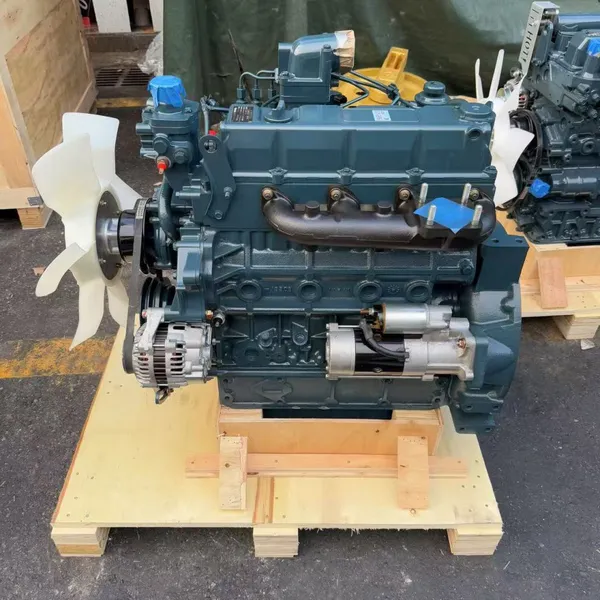 Read More

Contact Us
Recommended Products
-
 New 129 kW QSB6.7 Diesel Engine Excavator Construction Machinery Electric Start Water-Cooled Core Including Motor PumpUS$ 1888.00 - 3888.00MOQ: 1 Unit
-
Wholesale Diesel Engine Genuine 4 Stroke Direct Injection Doosan DL08 Engine for SaleUS$ 4558.00 - 4800.00MOQ: 1 Unit
-
Factory Price DOOSAN DL06 Construction Machinery Motor 6 Cylinder 115kw Water-Cooled With Core Components Engine and PumpUS$ 4752.00 - 5000.00MOQ: 1 Unit
-
Factory Price 4 Stroke 115kw Doosan DB58 Complete Engine Assy for Dx220 ExcavatorUS$ 3450.00 - 3650.00MOQ: 1 Unit
-
Factory Manufacture 123kw 4 Stroke Volvo D6e Machinery Engine for Construction MachineryUS$ 7500.00MOQ: 1 Unit
-
New BF6M2012C Cylinder 4-stroke Original Water-cooled Generator With Live Start FunctionUS$ 4500.00 - 5400.00MOQ: 1 Unit
-
Original Water Cooled 4 Stroke 6 Cylinder DEUTZ TCD2012062V Machinery EnginesUS$ 4888.00 - 5081.00MOQ: 1 Unit
-
Factory Outlet 6 Cylinder 250HP 2200rpm 6C8.3-C250 Construction Machinery Engines for CuminsUS$ 34627.00 - 36450.00MOQ: 1 Unit
-
1104D-44TA Diesel Engine 83kw New Water-Cooled Machine With Electric Start and Pump Good Price Per UnitUS$ 3700.00 - 4200.00MOQ: 1 Unit
-
Original Water Cooled 4 Stroke DEUTZ TCD 2013 L06 2V Machinery Engines for SaleUS$ 7070.00 - 7443.00MOQ: 1 Unit
-
Excavator Engine Assy QSL8.9 Complete Engine Assembly CUMMINS Qsl 9 Diesel EngineUS$ 4300.00 - 4600.00MOQ: 1 Unit
-
Genuine Vovo D4d EAE2 Diesel Engine for VOLVO EC140 ExcavatorNegotiableMOQ: 1 Unit
-
Factory Outlet 6 Cylinder 250HP 2200rpm 6C8.3-C250 Construction Machinery Engines for CuminsUS$ 4700.00 - 5100.00MOQ: 1 Unit
-
Good Price 153kw 4 Stroke Electric Start D7E Diesel Engine for Construction MachineryUS$ 8350.00MOQ: 1 Unit
-
WEICHAI 178kw 4 Stroke WD10G240E203 Diesel Engine for SEM660D SEM660B Wheel LoaderUS$ 3920.00 - 4127.00MOQ: 1 Unit
-
Dongfeng Shanghai SC11CB220G2B1 6-Cylinder Diesel Engine 162kw (220hp) SDEC 3306 New Condition Core Included Farm MachineryUS$ 6500.00MOQ: 1 Unit
-
ISUZU 4 Cylinder Diesel Engine 4BG1 Machinery Engines for Kobelco SK135 ExcavatorUS$ 6800.00MOQ: 1 Unit
-
130Hp Diesel Engine YC4D130 Yuchai Diesel Motor Price for TruckUS$ 3400.00 - 3600.00MOQ: 1 Unit
-
Shanghai SDEC SC9D220G2 162KW Diesel Engine for SEM922 SEM921 GraderUS$ 5320.00 - 5600.00MOQ: 1 Unit
-
Factory Outlet Sinotruk D1242 Engine Assembly for Construction IndustryUS$ 4615.00 - 4858.00MOQ: 1 Unit