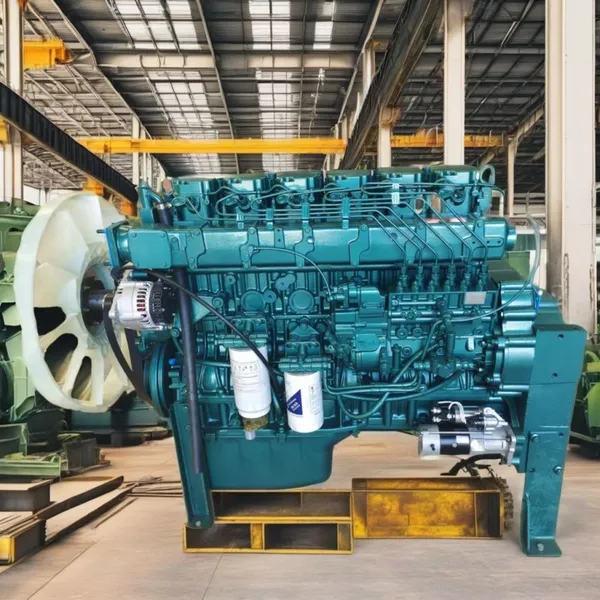

 Business License

VOLVO D7E Engine Specifications and Emissions Standards
A VOLVO D7E engine specifications sheet carries one row that buyers skim and later discover they needed. It records the stage the build was released at, and that entry reaches further into the rest of the sheet than any other line on the page. Two units of the same family can sit at different stages, and when they do, their output figures, their injection settings and their service lists differ with them.
This article reads the sheet from that row outwards. It explains what a stage entry states and what it leaves to the machine builder, shows which entries move when the stage changes, and sets out what a buyer replacing an engine has to match. D7E emissions standards are treated here as a property of the document rather than as a subject in their own right, because that is how a purchasing file meets them.
The unit itself is a six cylinder liquid cooled industrial diesel in the seven litre class, charged and with the charge cooled before it enters the manifold. Jining Pinbo Import and Export reads the stage entry before it quotes a replacement, because a figure that suits one build does not describe another.
1. VOLVO D7E Engine Specifications: The Row That Records a Stage
The row usually sits near the top of a published table, beside the model line and the displacement. Its wording is short and it names the stage the build was placed in when it left the production line. From a buyer's point of view the row is a label, and its importance is easy to underestimate on a first reading.
What the row does is divide the family into groups. Units built to an earlier stage and units built to a later one can share a block, a crankcase and a cylinder head, and still differ in the parts that decide how the engine runs. A VOLVO D7E engine specifications sheet therefore describes a build rather than a model, and the stage entry is how the build is named.
The distinction matters most in the second-hand and replacement markets, where units from different production periods sit side by side in the same warehouse. A buyer who reads the displacement and the rated figure and stops there may order a unit that will not match the machine it has to go into.
2. D7E Emissions Standards: What an Entry of That Kind States
An entry of that kind states which set of limits the engine was designed to meet when it was released. It is a description of the build, written in the language of the regulation family the market was working to at the time. Nothing on the engine plate proves how the unit behaves in a machine, and the sheet should be read as a record rather than as a claim.
The wording also fixes a market and a period, which is where most of its practical value sits. A machine sold into a region that has moved to a later set of limits will meet different replacement options from one sold into a region that has not. D7E emissions standards therefore answer a question about paperwork as much as about engineering.
Two habits make the entry usable. Read it together with the rated figure directly beneath it, since a build placed at an earlier stage often carries a different output from a later one on the same displacement. Then read it together with the machine's own file, because the file records how the machine was placed rather than what a supplier now has in stock.
3. VOLVO D7E Technical Data: The Entries That Move With the Stage
When the stage changes, several entries in the surrounding columns change with it. The most visible are the rated output and the speed at which it is quoted. Others are quieter: injection pressure, the shape of the combustion bowl, the number of injection events per cycle, and the way the calibration maps fuel against speed.
The air side moves as well. Charge cooling capacity, the charger match and, on later builds, the hardware that treats the exhaust before it leaves the engine all belong to the same block of entries. A reader comparing two sheets will find those rows differing while the physical rows above them are identical.
VOLVO D7E technical data is most useful read in groups for that reason. The physical group describes what the engine is, the performance group describes what it produces, and the release group describes the conditions the build was set to. Moving between the groups without noticing a change in the third one is how a comparison goes wrong.
| Group | Entries | Does it move with the stage? |
|---|---|---|
| Physical | Cylinder count, bore, stroke, swept volume | Rarely, since these belong to the block |
| Performance | Rated output, rated speed, torque at both ends of the band | Often, and usually downward on later releases |
| Release | Stage entry, reference conditions, fuel and lubricant notes | Always, because this group names the build |
| Installation | Weight, envelope, connection sizes, heat rejection | Sometimes, where hardware has changed |
4. VOLVO D7E Engine Specifications: Two Units, One Sheet, Different Figures
Two engines of one displacement can carry different published figures, and the reason is usually the stage rather than a mistake. A later release often holds a slightly lower rated output in exchange for the treatment its exhaust receives, because the work of reducing what leaves the cylinder is paid for inside it.
There is a second reason. A single family serves several duties, and the same hardware can be released with a rating set for continuous work and another set for intermittent work. A continuous figure carries a promise about hours, and it is set below the intermittent figure for that reason.
The practical consequence is simple. A VOLVO D7E engine specifications sheet read on its own tells a buyer what one build does, and a second sheet has to be read on the same terms before any number in it can be used. Comparing a continuous figure from one page with an intermittent figure from another is the most common error made with this material.
Jining Pinbo Import and Export asks which sheet a figure came from before it answers a comparison, because the same output can be quoted for two units that behave differently in service. Pinbo Power treats a number without its release group as an unfinished entry.
5. D7E Emissions Standards: What a Replacement Buyer Has to Match
A replacement engine has to match the machine as much as the model. The first item to match is the stage the machine was placed at when it was built, which is recorded in the machine's own file rather than in a supplier's list. A unit released at a different stage may fit the frame and still leave the machine unable to be registered or sold on in the market it works in.
The second item is the physical interface, which the stage does not affect but which the replacement has to respect. Mounting, coupling, connection sizes and the sensor set are all measured from the old unit rather than inferred from the new one.
The third item is the support that follows. A build with exhaust treatment hardware adds components to the service routine, and the workshop at the destination has to be able to look after them. D7E emissions standards matter to a buyer for that reason as well, since they decide what the machine around the engine has to carry.
Three documents settle most of it: the machine file, a photograph of the engine plate, and the old unit's own identity. Jining Pinbo Import and Export asks for all three before quoting, because a replacement matched from a model list alone is a guess with a delivery date attached.
6. VOLVO D7E Technical Data: Fuel and Lubricant Entries on the Sheet
The sheet carries two lines that are easy to pass over and expensive to ignore. The first states the fuel the build was released with, expressed as a permitted sulphur level and, on some releases, a note about which grades suit the injection equipment. The second states a lubricant category rather than a brand.
Those lines belong to the release group for a reason. Injection pressure and combustion shape are set together with a fuel quality in mind, and a machine run on a different quality meets wear it was not set up for. Lubricant follows the same logic, because the duty the oil performs includes cooling and cleaning as well as reducing friction.
VOLVO D7E technical data should therefore be copied into the machine file rather than left in the supplier's brochure. The two lines are what a workshop consults when it changes a filter or chooses an oil, and they travel with the engine for its whole working life.
7. D7E Emissions Standards: Reading the Sheet Against a Destination
A reader should ask three questions of the stage entry. Which market was this build released for? Has that market moved to a later set of limits since? And does the machine have to keep working there, or is it heading somewhere else?
The answers decide what the buyer should look for rather than what the buyer should avoid. A unit released for a market that has since moved on is still a sound engine; the question is whether a machine that carries it can be kept in service and passed on. A unit heading for a market that is still working to an earlier set of limits faces the opposite question.
D7E emissions standards are read here as a map of fit rather than as a ranking of engines. The right build is the one that suits the machine, the market it works in and the service support within reach of it. A supplier who can state those three plainly is more useful than one who quotes the highest release available.
8. VOLVO D7E Engine Specifications: What the Sheet Leaves to the Builder
Several items that decide how an engine behaves in service are settled by the machine builder rather than by the engine sheet. Cooling package capacity, the air filtration arrangement, the exhaust route and the length of the intake ducting all belong to the machine, and each of them changes the air the engine receives.
Altitude and ambient heat belong in the same list. A figure published at reference conditions is not the figure a site holds, and the correction has to be made for the elevation and the climate where the machine works. A VOLVO D7E engine specifications sheet run correctly is therefore a starting point for a calculation rather than the calculation itself.
The record the supplier keeps closes the loop. Where a build, a stage and an accessory list are filed against the order number, a question raised two seasons later can be answered from the unit that was actually delivered. Jining Pinbo Import and Export Co Ltd files those entries with each order for that reason, since a spare ordered later has to match the release the machine carries.
Read in that order, the sheet stops being a page of numbers. It becomes the description of one build, which is what a buyer is purchasing, and the stage entry at the top is the line that names it.
9. Frequently Asked Questions
9.1 How should a VOLVO D7E engine specifications sheet be read?
Read it in groups rather than from top to bottom. The physical group settles what the engine is, the performance group settles what it produces, the release group names the build and its conditions, and the installation group settles what the machine has to accept. The release group is the one that reaches furthest, because a change there moves entries in the performance group as well. A reader who takes those four groups in order will find that most disagreements between two sheets resolve into a difference of build rather than a difference of opinion.
9.2 What do D7E emissions standards mean on a purchasing file?
They name the build and the market it was released for, which is what a replacement buyer has to match. A machine placed at one stage and offered an engine from another may fit the frame and still leave the machine unable to be kept in service in its own market. The entry is a record of a build rather than a claim about performance, and it should be read together with the machine's own file. Buyers who hold those two documents can answer most questions without contacting a supplier at all.
9.3 Which VOLVO D7E technical data entries change when the stage changes?
The visible ones are rated output and the speed it is quoted at. The quieter ones are injection pressure, the shape of the combustion bowl, the number of injection events per cycle and the way the calibration maps fuel against speed. On later releases the hardware that treats the exhaust before it leaves the engine belongs to the same block of entries. The physical rows describing the block usually stay as they are, which is why a reader who compares the top rows of two sheets alone can conclude wrongly that the units are identical.
9.4 What must a buyer confirm before ordering a replacement unit?
Three things, in this order: the stage the machine was placed at, the physical interface measured from the old unit, and the service support available where the machine works. The first is read from the machine file, the second from the bay and the old engine, and the third from the local workshop. A supplier given those three can name a suitable build rather than a family. A supplier given a model name alone has to ask for them, which costs the buyer a week of correspondence at the start of a programme.
Recently Posted
-
Kubota V3300 Engine Specifications and Performance Data
November 5, 2026A buyer once asked for a Kubota V3300 engine specifications sheet and read the top third of it. The figure he came for was there,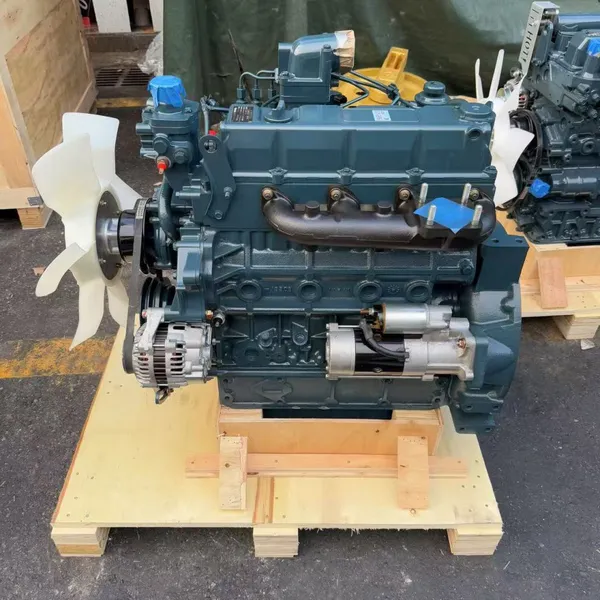 Read More
-
KTTA19-C700 Engine Specifications and Continuous Power Ratings
November 5, 2026A plant that had run its generating set for the better part of a year on a steady load found its exhaust temperatures climbing and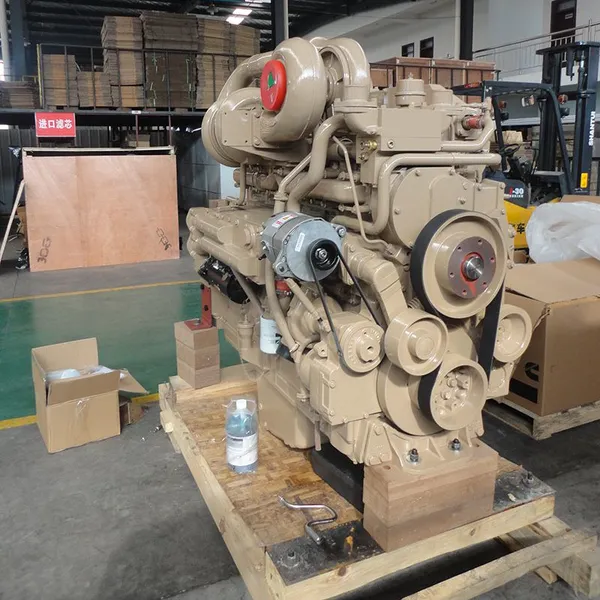 Read More
-
KTA38-M2 Marine Engine Specifications and Rating Classification
November 4, 2026Two quotations for the same marine engine arrived at one office with different output figures, and neither was wrong. One quoted t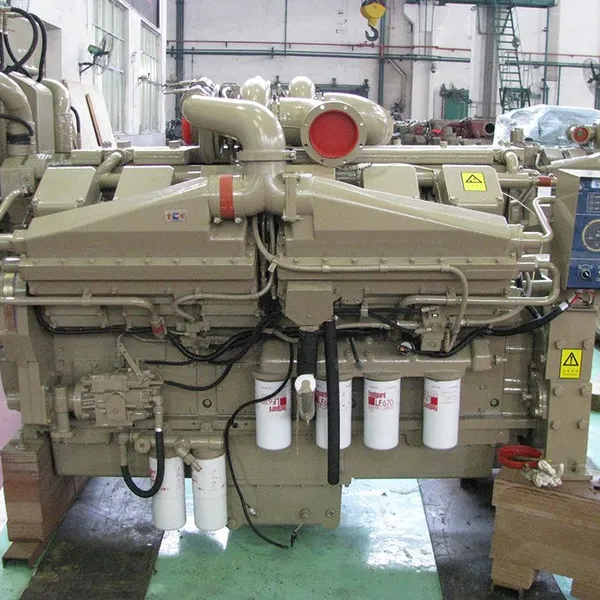 Read More
-
Doosan DL08 Engine Specifications: Displacement, Ratings and Emissions
November 4, 2026Three suppliers were asked for the numbers on one DL08 and sent back three sheets that shared almost nothing. One listed geometry, Read More

Contact Us
Recommended Products
-
 New 129 kW QSB6.7 Diesel Engine Excavator Construction Machinery Electric Start Water-Cooled Core Including Motor PumpUS$ 1888.00 - 3888.00MOQ: 1 Unit
-
Wholesale Diesel Engine Genuine 4 Stroke Direct Injection Doosan DL08 Engine for SaleUS$ 4558.00 - 4800.00MOQ: 1 Unit
-
Factory Price DOOSAN DL06 Construction Machinery Motor 6 Cylinder 115kw Water-Cooled With Core Components Engine and PumpUS$ 4752.00 - 5000.00MOQ: 1 Unit
-
Factory Price 4 Stroke 115kw Doosan DB58 Complete Engine Assy for Dx220 ExcavatorUS$ 3450.00 - 3650.00MOQ: 1 Unit
-
Factory Manufacture 123kw 4 Stroke Volvo D6e Machinery Engine for Construction MachineryUS$ 7500.00MOQ: 1 Unit
-
New BF6M2012C Cylinder 4-stroke Original Water-cooled Generator With Live Start FunctionUS$ 4500.00 - 5400.00MOQ: 1 Unit
-
Original Water Cooled 4 Stroke 6 Cylinder DEUTZ TCD2012062V Machinery EnginesUS$ 4888.00 - 5081.00MOQ: 1 Unit
-
Factory Outlet 6 Cylinder 250HP 2200rpm 6C8.3-C250 Construction Machinery Engines for CuminsUS$ 34627.00 - 36450.00MOQ: 1 Unit
-
1104D-44TA Diesel Engine 83kw New Water-Cooled Machine With Electric Start and Pump Good Price Per UnitUS$ 3700.00 - 4200.00MOQ: 1 Unit
-
Original Water Cooled 4 Stroke DEUTZ TCD 2013 L06 2V Machinery Engines for SaleUS$ 7070.00 - 7443.00MOQ: 1 Unit
-
Excavator Engine Assy QSL8.9 Complete Engine Assembly CUMMINS Qsl 9 Diesel EngineUS$ 4300.00 - 4600.00MOQ: 1 Unit
-
Genuine Vovo D4d EAE2 Diesel Engine for VOLVO EC140 ExcavatorNegotiableMOQ: 1 Unit
-
Factory Outlet 6 Cylinder 250HP 2200rpm 6C8.3-C250 Construction Machinery Engines for CuminsUS$ 4700.00 - 5100.00MOQ: 1 Unit
-
Good Price 153kw 4 Stroke Electric Start D7E Diesel Engine for Construction MachineryUS$ 8350.00MOQ: 1 Unit
-
WEICHAI 178kw 4 Stroke WD10G240E203 Diesel Engine for SEM660D SEM660B Wheel LoaderUS$ 3920.00 - 4127.00MOQ: 1 Unit
-
Dongfeng Shanghai SC11CB220G2B1 6-Cylinder Diesel Engine 162kw (220hp) SDEC 3306 New Condition Core Included Farm MachineryUS$ 6500.00MOQ: 1 Unit
-
ISUZU 4 Cylinder Diesel Engine 4BG1 Machinery Engines for Kobelco SK135 ExcavatorUS$ 6800.00MOQ: 1 Unit
-
130Hp Diesel Engine YC4D130 Yuchai Diesel Motor Price for TruckUS$ 3400.00 - 3600.00MOQ: 1 Unit
-
Shanghai SDEC SC9D220G2 162KW Diesel Engine for SEM922 SEM921 GraderUS$ 5320.00 - 5600.00MOQ: 1 Unit
-
Factory Outlet Sinotruk D1242 Engine Assembly for Construction IndustryUS$ 4615.00 - 4858.00MOQ: 1 Unit