
 Business License

KTTA19-C700 Engine Specifications and Continuous Power Ratings
A plant that had run its generating set for the better part of a year on a steady load found its exhaust temperatures climbing and its service intervals shortening. Nothing on the machine had changed. What had changed was that the rating the set was bought at had been read as a number rather than as a statement about time.
A continuous power rating is the hardest of the figures an engine carries, because it is the one an operator is allowed to hold without a clock running against it. Everything else on a data sheet is a statement about a shorter period.
This article sets out KTTA19-C700 engine specifications from the continuous figure outward, treats a KTTA19 continuous power rating as a promise about duration as much as about output, and explains how to read KTTA19 technical data so that the conditions written beside the number travel with it.
1. KTTA19-C700 Engine Specifications: The Figure a Site Runs On
KTTA19-C700 engine specifications are usually quoted with more than one output on the same page, and the order in which they appear is not the order of usefulness.
The higher figures draw the eye. They belong to the lighter classes, which are defined for a bounded number of hours in a year or for load held over a defined part of a cycle rather than around the clock.
The continuous figure sits lower on the page and it is the one an engine can hold indefinitely. For a plant that runs its set as its main supply, or a vessel that works its machinery through a long passage, that is the entry the whole installation is built around.
Reading the page in that order, from the figure that can be held for as long as the fuel lasts, is what prevents an installation being designed against a rating that was never meant to carry it.
2. KTTA19 Continuous Power Rating: What Continuous Is a Promise About
A KTTA19 continuous power rating is a promise about duration first and about output second, and the two halves cannot be separated.
The word continuous means the output may be carried without a limit on running hours, provided the conditions written beside the rating are met. It does not mean the engine can be run at a higher class for long periods simply because the operator chooses to.
That distinction decides the shape of the installation. A set bought at the continuous figure can be sized for a plant's base load, because the sustained heat it produces has been accounted for in the components that carry it.
A set bought at a lighter class and then run continuously is being worked outside the terms of its own rating. The engine does not refuse the load, which is what makes the mistake easy to make and slow to notice.
3. KTTA19 Technical Data: The Conditions Written Next to the Rating
KTTA19 technical data carries a set of conditions beside every rating, and those conditions are part of the figure rather than notes about it.
An output stated on a data sheet is quoted at a reference barometric pressure, an ambient temperature and a humidity, together with assumptions about the air entering the engine and the gases leaving it. Those values describe a bench rather than a site.
A plant at sea level in a temperate climate sits close to that reference, so the printed figure and the installed figure do not differ much. A plant at elevation, or one working through a hot season, does not, and the gap is what the conditions exist to describe.
The conditions therefore tell a specifier how far the figure can be relied on before correction. A quotation that prints the output and omits the assumptions behind it has left out the part that decides whether the number applies to the site. Jining Pinbo Import and Export Co Ltd prints those assumptions beside the rating for that reason.
4. KTTA19 Continuous Power Rating: Heat, Altitude and Inlet Restriction
A KTTA19 continuous power rating moves with three physical conditions, and each of them acts in the same direction.
Thinner air at altitude carries less oxygen into the cylinder for the same swept volume, so the fuel that can be burned falls with it. The effect is measurable from a few hundred metres upward and it grows with height.
High ambient temperature thins the air in the same way and adds a second effect, since a warmer day raises the temperature of the charge after the aftercooler and reduces its density again. It also raises the cooling duty the radiator or heat exchanger has to meet.
Restriction on the inlet adds a third. A clogged element or an undersized air cleaner lowers the pressure in the manifold, which the engine reads as a lower charge and answers with less fuel. A restriction on the exhaust side has a similar effect from behind, since gases that cannot leave freely limit what can enter.
| Condition | What it changes | Direction of the effect |
|---|---|---|
| Altitude | Mass of oxygen per cylinder | Rated output falls |
| Ambient heat | Charge density and cooling duty | Rated output falls, heat rises |
| Inlet restriction | Manifold pressure | Available output falls |
| Exhaust back pressure | Scavenging of the cylinder | Available output falls |
The corrections apply to the load the engine can carry rather than to the engine itself. A set that meets its continuous figure at the reference conditions meets a lower figure where those conditions are not held.
5. KTTA19 Technical Data: Reading the Sheet Column by Column
KTTA19 technical data is easier to check when the sheet is read in fixed columns rather than as a field of numbers.
The first column carries the geometry, which settles what the engine is and does not move with the site. It covers the cylinder count, the bore and stroke, the swept volume and the compression ratio.
The second column carries the rating and the class it belongs to, together with the governed speed, the torque at that speed and the fuel figure quoted against that same rating. Those entries belong on one line because reading one without the others produces a comparison that cannot be checked.
The third column carries the conditions and the installation group: the ambient and barometric assumptions, the heat passed to the cooling circuit, the charge air flow and the connection positions. Buyers tend to gather the first two columns and skip the third, and the third is the one that decides whether the chosen rating survives contact with the site.
6. KTTA19-C700 Engine Specifications: The Record Behind the Number
KTTA19-C700 engine specifications are supported by a test record, and that record is the part of the package a buyer can use later.
A build released at the continuous figure has been run at that figure long enough for the readings to settle, with exhaust temperature, oil pressure, coolant temperature and fuel rate logged against load. Those readings describe the engine as it left rather than as it was designed.
The record does two things for the owner. It gives a baseline for the first months of service, since a reading that moves away from the delivered figure is the earliest signal available. It also gives the shape of the response across the load band, which is what allows a fault to be traced to a cylinder or a circuit.
Where a unit has been rebuilt, the useful document is the one that travels with the rebuild, listing the parts renewed and the clearances set. A rebuild without that sheet leaves the next owner with an engine of unknown pedigree, which is a different object from the same engine with a file.
7. KTTA19 Continuous Power Rating: Hours, Service Windows and Consumables
A KTTA19 continuous power rating has a second half that appears after the order, in the shape of the service routine the duty demands.
An engine held at load for long periods stays at its working temperature, which is kind to it in one respect and demanding in another. The lubricant spends most of its life hot, so its condition is governed by hours at temperature rather than by the number of starts.
Filters follow the same logic. A continuous set passes a large volume of fuel and air in a short time, so the intervals that matter are measured in running hours and the readings at each service are what confirm them.
The overhaul interval then depends on the load factor the engine actually meets rather than on the class it was sold at. A plant running at the continuous figure reaches its major service on the hours in the schedule, and a plant that has been running above it reaches those hours sooner in terms of wear.
Jining Pinbo Import and Export records the intended duty and the expected hours at load with each order, so the service expectations quoted at the start can be checked against the way the plant has actually run. Pinbo Power treats that record as part of the supply rather than as background to it.
8. KTTA19-C700 Engine Specifications: Matching the Sheet to the Site
KTTA19-C700 engine specifications become an answer once the site conditions are set against them, and that step is worth doing in writing.
The order of the work is straightforward. The load the plant must carry is established first, including the steps it has to absorb. The site conditions follow, covering altitude, the highest ambient temperature expected and the layout of the inlet and exhaust paths.
The corrections are then applied to the rating, and the result is the figure the engine can actually hold at that site. Where the corrected figure falls short, the response is either to move to a build with more margin or to change the installation, and both are cheaper decided on paper than after commissioning.
Recording the site conditions with the order is what makes that comparison repeatable years later, when a plant is expanded or an engine is replaced. Pinbo Import and Export asks for altitude, ambient range and load profile before quoting a set for a remote site, because a figure valid at sea level is not the figure the station will hold.
9. Frequently Asked Questions
9.1 How should KTTA19-C700 engine specifications be read?
KTTA19-C700 engine specifications are read most clearly in three columns rather than as a field of numbers. The geometry column settles what the engine is and does not change with the site. The rating column carries the output with its duty class, its governed speed and the fuel figure quoted against that class. The third column carries the conditions beside the rating, including the ambient and barometric assumptions and the heat passed to the cooling circuit, and that column decides whether the chosen figure survives the site.
9.2 What does a KTTA19 continuous power rating promise?
A KTTA19 continuous power rating promises that the output may be carried without a limit on running hours, provided the conditions written beside it are met. It is the hardest class an engine carries, and the lighter ratings on the same sheet are defined for a bounded number of hours or for load held over part of a cycle. An installation designed against the continuous figure can be sized for base load. One designed against a lighter class and then run without pause is working outside its own terms.
9.3 Which conditions move KTTA19 technical data most?
KTTA19 technical data moves most with altitude, ambient heat and restriction on the air path. Thinner air at height carries less oxygen per cylinder, so the fuel that can be burned falls with it. High ambient temperature thins the air in the same way and adds to the cooling duty. Inlet restriction lowers manifold pressure and exhaust back pressure limits what can enter from behind, so all four act together in the same direction to reduce the load the engine can hold at a given site.
9.4 Why does a continuous duty change the service routine?
A continuous duty changes the service routine because the engine spends most of its life at working temperature rather than starting and stopping. The lubricant stays hot, so its condition is governed by hours at temperature and the readings taken at each service. Filters pass a large volume of fuel and air in a short time, so their intervals follow running hours. The hours to a major service then depend on the load factor the engine really meets rather than on the class it was sold at.
Recently Posted
-
VOLVO D7E Engine Specifications and Emissions Standards
November 5, 2026A VOLVO D7E engine specifications sheet carries one row that buyers skim and later discover they needed. It records the stage the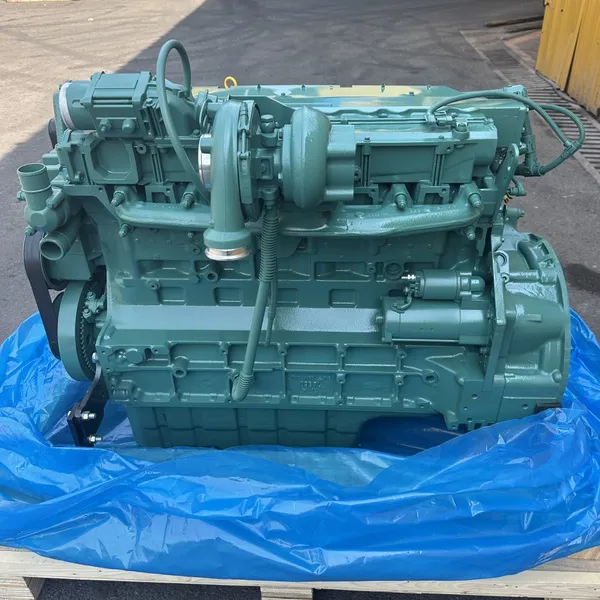 Read More
-
Kubota V3300 Engine Specifications and Performance Data
November 5, 2026A buyer once asked for a Kubota V3300 engine specifications sheet and read the top third of it. The figure he came for was there,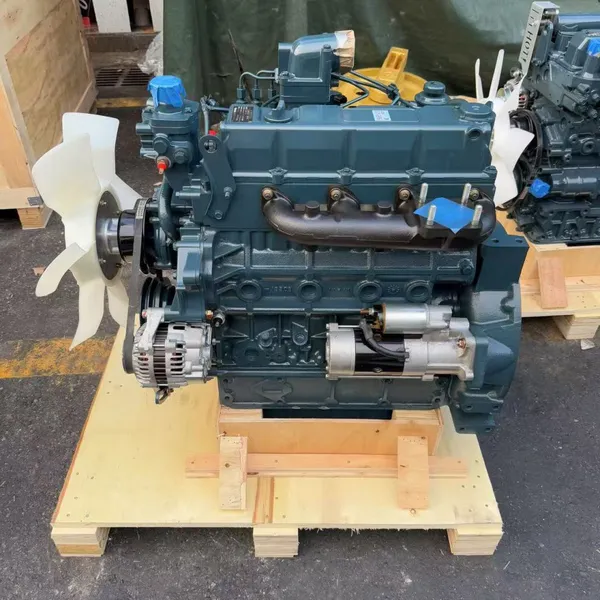 Read More
-
KTA38-M2 Marine Engine Specifications and Rating Classification
November 4, 2026Two quotations for the same marine engine arrived at one office with different output figures, and neither was wrong. One quoted t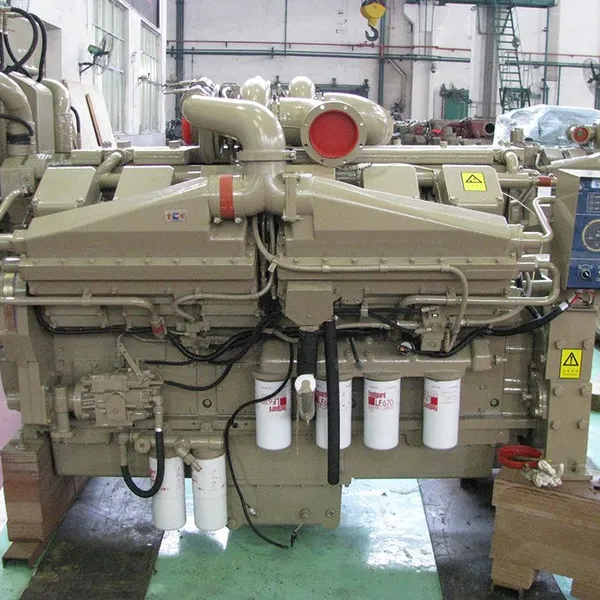 Read More
-
Doosan DL08 Engine Specifications: Displacement, Ratings and Emissions
November 4, 2026Three suppliers were asked for the numbers on one DL08 and sent back three sheets that shared almost nothing. One listed geometry, Read More

Contact Us
Recommended Products
-
 New 129 kW QSB6.7 Diesel Engine Excavator Construction Machinery Electric Start Water-Cooled Core Including Motor PumpUS$ 1888.00 - 3888.00MOQ: 1 Unit
-
Wholesale Diesel Engine Genuine 4 Stroke Direct Injection Doosan DL08 Engine for SaleUS$ 4558.00 - 4800.00MOQ: 1 Unit
-
Factory Price DOOSAN DL06 Construction Machinery Motor 6 Cylinder 115kw Water-Cooled With Core Components Engine and PumpUS$ 4752.00 - 5000.00MOQ: 1 Unit
-
Factory Price 4 Stroke 115kw Doosan DB58 Complete Engine Assy for Dx220 ExcavatorUS$ 3450.00 - 3650.00MOQ: 1 Unit
-
Factory Manufacture 123kw 4 Stroke Volvo D6e Machinery Engine for Construction MachineryUS$ 7500.00MOQ: 1 Unit
-
New BF6M2012C Cylinder 4-stroke Original Water-cooled Generator With Live Start FunctionUS$ 4500.00 - 5400.00MOQ: 1 Unit
-
Original Water Cooled 4 Stroke 6 Cylinder DEUTZ TCD2012062V Machinery EnginesUS$ 4888.00 - 5081.00MOQ: 1 Unit
-
Factory Outlet 6 Cylinder 250HP 2200rpm 6C8.3-C250 Construction Machinery Engines for CuminsUS$ 34627.00 - 36450.00MOQ: 1 Unit
-
1104D-44TA Diesel Engine 83kw New Water-Cooled Machine With Electric Start and Pump Good Price Per UnitUS$ 3700.00 - 4200.00MOQ: 1 Unit
-
Original Water Cooled 4 Stroke DEUTZ TCD 2013 L06 2V Machinery Engines for SaleUS$ 7070.00 - 7443.00MOQ: 1 Unit
-
Excavator Engine Assy QSL8.9 Complete Engine Assembly CUMMINS Qsl 9 Diesel EngineUS$ 4300.00 - 4600.00MOQ: 1 Unit
-
Genuine Vovo D4d EAE2 Diesel Engine for VOLVO EC140 ExcavatorNegotiableMOQ: 1 Unit
-
Factory Outlet 6 Cylinder 250HP 2200rpm 6C8.3-C250 Construction Machinery Engines for CuminsUS$ 4700.00 - 5100.00MOQ: 1 Unit
-
Good Price 153kw 4 Stroke Electric Start D7E Diesel Engine for Construction MachineryUS$ 8350.00MOQ: 1 Unit
-
WEICHAI 178kw 4 Stroke WD10G240E203 Diesel Engine for SEM660D SEM660B Wheel LoaderUS$ 3920.00 - 4127.00MOQ: 1 Unit
-
Dongfeng Shanghai SC11CB220G2B1 6-Cylinder Diesel Engine 162kw (220hp) SDEC 3306 New Condition Core Included Farm MachineryUS$ 6500.00MOQ: 1 Unit
-
ISUZU 4 Cylinder Diesel Engine 4BG1 Machinery Engines for Kobelco SK135 ExcavatorUS$ 6800.00MOQ: 1 Unit
-
130Hp Diesel Engine YC4D130 Yuchai Diesel Motor Price for TruckUS$ 3400.00 - 3600.00MOQ: 1 Unit
-
Shanghai SDEC SC9D220G2 162KW Diesel Engine for SEM922 SEM921 GraderUS$ 5320.00 - 5600.00MOQ: 1 Unit
-
Factory Outlet Sinotruk D1242 Engine Assembly for Construction IndustryUS$ 4615.00 - 4858.00MOQ: 1 Unit