
 Business License

Kubota V3300 Engine Specifications and Performance Data
A buyer once asked for a Kubota V3300 engine specifications sheet and read the top third of it. The figure he came for was there, and the three numbers that would have told him whether the engine would fit his machine sat further down the page.
A data sheet for a compact industrial diesel is not one table. It is three families of figures gathered under a single heading: what the engine produces, what it needs in order to be installed, and what it consumes while producing.
This page walks a Kubota V3300 engine specifications sheet in that order, reads the V3300 performance data at the conditions where the figures actually hold, and treats the Kubota V3300 technical table as the part that decides a fit rather than as a footnote to it.
1. Kubota V3300 Engine Specifications: Three Families of Figures on One Sheet
Kubota V3300 engine specifications arrive as one sheet, and the sheet is easier to use once it is divided into the three groups it actually contains.
The output group carries rated speed, the output at each rating the engine is offered at, and the torque that goes with them. This is the part buyers ask for first, and it is the part a repower often needs least, because a machine seldom fails for want of a headline figure.
The installation group carries the dimensions that decide whether a unit can be placed: the mounting pattern, the flywheel housing, and the overall envelope. Every one of those can differ between engines that share a swept volume.
The consumption group carries the fuel used at each point on the curve, the quantity of lubricant the sump takes, the coolant the system holds, and the heat the engine rejects to coolant and to the air around it. A cooling system or a fuel supply sized without this group is sized by guesswork.
The order matters. Reading the consumption block first is of little use if the output block has already ruled the engine in or out.
2. V3300 Performance Data: The Output Block and Its Reference Conditions
V3300 performance data is quoted at a reference condition, and the reference condition is the part of the block that buyers most often pass over.
The engine is a four cylinder liquid cooled unit of roughly three and a third litres, with a bore of ninety eight millimetres and a stroke of one hundred and ten. Those two figures set the character of the output, since a relatively long stroke in a compact four puts its torque low in the speed range, which is what a hydraulic machine wants.
The sheet normally quotes more than one rating for the same block. A figure for continuous work and a higher figure for intermittent work form the usual pair, and the difference between them concerns how long the output may be held rather than what the engine can physically do.
Behind each figure sits a speed and a set of conditions: the temperature of the air entering the intake, the temperature of the air around the machine, and the height above sea level at which the figure is claimed. Change any of the three and the figure that holds is a different figure.
3. Kubota V3300 Technical Table: The Installation Block
A Kubota V3300 technical table is where a repower is won or lost, and it is the block a buyer reaches last when the enquiry is arranged the wrong way round.
The mounting pattern comes first. The positions of the feet, the spacing between them and the height of the faces decide whether the engine sits on the frame that already exists or whether the frame is drilled again.
The rear face comes next. The flywheel housing pattern and the flywheel diameter decide what will attach behind the engine, which in most compact machines means a hydraulic pump coupling or a clutch rather than a gearbox.
The envelope follows: overall length, width and height measured at defined points, dry weight, and the position of the centre of gravity. In a machine with a narrow frame, the last of those decides how the unit behaves as much as whether it fits.
The table below sets out which figure in the installation block decides which part of a repower.
| Figure in the installation block | What it decides |
|---|---|
| Mounting foot positions and spacing | Whether the existing frame can be reused |
| Flywheel housing pattern and flywheel diameter | What will attach behind the engine |
| Overall length, width and height | Whether the unit enters the machine envelope |
| Dry weight and centre of gravity | Load on the frame and the balance of the machine |
| Front pulley and accessory drive layout | Belt routing and the position of driven accessories |
Pinbo Import and Export asks for the machine's own measurements alongside the sheet, because an installation block read without the frame is a set of numbers without a question.
4. V3300 Performance Data: The Consumption Block
V3300 performance data includes a consumption block, and that block is what turns a specification into an operating cost.
Fuel use is normally given as a curve rather than as a single figure, because an engine burns fuel in proportion to the work it is doing. The sheet quotes consumption at rated output, at the torque peak and at part load, and the part load numbers matter most to a machine that spends much of its day below full demand.
Lubricant capacity sets the sump volume, and with it the service interval and the quantity of oil a workshop must hold. Coolant capacity sets the volume of the system and the concentration of the mixture, and it is the figure a machine with a small radiator is most likely to be short of.
Heat rejection belongs to the same group. The sheet states how much heat leaves through the coolant and how much leaves through radiation to the air around the engine. A radiator and a fan are sized from those two figures, and a cooling package copied from another machine will be wrong wherever the duty differs.
5. Kubota V3300 Engine Specifications: The Air Side and Its Limits
Kubota V3300 engine specifications carry an air side that is easy to pass over and expensive to ignore.
The sheet gives the air the engine draws at rated speed, the restriction the intake may present at most, and the back pressure the exhaust may present at most. Those two limits describe a budget rather than a preference, and a machine that exceeds either loses output before it shows any other symptom.
Aspiration shapes the figures as well. A naturally aspirated build and a turbocharged build of the same block draw different quantities of air and reach their limits at different points, so the restriction figures belong to the build rather than to the engine name.
A machine working in dust adds a further consideration. Intake restriction rises as the filter loads, so an element that begins inside the limit can cross it between two services if the interval is set by the calendar instead of by the restriction indicator.
At Jining Pinbo Import and Export Co Ltd the build is confirmed before a restriction figure is quoted, because the limit travels with the build rather than with the model name.
6. Kubota V3300 Technical Table: Reading the Sheet at the Site Condition
A Kubota V3300 technical table quotes its figures at one set of conditions, and the site a machine works on will rarely be those conditions.
Altitude is the first correction. Air thins as a machine climbs, so an engine at height draws less air per stroke and produces less output from the same fuel. A machine working above the reference altitude carries a figure lower than the one printed, and the sheet normally supplies a correction rather than a revised number.
Ambient heat is the second. A hot day lowers the density of the air entering the engine and also narrows the difference between the coolant and the air passing through the radiator, so the cooling system loses capacity at the same time as the engine loses output.
Fuel temperature is the third and is frequently forgotten. Fuel that is warm carries slightly less energy in each litre, and a machine running a full day in summer may use more of it than the same machine uses in spring for the same work.
7. V3300 Performance Data: Matching the Sheet to the Machine
V3300 performance data becomes a decision when it is read against the machine the engine will drive.
A loader, a mower or a skid steer asks for a working point rather than a peak. The relevant part of the output block is the torque available at the speed the hydraulic pump or the implement runs at, and a figure taken at rated speed can describe a point the machine never reaches.
A machine driving a generator asks the opposite question. The governed speed is fixed, the load rises and falls, and the figure that matters is the output the engine holds while the load moves rather than the figure it reaches on a bench.
The consumption block then covers the remainder. A machine that works at part load has to be read on the curve where it actually sits, and the fuel figure describes the owner's buying pattern once those points are read.
Jining Pinbo Import and Export sends the output, installation and consumption figures together for exactly that reason, so the person sizing a radiator has the same material as the person sizing the load.
8. Kubota V3300 Engine Specifications: Recording the Numbers
Kubota V3300 engine specifications are worth keeping as a record, because the sheet that describes a new engine becomes the baseline for everything that follows it.
Three items belong in the machine file. The first is the sheet for the build actually delivered, since a family sheet may quote figures for ratings the unit was never set to. The second is a photograph of the data plate, which fixes the build and the serial reference. The third is a note of the conditions the machine works at.
With those three in hand, a later question becomes answerable. A machine that appears to have lost power can be checked against the figure it was set to, and against the altitude and ambient heat at which it was expected to hold that figure.
Pinbo Power keeps a file on each unit it dispatches, and that file is what allows a machine to be described again years later without relying on anyone's recollection.
That is the practical value of a sheet read in the right order. It stops describing an engine on a bench and starts describing an engine in a machine.
9. Frequently Asked Questions
9.1 What does a Kubota V3300 engine specifications sheet contain?
A sheet contains three groups of figures rather than one, and the output group covers rated speed along with the output and torque at each rating offered. The installation group covers mounting, the flywheel housing and the overall envelope, which together decide whether the unit will fit a frame. The consumption group covers fuel use, lubricant and coolant quantities, and the heat the engine rejects to coolant and to the air. Buyers tend to read the first group and to need the second.
9.2 How is V3300 performance data quoted and corrected?
V3300 performance data is quoted at a reference condition rather than at whatever condition a site presents. Altitude thins the air, ambient heat lowers its density and narrows the gap between coolant and surrounding air, and warm fuel carries slightly less energy in each litre. The sheet normally supplies a correction rather than a revised figure, and the corrected number is the one that describes the machine. Reading the printed figure without the correction overstates what the engine holds on site.
9.3 What makes a Kubota V3300 technical table decisive for a repower?
The installation block decides a repower, because a match in swept volume settles nothing about fit. Foot positions and spacing decide whether the existing frame can be reused, and the flywheel housing pattern decides what will attach behind the engine. The overall envelope governs whether the unit enters the machine at all, while dry weight and centre of gravity affect balance on the frame and the way the machine behaves. Reading those figures against the measurements taken on the machine itself turns a sheet into a specification.
9.4 Which figures matter most for a machine at part load?
The consumption block matters most, because a machine at part load never reaches the headline figure. Fuel use should be read on the curve at the point where the machine actually works rather than at rated output. Lubricant capacity sets the service interval together with the quantity and grade of oil a workshop must hold, and coolant capacity sets the volume and the mixture the system needs. Heat rejection then sizes the radiator and the fan for the duty the machine performs.
Recently Posted
-
VOLVO D7E Engine Specifications and Emissions Standards
November 5, 2026A VOLVO D7E engine specifications sheet carries one row that buyers skim and later discover they needed. It records the stage the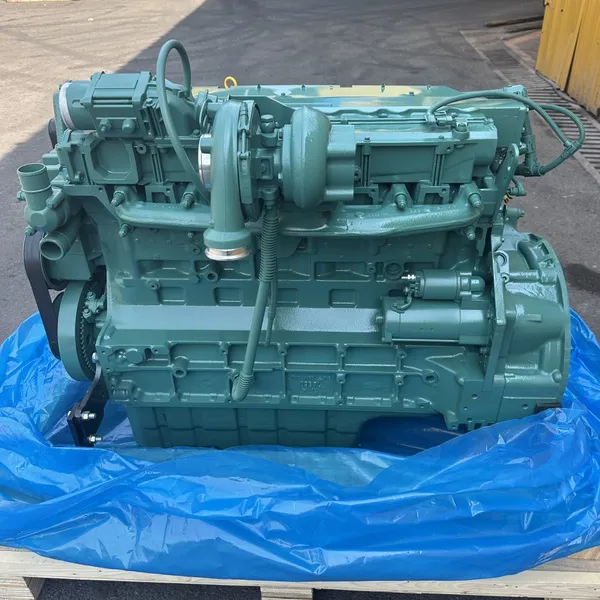 Read More
-
KTTA19-C700 Engine Specifications and Continuous Power Ratings
November 5, 2026A plant that had run its generating set for the better part of a year on a steady load found its exhaust temperatures climbing and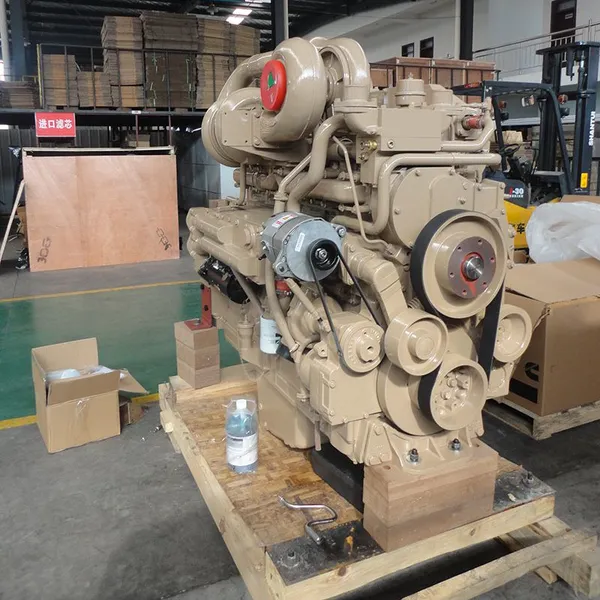 Read More
-
KTA38-M2 Marine Engine Specifications and Rating Classification
November 4, 2026Two quotations for the same marine engine arrived at one office with different output figures, and neither was wrong. One quoted t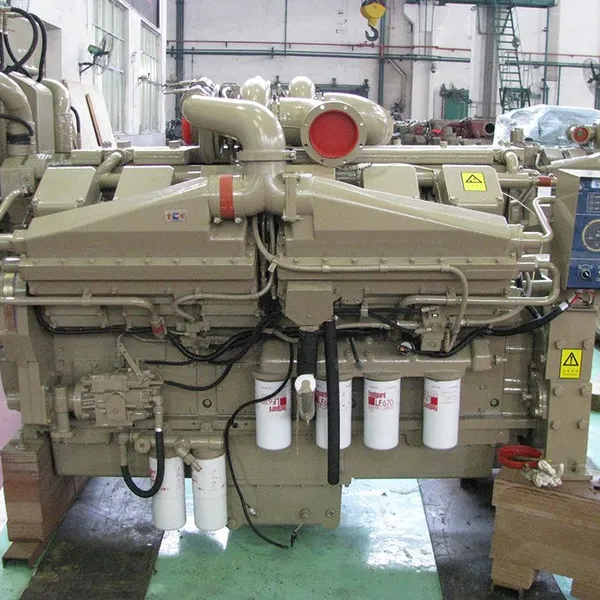 Read More
-
Doosan DL08 Engine Specifications: Displacement, Ratings and Emissions
November 4, 2026Three suppliers were asked for the numbers on one DL08 and sent back three sheets that shared almost nothing. One listed geometry, Read More

Contact Us
Recommended Products
-
 New 129 kW QSB6.7 Diesel Engine Excavator Construction Machinery Electric Start Water-Cooled Core Including Motor PumpUS$ 1888.00 - 3888.00MOQ: 1 Unit
-
Wholesale Diesel Engine Genuine 4 Stroke Direct Injection Doosan DL08 Engine for SaleUS$ 4558.00 - 4800.00MOQ: 1 Unit
-
Factory Price DOOSAN DL06 Construction Machinery Motor 6 Cylinder 115kw Water-Cooled With Core Components Engine and PumpUS$ 4752.00 - 5000.00MOQ: 1 Unit
-
Factory Price 4 Stroke 115kw Doosan DB58 Complete Engine Assy for Dx220 ExcavatorUS$ 3450.00 - 3650.00MOQ: 1 Unit
-
Factory Manufacture 123kw 4 Stroke Volvo D6e Machinery Engine for Construction MachineryUS$ 7500.00MOQ: 1 Unit
-
New BF6M2012C Cylinder 4-stroke Original Water-cooled Generator With Live Start FunctionUS$ 4500.00 - 5400.00MOQ: 1 Unit
-
Original Water Cooled 4 Stroke 6 Cylinder DEUTZ TCD2012062V Machinery EnginesUS$ 4888.00 - 5081.00MOQ: 1 Unit
-
Factory Outlet 6 Cylinder 250HP 2200rpm 6C8.3-C250 Construction Machinery Engines for CuminsUS$ 34627.00 - 36450.00MOQ: 1 Unit
-
1104D-44TA Diesel Engine 83kw New Water-Cooled Machine With Electric Start and Pump Good Price Per UnitUS$ 3700.00 - 4200.00MOQ: 1 Unit
-
Original Water Cooled 4 Stroke DEUTZ TCD 2013 L06 2V Machinery Engines for SaleUS$ 7070.00 - 7443.00MOQ: 1 Unit
-
Excavator Engine Assy QSL8.9 Complete Engine Assembly CUMMINS Qsl 9 Diesel EngineUS$ 4300.00 - 4600.00MOQ: 1 Unit
-
Genuine Vovo D4d EAE2 Diesel Engine for VOLVO EC140 ExcavatorNegotiableMOQ: 1 Unit
-
Factory Outlet 6 Cylinder 250HP 2200rpm 6C8.3-C250 Construction Machinery Engines for CuminsUS$ 4700.00 - 5100.00MOQ: 1 Unit
-
Good Price 153kw 4 Stroke Electric Start D7E Diesel Engine for Construction MachineryUS$ 8350.00MOQ: 1 Unit
-
WEICHAI 178kw 4 Stroke WD10G240E203 Diesel Engine for SEM660D SEM660B Wheel LoaderUS$ 3920.00 - 4127.00MOQ: 1 Unit
-
Dongfeng Shanghai SC11CB220G2B1 6-Cylinder Diesel Engine 162kw (220hp) SDEC 3306 New Condition Core Included Farm MachineryUS$ 6500.00MOQ: 1 Unit
-
ISUZU 4 Cylinder Diesel Engine 4BG1 Machinery Engines for Kobelco SK135 ExcavatorUS$ 6800.00MOQ: 1 Unit
-
130Hp Diesel Engine YC4D130 Yuchai Diesel Motor Price for TruckUS$ 3400.00 - 3600.00MOQ: 1 Unit
-
Shanghai SDEC SC9D220G2 162KW Diesel Engine for SEM922 SEM921 GraderUS$ 5320.00 - 5600.00MOQ: 1 Unit
-
Factory Outlet Sinotruk D1242 Engine Assembly for Construction IndustryUS$ 4615.00 - 4858.00MOQ: 1 Unit