
 Business License

6CTA8.3-C260 Engine Specifications and Power Ratings Explained
A tender went out for two replacement engines in a marine auxiliary role, and three suppliers returned three different torque figures for what all of them called a C260. The buyer selected the highest figure and signed. The engine that arrived produced the lowest of the three, and the vessel spent a week at the quay while the fuel pump was reset. The published 6CTA8.3-C260 engine specifications were correct in each quotation, but two of the three suppliers were quoting a different rating band from the one the vessel needed.
Specification sheets are written for engineers, and they assume the reader knows which figures are fixed by the design and which move with the rating. Most buyers never get that briefing, so a column of numbers becomes a source of confidence rather than a set of questions.
This article separates the two. It sets out the 6CTA8.3-C260 engine specifications that belong to the hardware, the 6CTA8.3 power ratings that belong to the calibration, and the Cummins C260 engine data worth checking against a plate before a purchase order is raised.
1. 6CTA8.3-C260 Engine Specifications: The Numbers That Matter
A specification sheet mixes two kinds of figure, and reading them as one list is where mistakes start.
The first kind is fixed by the design. Bore, stroke, displacement, compression ratio, firing order and the number of main bearings are the same on every 8.3 litre C series engine, whatever the suffix says.
The second kind moves with the calibration. Rated output, governed speed, peak torque, fuel delivery and the exhaust temperature limit all change between an intermittent and a continuous band, and they change again when the fuel pump is set for a specific machine.
The 6CTA8.3-C260 engine specifications that buyers should treat as reliable are therefore the hardware figures. Everything else belongs to the plate, and the plate belongs to the unit in front of you rather than to the model name.
2. Bore, Stroke and Displacement in the 6CTA8.3-C260 Engine Specifications
Bore and stroke decide the displacement, and the displacement decides how much torque the engine can make before the fuel system runs out of headroom.
On this family the bore measures 114 mm, the stroke measures 135 mm, and six cylinders give a total of 8.3 litres. The oversquare ratio is mild, which is why torque builds early and holds rather than peaking sharply at high speed.
The table below lists the fixed figures. Treat them as family values, because a small number of build variations exist for marine and generator applications.
| Item | Value |
|---|---|
| Cylinder arrangement | Inline six, four stroke |
| Bore | 114 mm |
| Stroke | 135 mm |
| Displacement | 8.3 litres |
| Compression ratio | roughly 17 to 1 |
| Firing order | 1-5-3-6-2-4 |
| Main bearings | 7 |
| Aspiration | Turbocharged with aftercooler |
| Dry weight | roughly 600 kg |
Jining Pinbo Import and Export Co Ltd keeps the dimensional envelope for this family on file because the figures decide whether an engine drops into an existing frame. Weight and mounting centres usually matter more than the horsepower figure at that stage of a repower.
3. 6CTA8.3 Power Ratings: Intermittent, Continuous and Peak
Power ratings are a schedule rather than a single number, and each entry carries a duty definition with it.
An intermittent rating assumes the machine alternates between load and no load through the shift, which describes a loader, an excavator or a haul truck. A continuous rating assumes the load never releases, which describes a generator set holding frequency or a marine auxiliary running a long passage.
The same hardware serves both, and the difference is made in the fuel pump calibration, the governor setting and the cooling package. A unit calibrated for the continuous band will not deliver the intermittent figure, and asking it to try will raise exhaust temperature above the design limit.
The table below shows the pattern that the 6CTA8.3 power ratings follow on typical industrial builds. Individual plates vary, so the plate always takes precedence.
| Rating band | Output | Rated speed | Duty definition |
|---|---|---|---|
| Intermittent | roughly 260 hp (194 kW) | 2,200 rpm | Load and no load alternating through the shift |
| Continuous | roughly 215 hp (160 kW) | 1,800 rpm | Steady load, no release through the working period |
| Peak torque | roughly 990 N m | 1,300 rpm | Available in both bands, rise above rated varies |
Read the duty definition before the output figure. Two engines quoted at the same horsepower can carry different duty definitions, and the one that matches the machine is worth more than the one with the larger number.
4. Cummins C260 Engine Data for Loaders, Generator Sets and Marine Work
Cummins C260 engine data changes shape depending on the application the unit was built for.
In a wheel loader the engine spends its life between roughly 30 and 90 percent load, with brief excursions to the governor. In a generator set it sits above 60 percent load for hours at a fixed speed, and in a marine auxiliary it may idle at a low load for long stretches between harbour movements.
Those three patterns produce different wear, different heat loads and different service intervals from the same block. A loader engine wears its rings and liners while a standby set wears its injectors and its cooling system, and the two arrive at an overhaul from different directions.
The table below summarises the application side of the Cummins C260 engine data, which is the part that decides how long the unit lasts rather than how much power it makes.
| Application | Typical load profile | Dominant wear item |
|---|---|---|
| Wheel loader | Repeated cycles with torque spikes | Rings, liners, turbocharger |
| Generator set | Steady load at fixed speed | Injectors, water pump, aftercooler core |
| Marine auxiliary | Long idle periods with heavy peaks | Cooling system, exhaust components |
Pinbo Power asks for the load profile before quoting a rating, because the profile decides which of the two ratings is defensible and how the engine should be crated for shipment.
5. Torque, Fuel Burn and Heat Rejection in Cummins C260 Engine Data
Three figures decide how a machine feels and how long the engine lasts, and none of them appears on a typical sales listing.
Peak torque lands near 990 N m at around 1,300 rpm, which gives a torque rise of roughly 35 percent above the rated point on the intermittent band. That rise is what lets a loaded machine recover speed without a downshift.
Fuel burn sits in the range of 200 to 215 grams per kilowatt hour at mid load, and the figure climbs steeply once the engine is worked above its rated band. Operators who hold a machine above the rated band for a shift often report a fuel problem when the fault belongs to the duty cycle.
Heat rejection to the cooling system is the third figure, and it is the one most often left out of a quotation. A turbocharged aftercooled engine of this size rejects a substantial share of its fuel energy as heat, and the radiators required for the intermittent and continuous bands differ in area as well as in core depth.
The engine's own specifications set the ceiling here. Once the coolant temperature limit is reached, the fuel system backs off and the output figure on the plate stops being available, whatever the buyer was promised.
6. 6CTA8.3-C260 Engine Specifications for Generator Set Duty
Generator duty is the application where a rating mistake becomes visible in seconds rather than hours.
A set running at a fixed speed has to hold frequency when the load steps, so the governor setting and the torque rise matter as much as the output figure. A unit calibrated for the intermittent band can hold the load but will drift on frequency recovery, and the drift shows up in equipment that depends on stable supply.
The 6CTA8.3-C260 engine specifications that matter most in this duty are the continuous rating, the fuel consumption at 75 percent load and the exhaust back pressure allowance. Cooling capacity comes next, because a set in an enclosure has to reject its heat through a smaller aperture than an engine in an open machine bay.
Enclosure design is often where a generator installation fails. The radiator may be correctly sized for the engine and still be starved of air by a louvre panel that was added after the cooling package was chosen.
7. Cylinder Head, Valve Lash and Other Engine Specifications
The service figures in the specification sheet decide how the engine is maintained rather than how it performs.
Valve lash sits at roughly 0.30 mm on the intake and 0.60 mm on the exhaust when the engine is cold, and the setting has to be checked at the interval the manual states rather than by ear. A tight exhaust valve raises exhaust temperature and shortens valve life, and the symptom appears as a power loss long before it appears as a failure.
Oil capacity is roughly 15 litres and coolant capacity is roughly 20 litres on the industrial build. The aftercooler adds to the coolant circuit, which is why the two capacities have to be read from the correct column when the engine carries an A in its model string.
Pinbo Import and Export supplies these figures with every unit it ships, alongside the torque and mounting data, so that a workshop can plan the install without waiting for a drawing request to travel back and forth.
8. Reading a Plate Against the Published 6CTA8.3 Power Ratings
A plate is a short document, and every field on it has a use.
The model string confirms the hardware: cylinders, family, aspiration and displacement. The rating field confirms the band the fuel pump was set for, and the serial number allows the build record to be traced.
Comparing a plate against the published 6CTA8.3 power ratings takes a minute and answers the question that matters. If the plate shows a continuous band and the machine needs an intermittent one, the engine will not deliver the figure the buyer has in mind, however healthy it is.
Ask for a photograph of the plate rather than a transcription. A transcription can drop the suffix that carries the rating, and the suffix is the whole point of the exercise.
Where a plate has been lost or painted over, the build record becomes the sole source of truth, and Pinbo Power can request it from the supplier channel before a unit is committed to a shipment.
9. Frequently Asked Questions
9.1 Which 6CTA8.3-C260 engine specifications never change between builds?
Bore, stroke, displacement, compression ratio, firing order and the number of main bearings are fixed by the design and stay the same across builds. Those 6CTA8.3-C260 engine specifications describe the castings and the rotating group, and they are the figures a buyer can rely on without seeing the plate. Output, governed speed, torque rise and fuel delivery move with the calibration instead. Confirm the fixed figures from the family data and the moving figures from the plate on the unit.
9.2 Why do published 6CTA8.3 power ratings differ between suppliers?
Suppliers quote different bands of the same schedule, and a listing rarely says which one. A continuous rating can sit 40 to 50 horsepower below an intermittent rating on the same block, so two correct quotations can look contradictory. The gap widens again when one supplier quotes a peak figure and the other quotes a governed figure. Ask every supplier for the rating band and the governed speed in writing, and compare like with like before a price is treated as final.
9.3 What Cummins C260 engine data should a mechanic record at handover?
Record the plate details, the governed speed, the valve lash setting, the oil and coolant capacities and the part numbers of the fitted filters. That Cummins C260 engine data turns the next service from a research task into a routine job. Add the hour meter reading and the date of the last oil sample, because those two entries produce a wear trend that a single measurement cannot. A workshop file built this way pays for itself at the first unplanned stop.
9.4 How much can a 6CTA8.3-C260 be derated for altitude or heat?
Derating for altitude runs at roughly 1 percent per 300 metres above sea level unless the fuel pump is adjusted to compensate, and temperature derating adds to that on hot sites. The published 6CTA8.3 power ratings assume a standard reference condition, so a machine working at an elevated mine site will not see the plate figure. Ask the supplier to state the derated output for the site rather than the catalogue figure. Matching the radiator to the derated figure is the cheaper half of the decision.
Recently Posted
-
DEUTZ BF6M1015 Engine Specifications: Bore, Stroke and Rating Tables
November 3, 2026A pump station in southern Europe ordered a replacement engine against a specification sheet copied from an old quotation, and the Read More
-
Buying a VOLVO D8H Engine: What to Confirm Before Ordering
November 2, 2026Buying a VOLVO D8H engine is mostly a matter of confirming things in the right order, because the unit itself is well established Read More
-
How to Source a VOLVO D7E Engine: Identification and Ordering
November 2, 2026Sourcing a VOLVO D7E engine is a different exercise from buying a mechanical industrial unit, because a large part of what identif Read More
-
Sourcing a Kubota V3300 Engine: Compact Diesel Buying Guide
November 2, 2026A three point three litre four cylinder liquid cooled unit is a small engine by industrial standards and a large purchase by works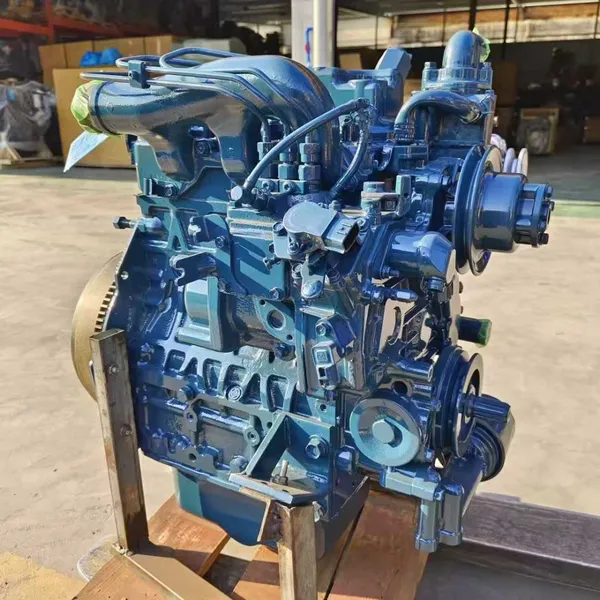 Read More

Contact Us
Recommended Products
-
 New 129 kW QSB6.7 Diesel Engine Excavator Construction Machinery Electric Start Water-Cooled Core Including Motor PumpUS$ 1888.00 - 3888.00MOQ: 1 Unit
-
Wholesale Diesel Engine Genuine 4 Stroke Direct Injection Doosan DL08 Engine for SaleUS$ 4558.00 - 4800.00MOQ: 1 Unit
-
Factory Price DOOSAN DL06 Construction Machinery Motor 6 Cylinder 115kw Water-Cooled With Core Components Engine and PumpUS$ 4752.00 - 5000.00MOQ: 1 Unit
-
Factory Price 4 Stroke 115kw Doosan DB58 Complete Engine Assy for Dx220 ExcavatorUS$ 3450.00 - 3650.00MOQ: 1 Unit
-
Factory Manufacture 123kw 4 Stroke Volvo D6e Machinery Engine for Construction MachineryUS$ 7500.00MOQ: 1 Unit
-
New BF6M2012C Cylinder 4-stroke Original Water-cooled Generator With Live Start FunctionUS$ 4500.00 - 5400.00MOQ: 1 Unit
-
Original Water Cooled 4 Stroke 6 Cylinder DEUTZ TCD2012062V Machinery EnginesUS$ 4888.00 - 5081.00MOQ: 1 Unit
-
Factory Outlet 6 Cylinder 250HP 2200rpm 6C8.3-C250 Construction Machinery Engines for CuminsUS$ 34627.00 - 36450.00MOQ: 1 Unit
-
1104D-44TA Diesel Engine 83kw New Water-Cooled Machine With Electric Start and Pump Good Price Per UnitUS$ 3700.00 - 4200.00MOQ: 1 Unit
-
Original Water Cooled 4 Stroke DEUTZ TCD 2013 L06 2V Machinery Engines for SaleUS$ 7070.00 - 7443.00MOQ: 1 Unit
-
Excavator Engine Assy QSL8.9 Complete Engine Assembly CUMMINS Qsl 9 Diesel EngineUS$ 4300.00 - 4600.00MOQ: 1 Unit
-
Genuine Vovo D4d EAE2 Diesel Engine for VOLVO EC140 ExcavatorNegotiableMOQ: 1 Unit
-
Factory Outlet 6 Cylinder 250HP 2200rpm 6C8.3-C250 Construction Machinery Engines for CuminsUS$ 4700.00 - 5100.00MOQ: 1 Unit
-
Good Price 153kw 4 Stroke Electric Start D7E Diesel Engine for Construction MachineryUS$ 8350.00MOQ: 1 Unit
-
WEICHAI 178kw 4 Stroke WD10G240E203 Diesel Engine for SEM660D SEM660B Wheel LoaderUS$ 3920.00 - 4127.00MOQ: 1 Unit
-
Dongfeng Shanghai SC11CB220G2B1 6-Cylinder Diesel Engine 162kw (220hp) SDEC 3306 New Condition Core Included Farm MachineryUS$ 6500.00MOQ: 1 Unit
-
ISUZU 4 Cylinder Diesel Engine 4BG1 Machinery Engines for Kobelco SK135 ExcavatorUS$ 6800.00MOQ: 1 Unit
-
130Hp Diesel Engine YC4D130 Yuchai Diesel Motor Price for TruckUS$ 3400.00 - 3600.00MOQ: 1 Unit
-
Shanghai SDEC SC9D220G2 162KW Diesel Engine for SEM922 SEM921 GraderUS$ 5320.00 - 5600.00MOQ: 1 Unit
-
Factory Outlet Sinotruk D1242 Engine Assembly for Construction IndustryUS$ 4615.00 - 4858.00MOQ: 1 Unit