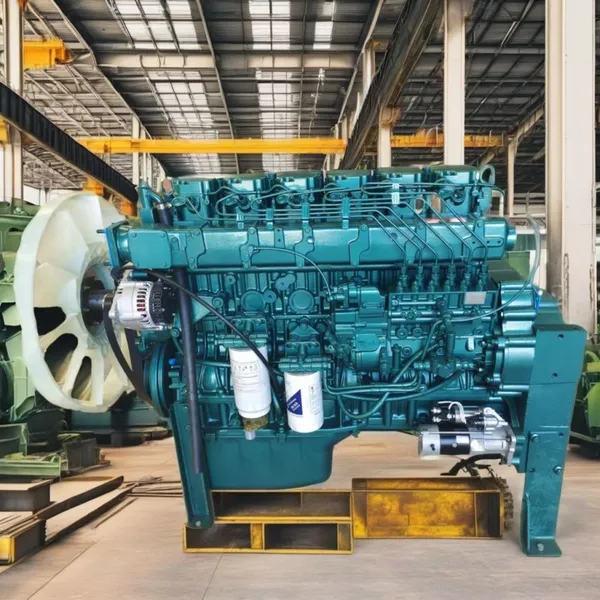

 Business License

VOLVO D8H vs VOLVO D7E: Power and Torque Compared
A VOLVO D8H vs VOLVO D7E comparison usually arrives as two figures written on a page, and that is the poorest form the question can take. The two units come from one industrial lineage and share a layout, so the interesting difference is not a headline number but the shape of the curve underneath it. One is the larger member of the pair, and the way its extra volume changes the shape of its output is what a machine actually feels.
What follows sets a D8H engine power comparison on the terms a buyer can use, treats a VOLVO engine torque comparison as a question about where the load sits in the speed range, and closes on the hardware that produces each shape. Neither unit is presented as the stronger one, because strength without a duty describes nothing a fleet can act on.
Two facts frame the whole discussion. A power figure is a statement about one point under named conditions, and a torque figure is a statement about turning effort at a stated speed. Both are read on a curve rather than on a label, and Jining Pinbo Import and Export asks a buyer which point of the curve the machine lives on before it puts a size forward.
1. VOLVO D8H vs VOLVO D7E: Two Curves Read Against One Duty
The pair sits one step apart in swept volume inside a single six cylinder family, with the D8H as the larger of the two. Each draws its air through a charger and cools that charge before it reaches the manifold, and each is built for industrial and vehicle work rather than for a single narrow field. That shared ground is why the comparison is about shape rather than about class.
A machine never works at the point a brochure quotes. It works at a speed and a load that its own task chooses, and it spends most of its life somewhere in the middle of the curve. A comparison that stops at the rated figure therefore compares two labels and leaves the working point untouched, which is where the decision actually sits.
Swap the question round and the useful version appears. Not which engine puts out more, but which shape of output suits the work the machine is bought to do. That question can be answered from the curves, and it can be answered before a quotation is requested.
2. D8H Engine Power Comparison: What a Rated Figure Is a Statement About
A rated power figure is a point on a curve under named conditions. It carries a speed at which the figure is measured, an ambient air temperature, a barometric or altitude reference, a fuel setting and an aspiration arrangement. Change any of those and the figure moves, which is why two published numbers for one engine can differ without either being wrong.
The second half of the statement is the duty the rating belongs to. A figure published for continuous work is a promise about hours and is set lower than a figure published for intermittent work on the same block. A buyer who compares a continuous figure from one sheet with an intermittent figure from another has compared nothing at all.
The practical rule follows from those two points. Read a rated figure together with its speed, its conditions and its duty class, and hold all four in view. A number lifted on its own travels badly, and it is the single most common error in a D8H engine power comparison.
3. VOLVO Engine Torque Comparison: Rated Torque, Peak Torque and the Rise Between
Torque is the turning effort the crankshaft can deliver, and it is reported at more than one speed. The figure at rated speed is what the engine holds while producing its rated power. The peak figure sits lower down the range, usually somewhere in the middle of the working band, and the difference between the two is the rise.
That rise is the property a machine meets when the load increases without warning. A bucket meets a face, a haul road steepens, a hydraulic circuit stalls, and the engine has to carry the extra effort by falling back to a speed where it can produce more torque. A build with a healthy rise absorbs the event and keeps the machine moving.
A VOLVO engine torque comparison is worth making in those terms. Plot the effort available against speed, mark the two points the machine uses, and the shape between them describes how much the unit can take before the operator has to intervene. A single peak figure hides that shape and can flatter an engine that falls away quickly either side of it.
4. VOLVO D8H vs VOLVO D7E: Where the Extra Litre Shows Up
More swept volume does not automatically mean a taller curve. It means the same turning effort can be produced at a lower speed, which shifts the whole useful band down the speed range. That shift is the practical content of this comparison, and it is easier to feel on a machine than to read on a brochure.
Two consequences follow. The larger unit can hold a given load at fewer revolutions, or produce more effort at the same revolutions, depending on how it is set. The smaller unit reaches its own figures higher up the range, which suits work that runs at a steady speed and does not need effort low down.
Neither consequence is an advantage by itself. An engine held at low speed for long periods must reject heat with less airflow from its fan and less oil movement in its galleries, which is a real constraint in a dusty or hot installation. A VOLVO D8H vs VOLVO D7E decision made on the curve alone has skipped a step that the installation will charge for later.
5. D8H Engine Power Comparison: Torque Reserve and What a Machine Does With It
Torque reserve is the margin an engine holds above the effort a steady load requires, and it is what pays for surprises. A machine working at the top of its band leaves nothing in hand, so any step in the load costs it speed, and a long enough step costs it the cycle. A machine working with reserve absorbs the same step and keeps going.
The size of the step a task presents is therefore the first question, not the size of the engine. Cyclic work presents large steps at a low average, while steady haulage presents a small step held for hours. Those two patterns ask for different shapes from the same pair of engines, and a fleet that mixes them has to choose which pattern it is optimising for.
Reserve also decides how much of the rated figure a machine can use as a working figure. An engine run near its limit for a living wears its injection equipment, its bearings and its cooling system faster than one carried at three quarters. That is not an argument for buying the largest unit available, because an engine working far below its band runs cold and dirty. It is an argument for matching the figure to the work.
6. VOLVO Engine Torque Comparison: Matching a Curve Shape to a Working Pattern
A VOLVO engine torque comparison becomes a decision when it is written against the pattern of a working day. Four patterns cover most industrial and vehicle duty, and each makes its own demand on the shape of the curve.
| Working pattern | What the curve has to do | Which shape fits more naturally |
|---|---|---|
| Steady haulage at one road speed | Hold output at a single point for hours | The larger unit, working at lower revolutions |
| Cyclic work with repeated steps | Absorb each step and recover speed | Either, decided by the size of the step rather than the size of the engine |
| Stationary drive at a governed speed | Keep the figure fixed and stay light on fuel | The unit sized to the load, not the larger member of the pair |
| Seasonal plant run hard for part of a year | Tolerate a high share of capacity for weeks | The unit that carries margin at the working point |
The table changes the form of the question. Instead of asking which engine is stronger, the buyer asks which shape the machine can use, and that question has an answer that survives a change of price. It also explains why two fleets running comparable work sometimes choose differently without either being mistaken.
The last row deserves a word, because seasonal work is where engines are most often overworked and most often overbought. A plant that runs hard for a few weeks and stands for the rest of the year needs margin during those weeks and does not benefit from a large unit sitting idle afterwards.
7. VOLVO D8H vs VOLVO D7E: The Hardware Behind the Shape
The shape of a curve comes from hardware rather than from tuning alone. Swept volume sets the ceiling, the charger match decides how quickly the ceiling is reached, and charge cooling decides how much air can be used before the exhaust temperature becomes a limit.
Injection is the other half. The pressure at which fuel is delivered, the number of events per cycle and the way the calibration maps fuel against speed together decide where peak torque sits and how flat the curve is either side of it. Two builds of one block can therefore be set for different work without any change to the castings.
This is why a VOLVO D8H vs VOLVO D7E comparison should be finished on the actual build offered rather than on the family name. The same designation may be prepared for a governed generator drive, for a machine that follows a hydraulic load, or for a vehicle that spends its day at a steady speed. Each preparation changes the curve a buyer will feel.
Jining Pinbo Import and Export asks for the working pattern before it puts one of the pair forward, because the calibration and the rating belong with the duty rather than with the model. Pinbo Power treats a curve without its duty as an unfinished description.
8. D8H Engine Power Comparison: What the Sheets Leave to the Installation
An engine does not produce its published figures in every machine. The air it breathes is filtered and carried through ducting, the cooling system is sized by the machine builder, and the exhaust is routed to wherever the machine has room for it. Each of those adds resistance the test bench did not have.
Altitude and ambient heat reduce the mass of air an engine can draw, so both reduce the output it can hold. The correction should be made for the site rather than read from a sheet at its reference conditions. A D8H engine power comparison made at sea level and applied to a site high above it will overstate what the unit can do.
The driven equipment completes the picture. A hydraulic pump, a torque converter or a generator each imposes its own demand, and the match between that demand and the curve decides how the machine behaves at its worst moment. Support after the sale belongs in the same list, since a curve is of no use to a fleet that cannot get a part.
The honest summary of this comparison is short. Both units are capable members of one family, the larger one offers its effort lower in the speed range, and the choice between them is settled by the pattern of the work, the installation it sits in, and the support available where the machine runs. Jining Pinbo Import and Export Co Ltd keeps the working pattern with each order for that reason, so a question raised about a machine later is answered from the duty it was bought for rather than from the model name on its plate.
9. Frequently Asked Questions
9.1 In a VOLVO D8H vs VOLVO D7E comparison, what actually differs?
The two units belong to one six cylinder industrial family, and the larger of the pair carries more swept volume. What that buys is effort lower in the speed range rather than a different kind of engine, so the larger unit can hold a given load at fewer revolutions while the smaller one reaches its own figures higher up. Published ratings also differ by duty class, and a continuous figure is set lower than an intermittent one on the same block. Because of that, the meaningful comparison is between two curves read at the speed the machine actually works at.
9.2 What does a D8H engine power comparison have to state?
It has to state the speed at which each figure is measured, the conditions the figure is valid in, and the duty class the rating belongs to. A power figure without those three is a point on a curve with no axes, and it cannot be compared with anything. Altitude and ambient temperature belong in the same sentence, because both reduce the air an engine can draw and therefore the output it can hold. A buyer who collects those entries for both units will find the comparison settles itself, often before a price is discussed.
9.3 How is a VOLVO engine torque comparison used in practice?
It is used to answer how much effort a machine has in hand when a load arrives without warning. Rated torque is the effort at rated speed, peak torque sits lower down the range, and the rise between them is what absorbs a bucket meeting a face or a grade steepening under a load. A build with a healthy rise keeps the machine moving without intervention. The comparison is made by marking the two speeds the machine actually uses and reading the shape between them, rather than by taking the highest figure on the sheet.
9.4 Which of the two suits a machine that works cyclically?
That is decided by the size of the step the cycle presents rather than by the size of the engine. A cycle built on large, sudden demands rewards effort low in the speed range, which is where the larger unit is comfortable. A cycle made of small, frequent steps at moderate speed can be served by either, and the smaller unit often returns better fuel figures while holding the same work. A buyer who states the step size, the average load and the hours a year receives a recommendation rather than a choice between two model names.
Recently Posted
-
How to Source a Genuine 6CTA8.3-C260 Engine: Buyer Checklist
October 28, 2026A buyer in eastern Europe paid a deposit against an engine advertised as genuine, and the crate that arrived held a rebuilt unit w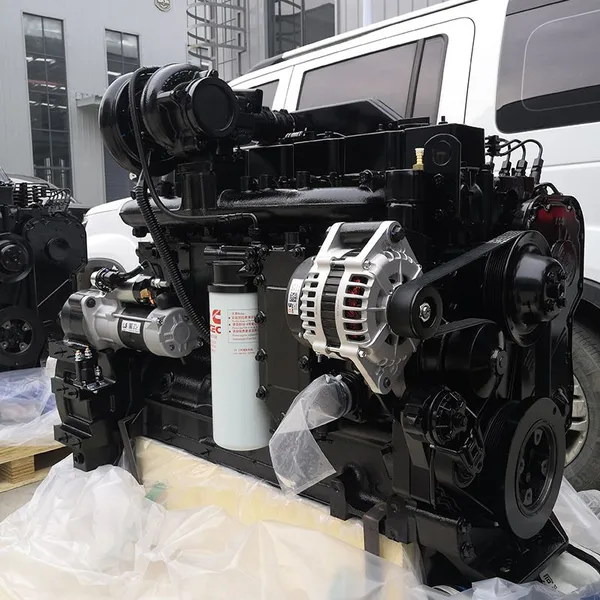 Read More
-
VOLVO D8H vs DEUTZ BF6M1015: Which Engine Suits Heavy Duty Work
October 28, 2026A VOLVO D8H vs DEUTZ BF6M1015 question is rarely about output at all. It arrives from a fleet that has a machine or a vehicle work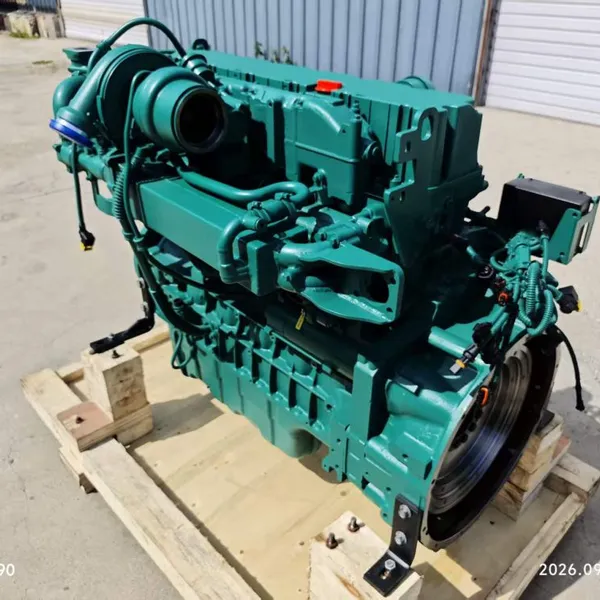 Read More
-
Kubota V3300 vs V3800: Choosing a Compact Industrial Diesel
October 27, 2026A machine builder once offered one chassis with a choice of two engines from the same family, and the specification sheet made the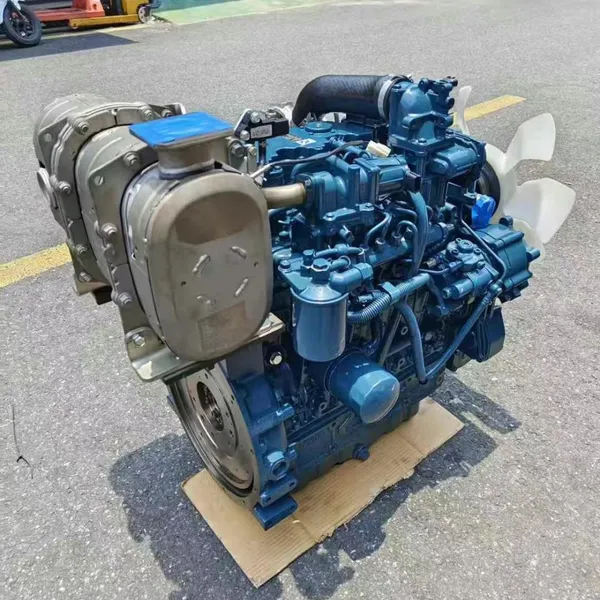 Read More
-
Kubota V3300 vs Yanmar 4TNV98: Compact Engine Comparison
October 27, 2026A workshop asked to repower a compact machine once described the two engines it was choosing between as the same unit with differe Read More

Contact Us
Recommended Products
-
 New 129 kW QSB6.7 Diesel Engine Excavator Construction Machinery Electric Start Water-Cooled Core Including Motor PumpUS$ 1888.00 - 3888.00MOQ: 1 Unit
-
Wholesale Diesel Engine Genuine 4 Stroke Direct Injection Doosan DL08 Engine for SaleUS$ 4558.00 - 4800.00MOQ: 1 Unit
-
Factory Price DOOSAN DL06 Construction Machinery Motor 6 Cylinder 115kw Water-Cooled With Core Components Engine and PumpUS$ 4752.00 - 5000.00MOQ: 1 Unit
-
Factory Price 4 Stroke 115kw Doosan DB58 Complete Engine Assy for Dx220 ExcavatorUS$ 3450.00 - 3650.00MOQ: 1 Unit
-
Factory Manufacture 123kw 4 Stroke Volvo D6e Machinery Engine for Construction MachineryUS$ 7500.00MOQ: 1 Unit
-
New BF6M2012C Cylinder 4-stroke Original Water-cooled Generator With Live Start FunctionUS$ 4500.00 - 5400.00MOQ: 1 Unit
-
Original Water Cooled 4 Stroke 6 Cylinder DEUTZ TCD2012062V Machinery EnginesUS$ 4888.00 - 5081.00MOQ: 1 Unit
-
Factory Outlet 6 Cylinder 250HP 2200rpm 6C8.3-C250 Construction Machinery Engines for CuminsUS$ 34627.00 - 36450.00MOQ: 1 Unit
-
1104D-44TA Diesel Engine 83kw New Water-Cooled Machine With Electric Start and Pump Good Price Per UnitUS$ 3700.00 - 4200.00MOQ: 1 Unit
-
Original Water Cooled 4 Stroke DEUTZ TCD 2013 L06 2V Machinery Engines for SaleUS$ 7070.00 - 7443.00MOQ: 1 Unit
-
Excavator Engine Assy QSL8.9 Complete Engine Assembly CUMMINS Qsl 9 Diesel EngineUS$ 4300.00 - 4600.00MOQ: 1 Unit
-
Genuine Vovo D4d EAE2 Diesel Engine for VOLVO EC140 ExcavatorNegotiableMOQ: 1 Unit
-
Factory Outlet 6 Cylinder 250HP 2200rpm 6C8.3-C250 Construction Machinery Engines for CuminsUS$ 4700.00 - 5100.00MOQ: 1 Unit
-
Good Price 153kw 4 Stroke Electric Start D7E Diesel Engine for Construction MachineryUS$ 8350.00MOQ: 1 Unit
-
WEICHAI 178kw 4 Stroke WD10G240E203 Diesel Engine for SEM660D SEM660B Wheel LoaderUS$ 3920.00 - 4127.00MOQ: 1 Unit
-
Dongfeng Shanghai SC11CB220G2B1 6-Cylinder Diesel Engine 162kw (220hp) SDEC 3306 New Condition Core Included Farm MachineryUS$ 6500.00MOQ: 1 Unit
-
ISUZU 4 Cylinder Diesel Engine 4BG1 Machinery Engines for Kobelco SK135 ExcavatorUS$ 6800.00MOQ: 1 Unit
-
130Hp Diesel Engine YC4D130 Yuchai Diesel Motor Price for TruckUS$ 3400.00 - 3600.00MOQ: 1 Unit
-
Shanghai SDEC SC9D220G2 162KW Diesel Engine for SEM922 SEM921 GraderUS$ 5320.00 - 5600.00MOQ: 1 Unit
-
Factory Outlet Sinotruk D1242 Engine Assembly for Construction IndustryUS$ 4615.00 - 4858.00MOQ: 1 Unit