
 Business License

Kubota V3300 vs V3800: Choosing a Compact Industrial Diesel
A machine builder once offered one chassis with a choice of two engines from the same family, and the specification sheet made the decision look simple. The larger unit carried a few more kilowatts and a little more torque, and there the sheet stopped.
What the sheet could not carry was the difference in the field. A machine that spends its day at part load behaves differently from one that holds its working point for hours, and the gap between two engines of one family shows up there rather than on paper.
These notes take the Kubota V3300 vs V3800 question as it arrives from a builder, from a fleet and from an operator, set out a compact industrial diesel selection method that begins with the duty instead of the figure, and gather what a V3300 engine comparison guide is worth checking once a unit is on the bench.
1. Kubota V3300 vs V3800: Two Units From One Family
The Kubota V3300 vs V3800 choice is narrow on purpose, because the two units come from one family and share most of what a machine sees.
Both are four cylinder liquid cooled diesels built on the same pattern, and the figure after the V in each name approximates the swept volume in cubic centimetres. The difference between them is roughly half a litre, made inside the same cylinder family rather than by adding another cylinder.
That shared origin is why the comparison is interesting at all. The mounting feet, the connection points and the general service layout are close enough that a chassis can be drawn to accept either unit, and the step between them is a specification option rather than a change of machine.
What grows with the volume is the output. Comparable builds of the two sit roughly fifteen kilowatts apart, and the torque figure moves with it right across the working range rather than at the top alone.
2. Compact Industrial Diesel Selection: What the Extra Volume Buys
Compact industrial diesel selection is often written up as a search for the highest figure, and the useful answer is narrower than that.
The first thing the extra volume buys is reserve at the working point. An engine rated a step below the duty it meets lives at the top of its class, and the top of a class is a place a machine can visit but not a place it can live.
The second is the ability to carry two demands at once. A compact machine drives its own transmission and works a hydraulic circuit, and on a busy cycle both are loaded together, so the sum is what the engine has to hold.
The third is margin against conditions. Air thins with altitude and charge density falls as ambient temperature rises, so an engine specified at its limit in a temperate workshop may be short of output on a site that is neither temperate nor at sea level.
The fourth is life. An engine working inside its class reaches its overhaul on the hours written in the book, while one that is worked outside it tends to arrive early, and the cost of that arrives as unplanned downtime.
3. V3300 Engine Comparison Guide: The Machine Side of the Decision
A V3300 engine comparison guide that stops at the engine leaves out half of what decides the answer, because the machine around it has to accept the unit chosen.
Sharing a family does a lot of work here. Mounting points, connection positions and the route of the service items stay close enough between the two that a builder can offer both in one chassis without redrawing the frame.
The packages around the engine are not shared, though. The radiator is sized to the heat the unit rejects, the air cleaner to the flow it draws, and the coupling to the pump to the torque it delivers. A machine specified for the smaller unit and reordered with the larger one needs those items checked rather than assumed.
Mass moves as well, and on a compact machine the mass is noticeable. An engine of the next size up adds weight at the front end, which changes the balance of a machine that is already sized close to its axles.
4. Kubota V3300 vs V3800: The Load Pattern That Decides
The Kubota V3300 vs V3800 decision turns on how the load arrives rather than on how large it becomes.
Some duties are built from peaks. A loader tilting a full bucket, a breaker striking, a machine pulling against an obstacle, each asks for a short burst at the top of the range and then returns to a lighter demand between them.
Other duties are built from long spells at a working point. A mower running a wide deck across a field, a pump running continuously, a trencher working through a run of ground, each holds the engine near the same load for hours at a time.
The pattern decides which unit belongs on the machine, and the table below sets out how the two answer it.
| Load pattern | Smaller unit | Larger unit |
|---|---|---|
| Short peaks between light spells | Holds the peaks from torque reserve | Carries peaks without noticing them |
| Long spells at a working point | Sits at the top of its class | Holds the point inside its class |
| Two circuits at once | Depends on how much they overlap | Keeps margin across the overlap |
| High site, hot day | Loses the most to derating | Absorbs part of the loss |
An owner who cannot say which row the machine belongs in usually has not measured the duty, and a week with a load recorder settles more than a season of opinion.
5. Compact Industrial Diesel Selection: Where the Smaller Unit Answers
Compact industrial diesel selection is not a march towards the bigger option, and there are duties where the smaller unit is the better engineering answer.
A machine that never reaches the top of its range carries the extra litre as dead weight and as friction. It burns more fuel at part load than the unit it replaced, because a larger displacement moves more air through the same cycle to make the same output.
The front end is the second reason. A lighter engine leaves room for counterweight elsewhere, and on a machine with a narrow track that difference is felt in stability rather than read on a sheet.
The third is the enclosure. A compact machine wraps its engine tightly, and a unit at the smaller end of a family sits more easily inside the space available, with more air left around it for cooling.
The fourth is cost, which reaches further than the price of the engine. A smaller unit needs a smaller radiator, a smaller cleaner and often a lighter pump drive, and those savings travel with every machine in a batch.
Pinbo Power begins a comparison at the duty for that reason, since the unit that suits a machine is not always the larger of the two on offer.
6. V3300 Engine Comparison Guide: Fuel, Service and the Parts Shelf
A V3300 engine comparison guide earns its keep when it moves from output to the running costs that follow the choice.
Fuel is the first of them, and it does not scale with displacement in the way an owner might expect. A larger engine at light load and a smaller engine at heavy load can arrive at similar consumption for the same work, while the smaller one pushed to its limit is the thirstier of the two in proportion to what it produces.
Service falls on hours of running, and the intervals inside one family are set on the same basis, so the two units ask for attention on comparable schedules. The consumables differ, however, since filters, belts and cooling parts are specified per build.
The parts shelf is where a fleet feels the decision. Two displacements from one family share a good deal at the level of tooling and procedure, and a fleet that already runs one of them starts from a known position when it adds the other.
7. Kubota V3300 vs V3800: Telling the Two Apart
The Kubota V3300 vs V3800 question also arrives from the other direction, when a unit has to be identified before anything is ordered for it.
The two look alike on a bench. The external envelope is close enough that a glance is not a method, and the cast surfaces carry more resemblance than difference.
The plate is the first place to look, and the block casting is the second. Where a plate is missing or painted over, measurement of the cylinder dimensions settles the displacement, and the accessory arrangement around the block often carries a part number that confirms it.
Photographs do the same work at a distance. A supplier asked to match a replacement benefits from images of the plate, the manifold side, the front end and the mountings, since a unit of the wrong displacement will fit a bay and still be the wrong engine.
8. Compact Industrial Diesel Selection: Three Questions That Settle It
Compact industrial diesel selection reduces to three questions for most buyers, and they are worth answering in order before a quotation is requested.
The first is the duty. What the machine spends its hours doing, and how much of that time sits near the top of the range, decides how much margin the engine needs.
The second is the machine. Whether the chassis and the packages around the engine will accept the larger unit without changes is a question for the builder rather than the engine catalogue.
The third is the fleet. Two displacements across one workshop means two sets of consumables, and a fleet that services its own machines at a distance from its base may value uniformity over a marginal gain.
Jining Pinbo Import and Export puts the question about duty ahead of the question about size, because the answer settles which of the two applies. Pinbo Power files the specification of each machine it supplies alongside the order, and the implements that machine runs belong in the same place. Jining Pinbo Import and Export Co Ltd reads that file before answering a parts enquiry, so a spare ordered two seasons later is matched to the machine it was fitted to.
9. Frequently Asked Questions
9.1 How large is the Kubota V3300 vs V3800 difference in practice?
The Kubota V3300 vs V3800 difference comes to roughly half a litre of swept volume and about fifteen kilowatts between comparable builds. Both units are four cylinder liquid cooled diesels of the same family, which is why they can be offered in one chassis. In practice the gap matters most at the working point rather than at the peak, because the larger unit holds a sustained load inside its class while the smaller one meets the same load at the top of its own. Fuel use at part load can favour the smaller of the two.
9.2 Why does compact industrial diesel selection begin with the duty?
Compact industrial diesel selection begins with the duty because a compact machine is specified close to the work it does. There is little spare capacity, so whether the load arrives as short peaks or as long spells at a working point decides how much margin the engine needs. A duty built from peaks can be met from torque reserve, while a duty held for hours asks for an engine that sits inside its class throughout. Measuring the duty for a week answers the question better than a comparison of catalogue figures.
9.3 What should a V3300 engine comparison guide include beyond output?
A V3300 engine comparison guide should cover the packages around the engine as well as the unit itself. Radiator size, air cleaner capacity and pump coupling follow the engine and are not shared between the two displacements, so a machine reordered with the larger unit needs those items checked. The guide should also weigh mass at the front end, the space left inside the enclosure, and the running costs that follow. Two displacements also mean two sets of consumables for a fleet to hold.
9.4 Can the two units be exchanged in one machine?
Exchanging the two units in one machine is possible where the chassis was drawn to accept either, and it is not a straight swap everywhere. The mounting points and connection positions stay close between them, but the radiator, the air cleaner and the coupling are sized per engine. The weight difference also moves the balance of a compact machine. A machine repowered with the larger unit is better treated as a specification change, with the surrounding packages reviewed before the order rather than after.
Recently Posted
-
Kubota V3300 vs Yanmar 4TNV98: Compact Engine Comparison
October 27, 2026A workshop asked to repower a compact machine once described the two engines it was choosing between as the same unit with differe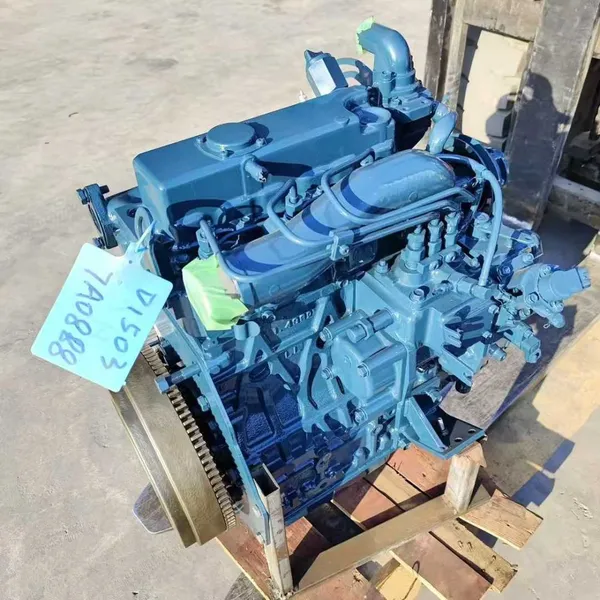 Read More
-
VOLVO D7E vs VOLVO D6E: Displacement and Application Compared
October 27, 2026A contractor with a loader that had thrown a rod asked for a price on the same model again and a price on the larger one, expectin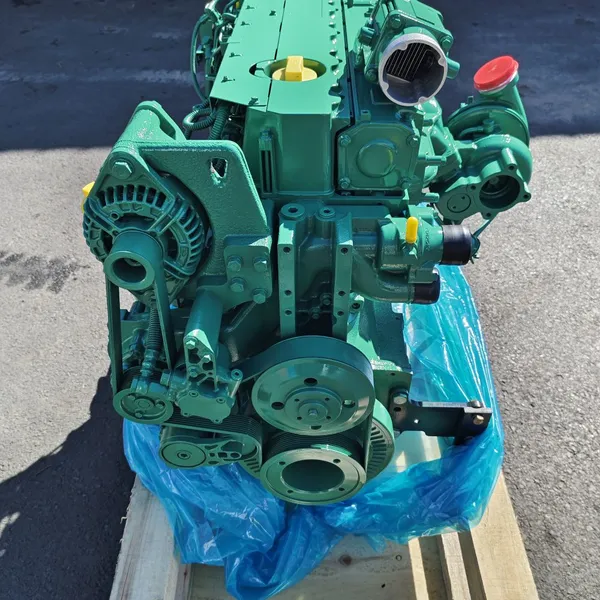 Read More
-
KTTA19-C700 vs KTA19-C700: Turbocharging and Output Compared
October 26, 2026A yard asked for a quotation on a nineteen litre engine and received two offers, one for a KTA build and one for a KTTA build. The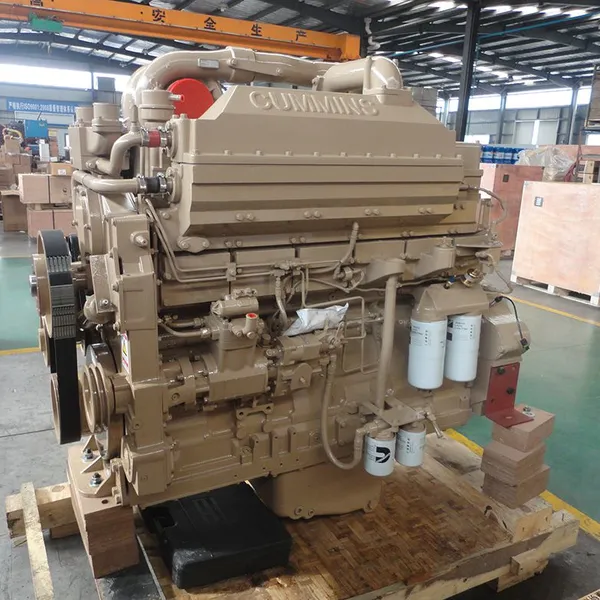 Read More
-
KTA38-M2 vs KTTA19-C700: Matching Marine Engine Ratings to Vessel Duty
October 26, 2026A yard working on a twin screw vessel received two offers for the main machinery. One proposed a single large engine on one shaft, Read More

Contact Us
Recommended Products
-
 New 129 kW QSB6.7 Diesel Engine Excavator Construction Machinery Electric Start Water-Cooled Core Including Motor PumpUS$ 1888.00 - 3888.00MOQ: 1 Unit
-
Wholesale Diesel Engine Genuine 4 Stroke Direct Injection Doosan DL08 Engine for SaleUS$ 4558.00 - 4800.00MOQ: 1 Unit
-
Factory Price DOOSAN DL06 Construction Machinery Motor 6 Cylinder 115kw Water-Cooled With Core Components Engine and PumpUS$ 4752.00 - 5000.00MOQ: 1 Unit
-
Factory Price 4 Stroke 115kw Doosan DB58 Complete Engine Assy for Dx220 ExcavatorUS$ 3450.00 - 3650.00MOQ: 1 Unit
-
Factory Manufacture 123kw 4 Stroke Volvo D6e Machinery Engine for Construction MachineryUS$ 7500.00MOQ: 1 Unit
-
New BF6M2012C Cylinder 4-stroke Original Water-cooled Generator With Live Start FunctionUS$ 4500.00 - 5400.00MOQ: 1 Unit
-
Original Water Cooled 4 Stroke 6 Cylinder DEUTZ TCD2012062V Machinery EnginesUS$ 4888.00 - 5081.00MOQ: 1 Unit
-
Factory Outlet 6 Cylinder 250HP 2200rpm 6C8.3-C250 Construction Machinery Engines for CuminsUS$ 34627.00 - 36450.00MOQ: 1 Unit
-
1104D-44TA Diesel Engine 83kw New Water-Cooled Machine With Electric Start and Pump Good Price Per UnitUS$ 3700.00 - 4200.00MOQ: 1 Unit
-
Original Water Cooled 4 Stroke DEUTZ TCD 2013 L06 2V Machinery Engines for SaleUS$ 7070.00 - 7443.00MOQ: 1 Unit
-
Excavator Engine Assy QSL8.9 Complete Engine Assembly CUMMINS Qsl 9 Diesel EngineUS$ 4300.00 - 4600.00MOQ: 1 Unit
-
Genuine Vovo D4d EAE2 Diesel Engine for VOLVO EC140 ExcavatorNegotiableMOQ: 1 Unit
-
Factory Outlet 6 Cylinder 250HP 2200rpm 6C8.3-C250 Construction Machinery Engines for CuminsUS$ 4700.00 - 5100.00MOQ: 1 Unit
-
Good Price 153kw 4 Stroke Electric Start D7E Diesel Engine for Construction MachineryUS$ 8350.00MOQ: 1 Unit
-
WEICHAI 178kw 4 Stroke WD10G240E203 Diesel Engine for SEM660D SEM660B Wheel LoaderUS$ 3920.00 - 4127.00MOQ: 1 Unit
-
Dongfeng Shanghai SC11CB220G2B1 6-Cylinder Diesel Engine 162kw (220hp) SDEC 3306 New Condition Core Included Farm MachineryUS$ 6500.00MOQ: 1 Unit
-
ISUZU 4 Cylinder Diesel Engine 4BG1 Machinery Engines for Kobelco SK135 ExcavatorUS$ 6800.00MOQ: 1 Unit
-
130Hp Diesel Engine YC4D130 Yuchai Diesel Motor Price for TruckUS$ 3400.00 - 3600.00MOQ: 1 Unit
-
Shanghai SDEC SC9D220G2 162KW Diesel Engine for SEM922 SEM921 GraderUS$ 5320.00 - 5600.00MOQ: 1 Unit
-
Factory Outlet Sinotruk D1242 Engine Assembly for Construction IndustryUS$ 4615.00 - 4858.00MOQ: 1 Unit