
 Business License

VOLVO D7E vs VOLVO D6E: Displacement and Application Compared
A contractor with a loader that had thrown a rod asked for a price on the same model again and a price on the larger one, expecting the second figure to explain itself. The two units are relatives, share a cylinder count and a cooling method, and sit a little over a litre apart in swept volume. Whether that litre matters depends almost entirely on where the old engine was working in its own range.
A VOLVO D7E vs VOLVO D6E comparison is rarely a question about which engine is better, because both are sound units from the same family. It is a question about which of the two is working comfortably in the machine it will be fitted to, and that question answers itself once the duty and the bay are written down.
What follows sets a D7E engine displacement comparison on the terms that decide a repower, treats a VOLVO engine application comparison as a question about the machine rather than about the catalogue, and closes with the three measurements that settle the choice before a quotation is requested.
1. VOLVO D7E vs VOLVO D6E: A Question That Rarely Starts at a Price List
New machines almost never present this choice. A machine builder selects a power unit while the machine is still on the drawing board, and the buyer receives a finished product with one engine already in it. The comparison arrives later, when the machine exists and the engine has to be chosen around it.
A VOLVO D7E vs VOLVO D6E decision usually begins with a photograph of an empty bay or a failed unit on a pallet. The frame is there, the pipework is there, the cooling package has been sized already, and whatever is chosen has to live inside those facts.
That is the opposite of a clean sheet. On a drawing board the answer follows the duty, and on an existing machine the answer follows the constraints first and the duty second, with the two reconciled before a quotation is worth preparing.
Jining Pinbo Import and Export starts those enquiries with the machine rather than the model, and asks for the bay dimensions and the old plate before naming either unit. A comparison made without them describes two engines, not one machine.
2. VOLVO D7E vs VOLVO D6E: Two Volumes From the Same Six Cylinders
Both units are inline six cylinder, liquid cooled, four stroke diesels of the same industrial lineage, and both are used across construction machinery, material handling and stationary drive work. The difference between them sits in swept volume: one comes in a little under six litres and the other a little over seven.
Because the cylinder count and the cooling method match, the two share a great deal on the outside. Service access, oil and filter routines, coolant practice and the general layout of the installation follow the same habits, which is why a decision between them can be made on the machine without reopening every question about maintenance.
| Item | The smaller unit | The larger unit |
|---|---|---|
| Cylinder count | Six, inline | Six, inline |
| Swept volume | A little under six litres | A little over seven litres |
| Bore | Narrower | Wider |
| Stroke | Slightly shorter | Slightly longer |
| Power band | Lower of the two | One step higher |
| Typical home | Mid size loaders, handlers, stationary drive | Heavier loaders, larger stationary and plant drive |
The near match in layout is worth holding on to while reading the rest of this page. Most of what separates the two on a real machine is not the block but the space the block takes and the heat it has to shed.
3. D7E Engine Displacement Comparison: Where the Difference Comes From
The extra volume is made up of a wider bore and a slightly longer stroke rather than of an extra cylinder or a different configuration. That is a geometric difference, and geometry is what shapes the way an engine makes its power.
A wider bore with a comparable stroke gives more room for air and fuel each cycle, so the larger unit reaches a given output at a lower speed or holds a heavier load at the same speed. The smaller unit reaches its own output at a higher point in its range, which keeps the pistons and the head working harder for the same result.
On a machine, that difference reads as position rather than as size. A D7E engine displacement comparison is useful when it asks how far up its own range each unit must work to meet the same demand, because an engine working at three quarters of its capacity for a living ages differently from one working at the limit.
The same comparison of swept volume also carries a penalty for the larger unit. More volume means more metal, more oil and more friction, so an engine of this kind run at a very light load consumes more fuel per unit of work than the smaller one doing the same job.
4. VOLVO Engine Application Comparison: Four Situations Where the Choice Is Made
Four situations produce most of the enquiries of this kind, and each weighs the two units differently.
The first is a repower, where a failed engine is replaced in a machine that is otherwise sound. Here the bay decides, and the question is which unit can be made to fit without redesigning the machine around it.
The second is fleet standardisation, where an operator running several machines wants one service routine, one oil, one filter range and one training standard. Here the heaviest duty in the fleet sets the floor, and the trade is accepted on the lighter machines.
The third is the purchase of a used machine. Here the engine matters less than the record, because a unit of either size with a documented history is worth more than the other size with none. The fourth is a new build or a conversion of an unpowered machine, where the duty can be written down properly and the bay can still be shaped to suit the answer.
5. D7E Engine Displacement Comparison: The Repower Case
A repower begins with measurements rather than with displacement. The bay has already been laid out around one unit, so every interface is a constraint that the replacement has to meet or the machine has to be modified to accept.
The measurements worth taking first are the mounting feet and their spacing, the flywheel housing pattern, the output coupling, the front end accessory drive and the routes taken by the inlet and the exhaust. A larger unit is normally not the same shape at those points, so a repower upward usually involves new mounts, altered pipework and a different coupling arrangement.
Cooling is the next item and it is often the one that decides the matter. More swept volume means more heat to reject, and the radiator, the fan, its drive ratio and the air path through the enclosure were sized for the original engine. A bay that cannot pass more air will limit what can be installed in it, whatever the label on the crate says.
The control side closes the list. A machine assembled around a mechanically governed unit carries neither the sensors nor the wiring that an electronically managed replacement expects, so the harness and the instruments may have to change with the engine. Pinbo Power asks for pictures of the empty bay and the failed unit together, since the machine rather than the catalogue settles which of the two volumes goes back in.
6. VOLVO Engine Application Comparison: The Fleet Standard Case
Standardising a mixed fleet on one of these two units has a visible benefit and a hidden cost, and both deserve to be counted before the decision is made.
The benefit is repetition. One oil specification, one filter range, one set of tools, one diagnostic routine and one training message reach every machine in the yard, and a technician who has seen one unit has seen them all. For a fleet spread across several sites, that alone can outweigh a small difference in the engine specification sheet.
The cost appears on the lighter machines. A VOLVO engine application comparison made on a fleet basis sets the floor by the heaviest duty, which means the smallest machines in the fleet end up carrying more capacity than their work requires and paying for it in fuel and in purchase price.
Diagnostics belong in the same calculation. An electronically managed unit is serviced through a connection and a software routine, and a fleet moving from mechanically governed machines has to acquire the reader, the licences and the habit of using them. Jining Pinbo Import and Export raises that item at the order stage, since it changes the workshop budget rather than the engine price.
7. VOLVO D7E vs VOLVO D6E: Fuel, Service Window and Cost Across a Life
Running cost does not follow displacement on its own. A VOLVO D7E vs VOLVO D6E comparison on fuel turns on the load each unit carries, and on that basis the larger unit often wins at heavy steady work while the smaller one wins on light or intermittent duty.
The service side is similar in shape. The larger unit holds more oil and takes larger filters, so a single service costs more, while the longer intervals its greater capacity often allows can bring the cost per hour back into line. Whether it does depends on the duty, and a fleet that changes oil by the calendar rather than by the hour meter will not see the benefit.
Overhaul timing follows the load factor. Two units of different sizes doing identical work are not doing identical work internally, because the smaller one is closer to its limit throughout and the larger one is not. That difference usually shows up as an earlier overhaul on the unit that was working hardest, whichever size it happens to be.
Resale is the last item and it is often ignored. A machine carrying the more common power unit of its class is easier to place when it is sold on, and ease of sale is worth more to some operators than a marginal gain in fuel.
8. VOLVO Engine Application Comparison: How to Settle It in Three Steps
Three steps settle most of these decisions, and they are worth taking in order.
Write the worst duty down first, meaning the heaviest sustained demand the machine meets and the largest load step it has to absorb, together with the hours a year it runs. Measure the bay second, including mounting, coupling, cooling and the routes in and out, because those are the facts that cannot be argued with.
Check the support radius third. What can be delivered to the site quickly, and who there has worked on this family before? Where the three steps point to different answers, the first two carry the weight, since a support arrangement can be built over time and an interface cannot be talked into fitting.
Put the three on one page before an enquiry is sent. Jining Pinbo Import and Export reads that sheet before offering either unit, and the finished comparison usually names a build, a mounting set and a service list in one reply rather than in three exchanges.
9. Frequently Asked Questions
9.1 In a VOLVO D7E vs VOLVO D6E comparison, how large is the gap?
The gap is about a litre and a half of swept volume between two otherwise similar inline sixes, which works out at a modest step in output rather than a change of class. What makes the comparison interesting is not the size of the gap but its position: an engine working at three quarters of its range behaves differently over a life from one working near its limit. Both units are well supported wherever the family is common, so a VOLVO D7E vs VOLVO D6E question is settled in the machine rather than at the parts counter.
9.2 What does a D7E engine displacement comparison change in an installation?
It changes the heat load and the footprint rather than the layout. More swept volume means more heat to reject, so the radiator, the fan and the air path through the bay become the items to check. Mounting points and coupling arrangements differ as well, so an installation built around one unit will usually need brackets and pipework altered for the other. A D7E engine displacement comparison that stops at the figures has missed the two items that decide whether the work takes a morning or a fortnight.
9.3 When does a VOLVO engine application comparison point to the smaller unit?
It points that way when the machine works light or intermittently, when the bay is tight and the cooling package cannot grow, and when the same output can be reached without the extra capacity. Light duty is where the larger unit pays most clearly for its size, because friction and pumping losses do not shrink with the load. A VOLVO engine application comparison made on those three facts usually reaches the smaller unit without any further argument about output or class.
9.4 Can the two units be exchanged in the same machine?
They can in some frames and cannot in others, and the answer is a measurement rather than an opinion. Mounting feet, flywheel housing, coupling, front end drive and cooling are the five points to check against the machine. Where several differ, a repower is possible but becomes a project rather than a swap, and the bay should be measured before a price is requested. Photographs of the old unit and of the bay shorten the process, because a supplier who can see the machine knows which of the five points will need work.
Recently Posted
-
Kubota V3300 vs V3800: Choosing a Compact Industrial Diesel
October 27, 2026A machine builder once offered one chassis with a choice of two engines from the same family, and the specification sheet made the decision look simple. The larger unit carried a few more kilowatts and a little more torque, and there the sheet stopped. What the sheet could not carry was the difference in the field. A machine that spends its day at part load behaves differently from one that holds its working point for hours,Read More -
Kubota V3300 vs Yanmar 4TNV98: Compact Engine Comparison
October 27, 2026A workshop asked to repower a compact machine once described the two engines it was choosing between as the same unit with differe Read More
-
KTTA19-C700 vs KTA19-C700: Turbocharging and Output Compared
October 26, 2026A yard asked for a quotation on a nineteen litre engine and received two offers, one for a KTA build and one for a KTTA build. The Read More
-
KTA38-M2 vs KTTA19-C700: Matching Marine Engine Ratings to Vessel Duty
October 26, 2026A yard working on a twin screw vessel received two offers for the main machinery. One proposed a single large engine on one shaft, Read More

Contact Us
Recommended Products
-
 New 129 kW QSB6.7 Diesel Engine Excavator Construction Machinery Electric Start Water-Cooled Core Including Motor PumpUS$ 1888.00 - 3888.00MOQ: 1 Unit
-
Wholesale Diesel Engine Genuine 4 Stroke Direct Injection Doosan DL08 Engine for SaleUS$ 4558.00 - 4800.00MOQ: 1 Unit
-
Factory Price DOOSAN DL06 Construction Machinery Motor 6 Cylinder 115kw Water-Cooled With Core Components Engine and PumpUS$ 4752.00 - 5000.00MOQ: 1 Unit
-
Factory Price 4 Stroke 115kw Doosan DB58 Complete Engine Assy for Dx220 ExcavatorUS$ 3450.00 - 3650.00MOQ: 1 Unit
-
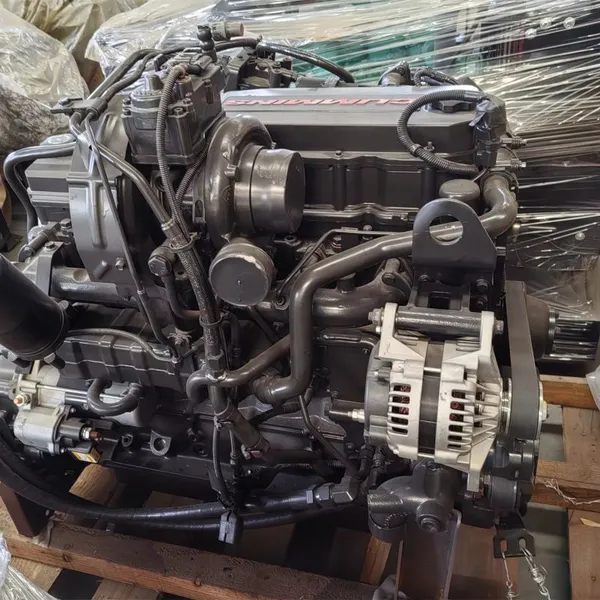
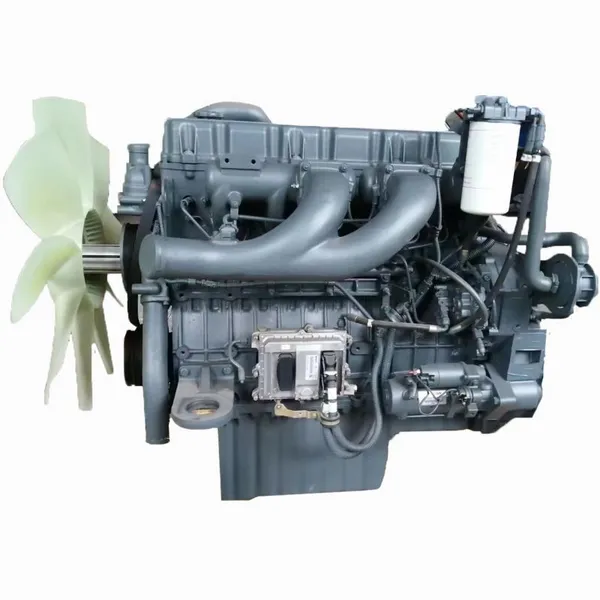
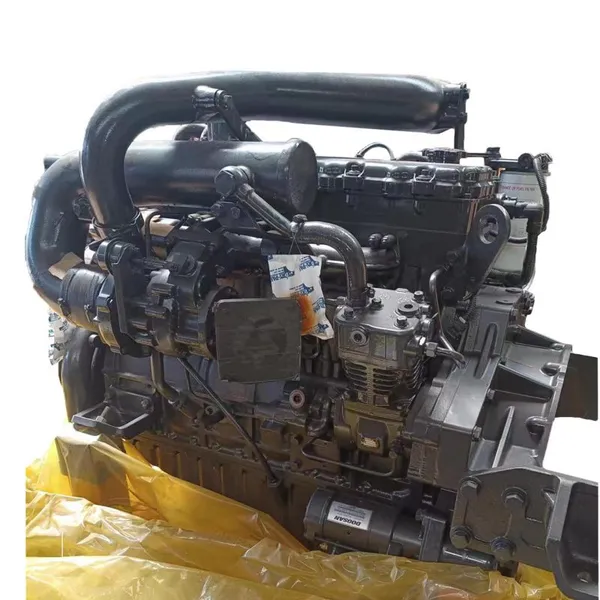
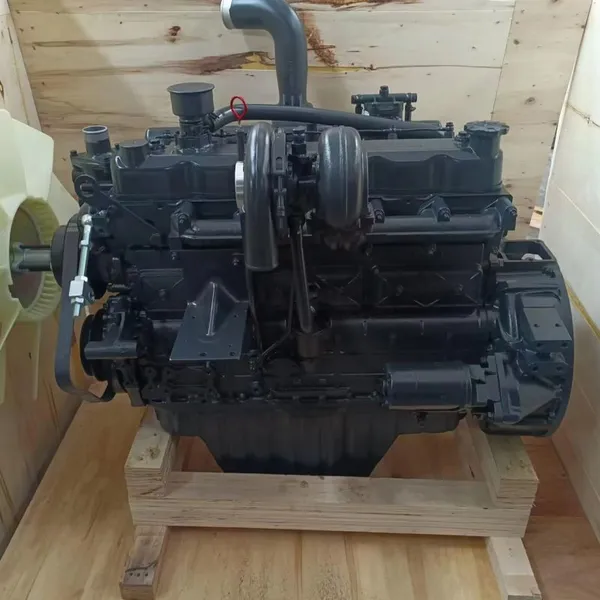
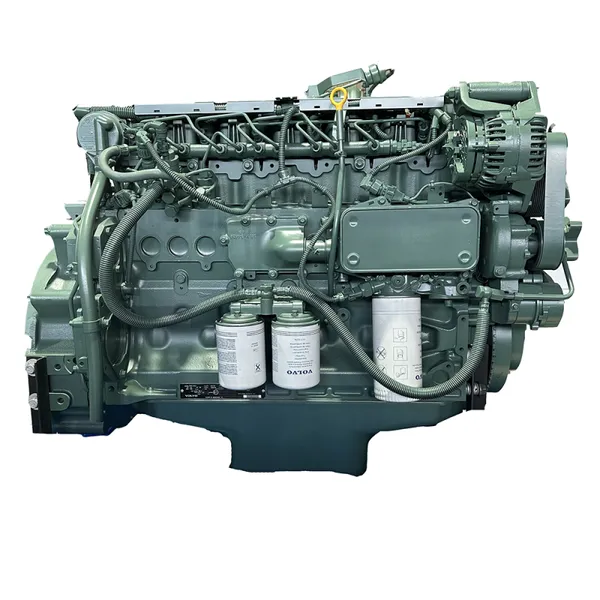
Factory Manufacture 123kw 4 Stroke Volvo D6e Machinery Engine for Construction MachineryUS$ 7500.00MOQ: 1 Unit
-
New BF6M2012C Cylinder 4-stroke Original Water-cooled Generator With Live Start FunctionUS$ 4500.00 - 5400.00MOQ: 1 Unit
-
Original Water Cooled 4 Stroke 6 Cylinder DEUTZ TCD2012062V Machinery EnginesUS$ 4888.00 - 5081.00MOQ: 1 Unit
-
Factory Outlet 6 Cylinder 250HP 2200rpm 6C8.3-C250 Construction Machinery Engines for CuminsUS$ 34627.00 - 36450.00MOQ: 1 Unit
-
1104D-44TA Diesel Engine 83kw New Water-Cooled Machine With Electric Start and Pump Good Price Per UnitUS$ 3700.00 - 4200.00MOQ: 1 Unit
-
Original Water Cooled 4 Stroke DEUTZ TCD 2013 L06 2V Machinery Engines for SaleUS$ 7070.00 - 7443.00MOQ: 1 Unit
-
Excavator Engine Assy QSL8.9 Complete Engine Assembly CUMMINS Qsl 9 Diesel EngineUS$ 4300.00 - 4600.00MOQ: 1 Unit
-
Genuine Vovo D4d EAE2 Diesel Engine for VOLVO EC140 ExcavatorNegotiableMOQ: 1 Unit
-
Factory Outlet 6 Cylinder 250HP 2200rpm 6C8.3-C250 Construction Machinery Engines for CuminsUS$ 4700.00 - 5100.00MOQ: 1 Unit
-
Good Price 153kw 4 Stroke Electric Start D7E Diesel Engine for Construction MachineryUS$ 8350.00MOQ: 1 Unit
-
WEICHAI 178kw 4 Stroke WD10G240E203 Diesel Engine for SEM660D SEM660B Wheel LoaderUS$ 3920.00 - 4127.00MOQ: 1 Unit
-
Dongfeng Shanghai SC11CB220G2B1 6-Cylinder Diesel Engine 162kw (220hp) SDEC 3306 New Condition Core Included Farm MachineryUS$ 6500.00MOQ: 1 Unit
-
ISUZU 4 Cylinder Diesel Engine 4BG1 Machinery Engines for Kobelco SK135 ExcavatorUS$ 6800.00MOQ: 1 Unit
-
130Hp Diesel Engine YC4D130 Yuchai Diesel Motor Price for TruckUS$ 3400.00 - 3600.00MOQ: 1 Unit
-
Shanghai SDEC SC9D220G2 162KW Diesel Engine for SEM922 SEM921 GraderUS$ 5320.00 - 5600.00MOQ: 1 Unit
-
Factory Outlet Sinotruk D1242 Engine Assembly for Construction IndustryUS$ 4615.00 - 4858.00MOQ: 1 Unit