
 Business License

KTA38-M2 vs KTTA19-C700: Matching Marine Engine Ratings to Vessel Duty
A yard working on a twin screw vessel received two offers for the main machinery. One proposed a single large engine on one shaft, and the other proposed two smaller units, and both were technically sound. The difference between them had less to do with output than with the working pattern the vessel would hold for most of its life.
Putting KTA38-M2 vs KTTA19-C700 side by side is useful for that reason, because the two units sit at different points on the same scale. One is a large V twelve and the other is an inline six, and the swept volume between them differs by roughly a factor of two.
This comparison treats a marine engine rating comparison as a question of fit rather than of ranking, works through vessel duty engine selection from the working pattern outward, and shows where each unit suits a hull and where the two arrangements overlap.
1. KTA38-M2 vs KTTA19-C700: What the Two Units Are
KTA38-M2 vs KTTA19-C700 begins with the shape of each engine, because the shape explains the roles they take.
The KTA38-M2 carries twelve cylinders in two banks of six around a single crankshaft, which gives it a swept volume in the region of thirty-eight litres. Its rated output arrives at a governed marine speed rather than at a peak figure, and the block stays unusually short for its displacement because the cylinders are stacked in two rows rather than strung along one.
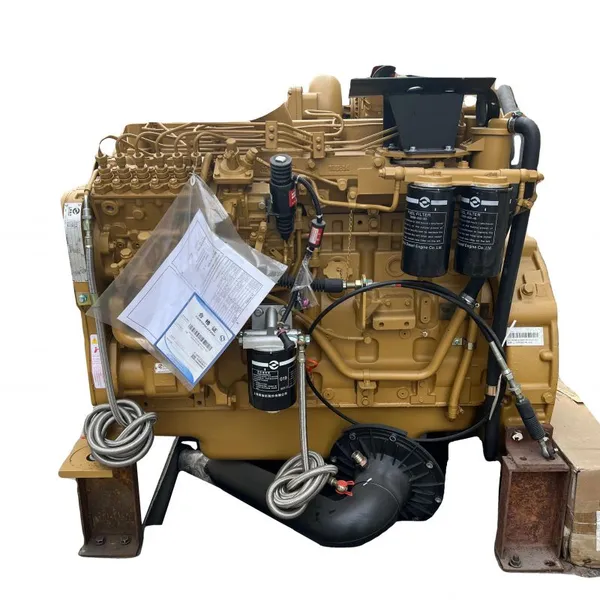
The KTTA19-C700 is an inline six of roughly nineteen litres, turbocharged and aftercooled. Its output falls in the several hundred kilowatt class, and it is built to run at a governed speed that suits either a propeller or a generator.
Both carry a duty class with every rating they are sold at. That shared feature is what makes the two comparable at all, and it is also the feature most often left out of a summary quotation.
2. Marine Engine Rating Comparison: Why Class Comes Before Power
A marine engine rating comparison that starts with the largest number on each sheet compares the wrong entries.
Every marine rating carries a class beside it. The scale runs from continuous duty, where the output can be held indefinitely, down through intermittent service for defined periods within a cycle, to lighter ratings drawn up for a bounded number of hours in a year.
One engine therefore appears on its own sheet with several figures, and the higher figures belong to the lighter classes. Placing a light duty figure from one unit beside a continuous figure from the other produces a difference that has nothing to do with the engines.
The reliable order is class first, then governed speed, then the fuel figure quoted against that rating. A marine engine rating comparison built in that order can be checked by the vessel's own working pattern, and one built on peak figures cannot.
3. Vessel Duty Engine Selection: The Working Pattern That Decides
Vessel duty engine selection follows the hours an engine spends at load, and that quantity is easier to describe in words than to measure.
A vessel running long passages at a steady speed holds its machinery close to continuous duty. A harbour craft or a ferry that manoeuvres through a short working day sits in an intermittent pattern, because its engine is started, loaded, unloaded and stopped far more often.
An auxiliary generator aboard the same vessel occupies a third pattern. It may run for long periods, and it may run for short intervals, and the class it is bought at follows whichever of those describes the installation.
The match is made against the pattern rather than against the size of the hull. Two ships of comparable length can belong in different classes, since one keeps its machinery loaded through a long passage while the other works it in short bursts. That difference is what points to one engine rather than the other.
4. KTA38-M2 vs KTTA19-C700: One Large Unit or Two Smaller Ones
The most practical form of KTA38-M2 vs KTTA19-C700 is the choice between one large unit and two of the smaller ones.
A single large engine takes one shaft, one gearbox and one set of connections, so the installation is simpler and the maintenance is concentrated on one machine. It also puts the whole of the propulsion on one item, and a fault takes the vessel out of service.
Two of the inline sixes distribute that risk. The vessel can lose one unit and still make way on the other, and the arrangement allows a repair to be carried out while the ship keeps working on reduced power.
| Consideration | One large unit | Two smaller units |
|---|---|---|
| Redundancy | None on the single shaft | One unit can be lost without losing way |
| Maintenance load | One machine to service and hold parts for | Two of everything, on one schedule |
| Output steps | Output changes in large moves | Finer control across the range |
| Installation | One heavy lift and one foundation | Two lighter lifts and two foundations |
Neither arrangement is better in the abstract. The redundancy a two unit installation buys is worth more to a vessel that must keep working, and it is worth less to one whose schedule allows a planned stop. Pinbo Power asks which of those two conditions applies before it puts an arrangement forward.
5. Marine Engine Rating Comparison: Space, Weight and the Engine Room
A marine engine rating comparison also has to account for the space the machinery occupies, because the engine room was drawn before either offer arrived.
The V twelve is short for its displacement and wide across the two banks, and it arrives as one heavy item. The lift, the foundation and the access for installation all have to be planned around a single mass that cannot be divided.
An inline six is narrow and tall, and two of them occupy more length along the keel than one V twelve of twice the volume. The height under the deck becomes the binding constraint rather than the floor area.
The sea water and exhaust connections follow the same reasoning. Two units need two of each, and the routing has to be arranged so that neither engine's exhaust passes close to the other's air intake. Those details belong in the comparison because they decide whether the chosen arrangement fits the hull at all.
6. Vessel Duty Engine Selection: Fuel and Service Follow the Pattern
Vessel duty engine selection shapes the running cost after the order as well as the machinery at it, and fuel is where that shows first.
Fuel burn follows the load carried rather than the size of the engine. A large unit working at part load and two smaller units working harder can arrive at similar consumption for the same passage, and the fair comparison uses the fuel figures quoted against the class the vessel will work in.
Service intervals then follow running hours rather than the calendar. An engine held at load for long periods reaches its working temperature and stays there, while one that runs in short bursts spends more of its life warming up and cooling down, and that pattern changes which items need attention.
An oil sample is worth most when the results are read one against the next, since a single set of markers says little and a sequence shows whether the metal is behaving as the hours would suggest. On a twin installation the two engines should also be logged apart, because they will not accumulate the same running time.
7. KTA38-M2 vs KTTA19-C700: Where Each Suits a Vessel
The useful reading of KTA38-M2 vs KTTA19-C700 is that each suits a working pattern rather than a vessel size.
The large V twelve suits a vessel that holds a heavy load for hours on a single shaft, such as a long distance tow or a coastal cargo run that keeps to a steady service speed. Its swept volume gives it the reserve to carry that load without being worked to its ceiling.
Two of the inline sixes suit a vessel that needs fine control, redundancy, or both. Harbour work and short ferry crossings present changing loads through a short day, and a twin installation answers those changes in smaller steps while keeping the ship moving if one unit stops.
Where both arrangements would work, the deciding questions are the working pattern and the space in the engine room. Neither engine outranks the other, and a quotation that presents one as the stronger machine has answered a question the buyer did not ask.
8. Marine Engine Rating Comparison: How to Set Two Offers Side by Side
A marine engine rating comparison is worth doing in a fixed order so that two offers are read the same way.
The first line is the arrangement, stated plainly as one unit or two, because that entry changes every other figure that follows. The second is the rating class with its governed speed and its fuel figure. The third is the installation group, which carries the mass, the principal dimensions and the connection positions.
The working pattern then goes against the offers. A route, the hours at load and the manoeuvring in a normal day are enough to place the vessel in a class, and that placement is what makes one of the two offers the closer fit.
Pinbo Power wants the route, the hours at load and the amount of manoeuvring in a normal day before it puts a class forward, because those three answers place the vessel and the class follows the placement. Jining Pinbo Import and Export holds the build, the rating class and the accessory list against every order. Jining Pinbo Import and Export Co Ltd opens that file at the quotation rather than at the delivery.
9. Frequently Asked Questions
9.1 How do the KTA38-M2 vs KTTA19-C700 engines differ?
The KTA38-M2 vs KTTA19-C700 engines differ first in size and shape. The KTA38-M2 is a V twelve of roughly thirty-eight litres arranged in two banks around one crankshaft, with output in the region of nine hundred kilowatts at a governed marine speed. The KTTA19-C700 is an inline six of roughly nineteen litres, turbocharged and aftercooled, in the several hundred kilowatt class. The swept volume between them differs by about a factor of two, which is what places them in different roles.
9.2 Why does rating class matter in a marine engine rating comparison?
Rating class matters in a marine engine rating comparison because one engine carries several figures on one sheet. A rating is always quoted with the duty class it belongs to, and the higher figures belong to the lighter classes while the lower ones belong to the classes that can be held indefinitely. Placing a light duty figure from one unit beside a continuous figure from the other produces a gap that has nothing to do with the machinery. Each figure has to be read with its class, its governed speed and its fuel consumption.
9.3 What drives vessel duty engine selection?
Vessel duty engine selection follows the hours the engine spends at load rather than the size of the vessel. A ship running long passages at a steady speed sits close to continuous duty, while a harbour craft or a ferry that manoeuvres through a short day sits in an intermittent pattern because it is started, loaded and stopped far more often. An auxiliary generator aboard the same ship occupies a third pattern. Two vessels of similar dimensions can therefore sit in different classes.
9.4 When should a vessel use one large engine rather than two smaller ones?
A vessel should use one large engine when its schedule allows a planned stop and the engine room has the space for a single heavy unit on one shaft. Two smaller units suit a ship that must keep working, because losing one engine still leaves the vessel making way on the other and allows a repair to be done on reduced power. The two unit arrangement also answers changing loads in finer steps. Neither is stronger; the choice follows the working pattern.
Recently Posted
-
KTTA19-C700 vs KTA19-C700: Turbocharging and Output Compared
October 26, 2026A yard asked for a quotation on a nineteen litre engine and received two offers, one for a KTA build and one for a KTTA build. The Read More
-
Doosan DL08 vs DEUTZ BF6M1013: Which Six-Cylinder Suits Construction Work
October 26, 2026Two six-cylinder diesels of almost the same size turned up at one yard in the same season, one pulled from a loader and one offere Read More
-
Doosan DL08 vs DL06: Displacement and Duty Compared
October 23, 2026The Doosan DL08 vs DL06 question rarely arrives on its own. It usually follows a machine that has come up short, or a repower in w Read More
-
Doosan DL06 vs DEUTZ BF6M1015: Comparing Six-Cylinder Industrial Engines
October 23, 2026A buyer with two engine plates in front of him counted the holes in each head and concluded the units were rivals. Both had six. T Read More

Contact Us
Recommended Products
-
 New 129 kW QSB6.7 Diesel Engine Excavator Construction Machinery Electric Start Water-Cooled Core Including Motor PumpUS$ 1888.00 - 3888.00MOQ: 1 Unit
-
Wholesale Diesel Engine Genuine 4 Stroke Direct Injection Doosan DL08 Engine for SaleUS$ 4558.00 - 4800.00MOQ: 1 Unit
-
Factory Price DOOSAN DL06 Construction Machinery Motor 6 Cylinder 115kw Water-Cooled With Core Components Engine and PumpUS$ 4752.00 - 5000.00MOQ: 1 Unit
-
Factory Price 4 Stroke 115kw Doosan DB58 Complete Engine Assy for Dx220 ExcavatorUS$ 3450.00 - 3650.00MOQ: 1 Unit
-
Factory Manufacture 123kw 4 Stroke Volvo D6e Machinery Engine for Construction MachineryUS$ 7500.00MOQ: 1 Unit
-
New BF6M2012C Cylinder 4-stroke Original Water-cooled Generator With Live Start FunctionUS$ 4500.00 - 5400.00MOQ: 1 Unit
-
Original Water Cooled 4 Stroke 6 Cylinder DEUTZ TCD2012062V Machinery EnginesUS$ 4888.00 - 5081.00MOQ: 1 Unit
-
Factory Outlet 6 Cylinder 250HP 2200rpm 6C8.3-C250 Construction Machinery Engines for CuminsUS$ 34627.00 - 36450.00MOQ: 1 Unit
-
1104D-44TA Diesel Engine 83kw New Water-Cooled Machine With Electric Start and Pump Good Price Per UnitUS$ 3700.00 - 4200.00MOQ: 1 Unit
-
Original Water Cooled 4 Stroke DEUTZ TCD 2013 L06 2V Machinery Engines for SaleUS$ 7070.00 - 7443.00MOQ: 1 Unit
-
Excavator Engine Assy QSL8.9 Complete Engine Assembly CUMMINS Qsl 9 Diesel EngineUS$ 4300.00 - 4600.00MOQ: 1 Unit
-
Genuine Vovo D4d EAE2 Diesel Engine for VOLVO EC140 ExcavatorNegotiableMOQ: 1 Unit
-
Factory Outlet 6 Cylinder 250HP 2200rpm 6C8.3-C250 Construction Machinery Engines for CuminsUS$ 4700.00 - 5100.00MOQ: 1 Unit
-
Good Price 153kw 4 Stroke Electric Start D7E Diesel Engine for Construction MachineryUS$ 8350.00MOQ: 1 Unit
-
WEICHAI 178kw 4 Stroke WD10G240E203 Diesel Engine for SEM660D SEM660B Wheel LoaderUS$ 3920.00 - 4127.00MOQ: 1 Unit
-
Dongfeng Shanghai SC11CB220G2B1 6-Cylinder Diesel Engine 162kw (220hp) SDEC 3306 New Condition Core Included Farm MachineryUS$ 6500.00MOQ: 1 Unit
-
ISUZU 4 Cylinder Diesel Engine 4BG1 Machinery Engines for Kobelco SK135 ExcavatorUS$ 6800.00MOQ: 1 Unit
-
130Hp Diesel Engine YC4D130 Yuchai Diesel Motor Price for TruckUS$ 3400.00 - 3600.00MOQ: 1 Unit
-
Shanghai SDEC SC9D220G2 162KW Diesel Engine for SEM922 SEM921 GraderUS$ 5320.00 - 5600.00MOQ: 1 Unit
-
Factory Outlet Sinotruk D1242 Engine Assembly for Construction IndustryUS$ 4615.00 - 4858.00MOQ: 1 Unit