
 Business License

DEUTZ F3L912 vs Kubota V3300: Air-Cooled Against Liquid-Cooled
A contractor running a small fleet asked whether a three cylinder air cooled engine could replace a four cylinder liquid cooled one on the same duty, and the answer turned out to depend less on output than on where the engine sat and what surrounded it.
The two units are close in size and serve overlapping work, which is exactly what makes the comparison interesting. They differ in how they shed heat, and the cooling method reaches into the frame, the enclosure, the maintenance routine and the cold weather procedure.
This article sets DEUTZ F3L912 vs Kubota V3300 side by side, treats air cooled versus liquid cooled as the deciding difference rather than a footnote, and closes with the F3L912 engine comparison V3300 buyers keep returning to before they order.
1. Why the DEUTZ F3L912 vs Kubota V3300 Comparison Comes Up
The DEUTZ F3L912 vs Kubota V3300 question appears wherever a compact machine needs a small industrial diesel and the buyer weighs a simpler installation against a steadier one.
Both engines are used in compact construction equipment, agricultural machines, small generating sets and material handling work. Both are built for long hours at modest load, and both are supported by a parts trade that reaches most export markets.
Buyers arrive from two directions. Someone repowering an older machine asks whether the air cooled engine will fit an enclosure built for a liquid cooled one, and someone specifying a new build asks which method holds up better in the climate the machine will work in.
Pinbo Power meets both enquiries regularly, and the discussion settles faster when the cooling method is treated as the first question rather than the last.
2. Air Cooled Versus Liquid Cooled: What the Cooling Method Decides
Air cooled versus liquid cooled is the axis that separates these two engines, and it decides far more than the parts list shows.
The F3L912 is a three cylinder air cooled unit, with the cylinders and head finned and the heat carried away by air moved across those fins. There is no coolant, no radiator and no water pump, so the cooling system cannot leak, freeze or collect scale.
The V3300 is a four cylinder liquid cooled unit, with a water jacket around the cylinders, a pump circulating coolant and a radiator rejecting the heat. The coolant temperature is held within a narrow band by a thermostat, which keeps the metal at a steadier temperature across the working day.
That single difference shapes noise, warm up, enclosure design and the maintenance routine. Reading the rest of the comparison without it tends to produce a conclusion that does not survive the first season.
The method also decides the noise a machine makes. An air cooled engine carries combustion noise through its fins and its fan, while a liquid cooled engine surrounds the cylinders with coolant and a jacket that damps some of it, which matters where a machine works near people.
| Point of comparison | Air cooled unit | Liquid cooled unit |
|---|---|---|
| Heat path | Fins and moving air | Coolant, pump and radiator |
| Operating temperature | Higher, with a wider swing | Held in a narrow band |
| Cooling system parts | Fan, shrouds and baffles | Pump, radiator, hoses, coolant |
| Effect of freezing | No coolant to freeze | Coolant mix and preparation needed |
Read those rows as tendencies rather than as figures for a serial number, since the build and the duty still shape the final numbers.
3. Displacement and Cylinder Count Behind the F3L912 Engine Comparison V3300
An F3L912 engine comparison V3300 buyers make on paper starts with displacement, and the two units sit close enough that the gap surprises people.
The three cylinder unit carries a swept volume in the region of two and a half to three litres, while the four cylinder unit carries roughly three to three and a half litres. The overlap is wide enough that both can serve the same machine class at different points in their output ranges.
Cylinder count changes the shape of the delivery as much as the total. Three cylinders in line produce a rocking couple that the mountings manage, while four cylinders give a steadier firing order that suits a frame carrying other equipment.
Output follows displacement and aspiration rather than the family name. Both engines are offered across a band of ratings, and both appear in naturally aspirated and turbocharged form where the build allows it.
4. Air Cooled Versus Liquid Cooled: Cold Start and Warm Up
Air cooled versus liquid cooled shows its clearest practical difference on a cold morning, where the two engines behave in opposite ways at the start of a shift.
An air cooled engine has no coolant to freeze and no block to warm through, so it reaches working temperature quickly and can start without a coolant mix decision. That is an advantage in a cold climate or on a machine that works intermittently through the day.
A liquid cooled engine holds its temperature more steadily once running, but it needs a coolant mix matched to the climate and, in hard cold, a block heater or a warm up period before load is applied.
The trade is between a quick start and a steady run. A machine that starts and stops through the day rewards the air cooled unit, while one that runs long shifts under load rewards the steady temperature of the liquid cooled engine.
5. Air Cooled Versus Liquid Cooled in Dust, Heat and Enclosure
Air cooled versus liquid cooled becomes decisive in an enclosure, because an engine that sheds heat into the air around it needs a path for that air to leave.
An air cooled unit draws cooling air from the bay and discharges it into the same space unless ducting carries it out. In a tight canopy the drawn air warms as the machine works, and the engine ends up cooling itself with air it has already heated.
A liquid cooled unit moves the rejection point to a radiator, which can be placed at the edge of the enclosure and fed with cooler outside air. The radiator core is the trade, since dust and debris blind a core faster than they interfere with fins on a ducted air cooled engine.
Pinbo Import and Export asks for the enclosure drawing and the dust level of the site on any enquiry of this kind, because the two together decide which cooling method holds its margin in the conditions the machine actually meets.
6. F3L912 Engine Comparison V3300: Maintenance and the Parts Shelf
An F3L912 engine comparison V3300 on maintenance turns on two different lists, and neither is longer than the other in a simple sense.
The air cooled engine has no coolant to change and no radiator to flush, but its fins, shrouds and fan belt carry the whole cooling duty and are inspected as closely as a radiator would be. A bent fin or a loose shroud reduces cooling without leaving a mark on the outside.
The liquid cooled engine carries a coolant regimen, with a mix to maintain, a radiator core to keep clear and hoses to replace on a schedule. In return, its parts trade is wide and its service procedures are familiar to most workshops.
Record keeping is what makes either list manageable. Hour meter readings, intake restriction and oil sample trends describe condition on both engines, and they let a fleet plan a service instead of reacting to one.
Whichever list applies, the parts behind the engine deserve the same question. Flywheel housings, mountings and the drive take off are made for a particular block, and a repower can turn on those items rather than on the engine itself.
7. Where Each Engine Belongs in the DEUTZ F3L912 vs Kubota V3300 Question
A DEUTZ F3L912 vs Kubota V3300 choice usually points clearly once the installation and the climate are written down.
The air cooled unit suits an open installation, a cold climate, a machine that starts and stops through the day, and any site where a freezing risk or a coolant supply problem would be a burden. It asks for clean air around the fins and a ducting path that carries the discharged air away.
The liquid cooled unit suits an enclosed machine, a long steady shift, a hot climate and a fleet that values a narrow operating temperature and a wide parts network. It asks for a radiator placed where it can breathe and a coolant regimen that is actually followed.
Pinbo Import and Export supplies both types and treats the installation drawing as part of the enquiry, so the recommendation follows the machine rather than a preference for one method.
8. What the DEUTZ F3L912 vs Kubota V3300 Decision Leaves Out
The DEUTZ F3L912 vs Kubota V3300 decision leaves out the parts behind the engine, and those parts often settle a repower.
Flywheel housings, bell housings, mountings and the drive take off are made to fit a particular block. A machine set up for one engine can need new brackets and a revised coupling before the other fits, whatever the output figure says.
The frame and the drive line belong in the same sentence. Adding or removing a cylinder changes the length of the block and the mass on the mountings, which can ask for a new mounting plate and a check of the driven equipment.
Jining Pinbo Import and Export Co Ltd keeps a record of the build supplied against each order, so a later enquiry about the same machine is answered against the engine that is in it rather than a similar one.
Pinbo Power keeps the build supplied against each order so that a later question is answered against the engine in the machine. That record is what makes a second order faster than the first, whatever cooling method the machine uses.
9. Frequently Asked Questions
9.1 What separates DEUTZ F3L912 vs Kubota V3300 in practice?
The DEUTZ F3L912 vs Kubota V3300 difference comes down to the cooling method before it comes down to output. The three cylinder unit sheds heat through fins and moving air, so it has no coolant to freeze, leak or collect scale. The four cylinder unit circulates coolant through a jacket and rejects heat at a radiator, which holds its metal temperature in a narrower band. That single difference shapes the enclosure, the warm up, the maintenance list and the cold weather procedure.
9.2 Why does air cooled versus liquid cooled matter so much in an enclosure?
Air cooled versus liquid cooled matters in an enclosure because the two methods reject heat in different places. An air cooled engine draws cooling air from the space around it and discharges warmer air into the same space, so a tight canopy can raise the air temperature the engine breathes. A liquid cooled engine moves the rejection point to a radiator that can sit at the edge of the enclosure and draw cooler outside air. The trade is that a radiator core blinds with dust more easily than ducted fins do.
9.3 How should a buyer run a F3L912 engine comparison V3300?
A F3L912 engine comparison V3300 should start with the installation and the climate rather than the output figure. Write down the space available, the enclosure, the air path in and out, the duty cycle and the lowest temperature the machine meets. Then weigh the parts behind the engine, since flywheel housings and mountings are made for a particular block and can decide a repower on their own. A comparison made on displacement alone tends to mislead in both directions, because the two units overlap closely in size.
9.4 Do the two engines share service parts?
They share very little, because they come from different makers with different designs. The air cooled engine uses finned cylinders, its own shrouds and a fan set, while the liquid cooled engine uses a water jacket, a pump, a radiator and coolant. Common consumables such as filters and oils are specified separately for each, so a fleet running both keeps two procedures and two parts lists, which is worth knowing before standardising a mixed fleet on one shelf. That is a planning point rather than a fault in either engine.
Recently Posted
-
Doosan DL08 vs DL06: Displacement and Duty Compared
October 23, 2026The Doosan DL08 vs DL06 question rarely arrives on its own. It usually follows a machine that has come up short, or a repower in w Read More
-
Doosan DL06 vs DEUTZ BF6M1015: Comparing Six-Cylinder Industrial Engines
October 23, 2026A buyer with two engine plates in front of him counted the holes in each head and concluded the units were rivals. Both had six. T Read More
-
DEUTZ F3L912 vs F4L912: Cylinder Count and Power Trade-Offs
October 22, 2026A workshop in an export market replaced a three cylinder air cooled engine with a four cylinder unit of the same family and found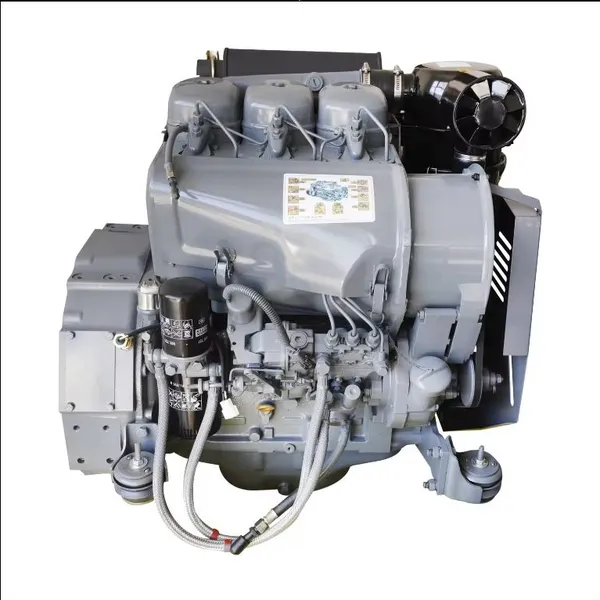 Read More
-
DEUTZ BF6M1015 vs VOLVO D7E: Comparing Industrial Engine Platforms
October 22, 2026A fleet operator with a mixed workshop put a DEUTZ BF6M1015 beside a VOLVO D7E on paper and asked which platform to standardise on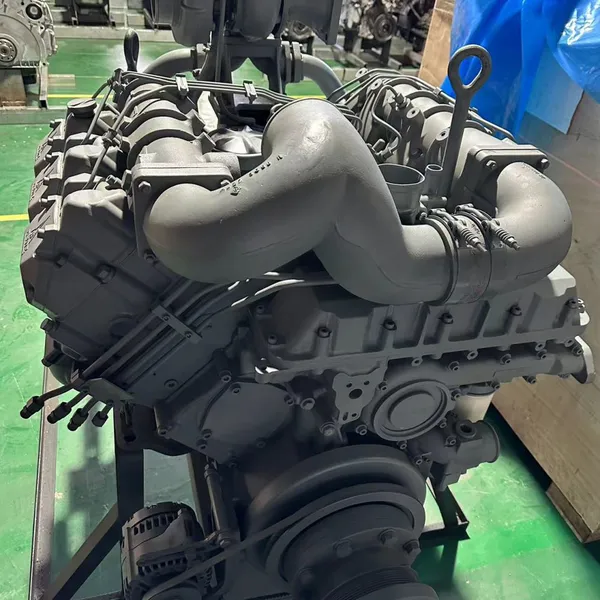 Read More

Contact Us
Recommended Products
-
 New 129 kW QSB6.7 Diesel Engine Excavator Construction Machinery Electric Start Water-Cooled Core Including Motor PumpUS$ 1888.00 - 3888.00MOQ: 1 Unit
-
Wholesale Diesel Engine Genuine 4 Stroke Direct Injection Doosan DL08 Engine for SaleUS$ 4558.00 - 4800.00MOQ: 1 Unit
-
Factory Price DOOSAN DL06 Construction Machinery Motor 6 Cylinder 115kw Water-Cooled With Core Components Engine and PumpUS$ 4752.00 - 5000.00MOQ: 1 Unit
-
Factory Price 4 Stroke 115kw Doosan DB58 Complete Engine Assy for Dx220 ExcavatorUS$ 3450.00 - 3650.00MOQ: 1 Unit
-
Factory Manufacture 123kw 4 Stroke Volvo D6e Machinery Engine for Construction MachineryUS$ 7500.00MOQ: 1 Unit
-
New BF6M2012C Cylinder 4-stroke Original Water-cooled Generator With Live Start FunctionUS$ 4500.00 - 5400.00MOQ: 1 Unit
-
Original Water Cooled 4 Stroke 6 Cylinder DEUTZ TCD2012062V Machinery EnginesUS$ 4888.00 - 5081.00MOQ: 1 Unit
-
Factory Outlet 6 Cylinder 250HP 2200rpm 6C8.3-C250 Construction Machinery Engines for CuminsUS$ 34627.00 - 36450.00MOQ: 1 Unit
-
1104D-44TA Diesel Engine 83kw New Water-Cooled Machine With Electric Start and Pump Good Price Per UnitUS$ 3700.00 - 4200.00MOQ: 1 Unit
-
Original Water Cooled 4 Stroke DEUTZ TCD 2013 L06 2V Machinery Engines for SaleUS$ 7070.00 - 7443.00MOQ: 1 Unit
-
Excavator Engine Assy QSL8.9 Complete Engine Assembly CUMMINS Qsl 9 Diesel EngineUS$ 4300.00 - 4600.00MOQ: 1 Unit
-
Genuine Vovo D4d EAE2 Diesel Engine for VOLVO EC140 ExcavatorNegotiableMOQ: 1 Unit
-
Factory Outlet 6 Cylinder 250HP 2200rpm 6C8.3-C250 Construction Machinery Engines for CuminsUS$ 4700.00 - 5100.00MOQ: 1 Unit
-
Good Price 153kw 4 Stroke Electric Start D7E Diesel Engine for Construction MachineryUS$ 8350.00MOQ: 1 Unit
-
WEICHAI 178kw 4 Stroke WD10G240E203 Diesel Engine for SEM660D SEM660B Wheel LoaderUS$ 3920.00 - 4127.00MOQ: 1 Unit
-
Dongfeng Shanghai SC11CB220G2B1 6-Cylinder Diesel Engine 162kw (220hp) SDEC 3306 New Condition Core Included Farm MachineryUS$ 6500.00MOQ: 1 Unit
-
ISUZU 4 Cylinder Diesel Engine 4BG1 Machinery Engines for Kobelco SK135 ExcavatorUS$ 6800.00MOQ: 1 Unit
-
130Hp Diesel Engine YC4D130 Yuchai Diesel Motor Price for TruckUS$ 3400.00 - 3600.00MOQ: 1 Unit
-
Shanghai SDEC SC9D220G2 162KW Diesel Engine for SEM922 SEM921 GraderUS$ 5320.00 - 5600.00MOQ: 1 Unit
-
Factory Outlet Sinotruk D1242 Engine Assembly for Construction IndustryUS$ 4615.00 - 4858.00MOQ: 1 Unit