
 Business License

DEUTZ BF6M1015 vs VOLVO D7E: Comparing Industrial Engine Platforms
A fleet operator with a mixed workshop put a DEUTZ BF6M1015 beside a VOLVO D7E on paper and asked which platform to standardise on. The figures on the pages were close enough to look comparable, and the two engines were not in the same size class at all.
That mistake costs more than a wrong purchase. Two platforms built for different duties need different tools, different service routines and different spares on the shelf, and a fleet that mixes them without knowing why pays for the confusion in every season that follows.
This article sets a DEUTZ BF6M1015 vs VOLVO D7E comparison on the terms that decide a fleet decision, treats the industrial engine platform comparison as a question about control architecture and parts rather than about output figures, and closes with a BF6M1015 engine versus D7E view of what each platform asks of the workshop.
1. Why a DEUTZ BF6M1015 vs VOLVO D7E Comparison Comes Up
A DEUTZ BF6M1015 vs VOLVO D7E comparison comes up whenever a fleet runs machines from two manufacturers and wants one workshop procedure rather than two.
The two names reach the same job sites. Both appear in loaders and in plant machinery, both are six cylinder liquid cooled diesels, and both travel through the same export channels. That overlap is enough to start the comparison, and it is where the confusion begins.
The engines are built to different priorities. One is a large displacement industrial unit that carries heavy loads at low speed, and the other is a mid sized platform designed to sit inside a machine whose hydraulics and electronics were specified alongside it.
Pinbo Power fields this question in export enquiries, and the useful answer starts by separating the size question from the platform question rather than treating the two as one.
2. An Industrial Engine Platform Comparison Across Two Size Classes
An industrial engine platform comparison should begin with the fact that the two units are not equivalents, because that single point reframes everything after it.
The DEUTZ BF6M1015 is a large displacement six cylinder engine, in the region of twelve litres, built to produce heavy torque low in the speed range. The VOLVO D7E is a seven litre class six cylinder unit, lighter in mass and designed around a higher specific output.
That gap in displacement is not a small difference in a specification table. It decides the frame the engine needs, the mass the mountings carry and the heat the cooling package has to reject, and it means the two platforms serve different weight classes of machine.
The table below sets the platforms against the points that separate them in practice. Read the entries as tendencies across the families rather than as figures for a particular build.
| Point of comparison | DEUTZ BF6M1015 | VOLVO D7E |
|---|---|---|
| Displacement class | In the region of twelve litres | In the region of seven litres |
| Mass and footprint | Substantial, larger cooling package | Lighter, compact envelope |
| Control architecture | Mechanical governing on many builds, electronic on later ones | Electronic control central to the platform |
| Typical machine class | Heavy plant and larger stationary sets | Mid size mobile machinery |
A buyer who reads those rows in order will usually find that the choice was made by the machine class before the platform was ever discussed. The comparison then becomes a question of what each platform demands of the people who maintain it.
3. DEUTZ BF6M1015 vs VOLVO D7E: Control Architecture and Diagnostics
The sharpest practical difference in a DEUTZ BF6M1015 vs VOLVO D7E comparison sits in the control architecture, because it changes how a fault is found and who can find it.
On a mechanically governed build of the larger engine, fuelling is set at the injection pump and the governor holds the speed. A workshop diagnoses that arrangement with gauges and hand tools, and a competent mechanic can work on it without a manufacturer connection.
The D7E platform places electronic control at the centre of the design. Fuelling, timing and protection are handled by an engine control unit, and reading the system means a diagnostic connection rather than a pressure gauge.
Neither approach is better in the abstract, and they fail differently. A mechanical system drifts and can be adjusted back into specification on site, while an electronic system holds its calibration until a sensor or an actuator fails, and then reports the fault in a form that requires the right tool to read.
For a workshop in a region where diagnostic equipment is available, the electronic platform is straightforward to support. For a fleet working from a remote yard with a limited tool set, a mechanically governed build of the larger engine is easier to keep in service.
4. BF6M1015 Engine Versus D7E: Fuel Delivery and Service Tools
A BF6M1015 engine versus D7E comparison of the fuel side follows from that architecture and settles what a workshop has to hold.
The larger engine, on a mechanical build, uses an injection pump that can be reconditioned by a specialist and refitted without a programming step. Spare pumps and injectors are held as physical items, and swapping one is a mechanical task.
The D7E platform pairs its electronic control with injectors and sensors that carry calibration data. Replacing a component can require the new part to be matched to the control unit before the engine runs correctly, which turns a parts swap into a procedure.
Tooling follows the same line. The mechanical engine asks for a torque wrench, a set of gauges and the timing marks cast into the housing. The electronic platform asks for a diagnostic reader and the software to go with it, and both have to be current for the build being serviced.
Pinbo Import and Export asks which arrangement a buyer already supports before quoting, because a fleet that standardises on one architecture saves the cost of holding two sets of tools and two training routines.
5. An Industrial Engine Platform Comparison of Cooling Packages
An industrial engine platform comparison has to account for cooling, because the two platforms place different demands on the space around them.
A larger displacement engine rejects more heat to the coolant and to the lubricating oil at the same duty, so the radiator grows with the block and the air path through the machine has to be planned around the larger core.
The D7E platform reaches its output from a smaller swept volume, which reduces the physical size of the package but raises the specific load on each component. That makes charge air cooling more central to the design, since the air leaving the compressor has to be brought down before it enters the manifold.
The difference shows up in installation rather than on a data sheet. A machine built around a compact platform may not have the frame or the airflow to accept a larger block without redesign, and a machine built around the larger engine may not need the finer airflow control the smaller platform expects.
Where the frame is already fixed, the platform is usually decided before the engine is chosen. Where the machine is being repowered, the cooling path is the first item to check and the most expensive to change afterwards.
6. DEUTZ BF6M1015 vs VOLVO D7E: Parts Ecosystem and Response Time
The parts side of a DEUTZ BF6M1015 vs VOLVO D7E comparison often decides a fleet decision on its own, because an engine that cannot be repaired is a machine standing still.
Both platforms are well represented in the aftermarket, and they are represented by different networks. The larger DEUTZ family is carried by independent parts traders and engine specialists alongside the maker's own channel, which widens the range of items available at short notice.
The D7E platform is tied more closely to the machine it was installed in, since the electronics connect the engine to the wider system. Parts usually come through the equipment manufacturer's dealer network, which is a strength where a dealer sits nearby and a constraint where one does not.
A workshop's answer depends on where it works. A fleet near a full service dealer can support the electronic platform comfortably, while a fleet several days from one may prefer the platform it can repair from stocked mechanical parts.
The response time that matters is measured to the machine, not to the warehouse. That is why Jining Pinbo Import and Export Co Ltd asks for the destination and the distance to a dealer before discussing which platform suits a fleet.
7. BF6M1015 Engine Versus D7E: Cost of Ownership During Downtime
A BF6M1015 engine versus D7E comparison on cost turns on downtime rather than on fuel, because the two platforms lose days in different ways.
The larger mechanical engine fails in a way that a workshop can often see coming. A pump that drifts rich, a governor that hunts or a rise in exhaust temperature under load all leave symptoms before the unit stops, and each of those can be corrected on site for the cost of parts.
The electronic platform tends to stop more cleanly and more completely. A failed sensor can take the engine out of service at once, and returning it depends on the right part and the right tool reaching the machine.
Fuel use does differ between the platforms, and it tracks the duty more than the name. A large engine working below its designed load burns more than its size suggests, and a smaller platform held near its working point is economical on the same machine.
Weighing the two means putting a value on a day of lost production. A fleet that loses a week of output to a diagnostic wait will read the comparison differently from one with a dealer an hour away.
8. Industrial Engine Platform Comparison: Which Platform Fits the Machine
An industrial engine platform comparison ends with a question about the machine, and the answer is usually visible before any data sheet is opened.
Where the machine is heavy, works against a load from rest and has room for a large cooling package, the larger displacement platform suits it. Where the machine is lighter, works at moderate load and has a compact bay, the mid sized platform is the natural fit.
Support conditions narrow the choice further. A fleet with access to diagnostic tools and a nearby dealer can carry the electronic platform without difficulty, and a fleet working remotely is better served by an architecture it can service itself.
The most common export error is buying the heavier platform for a machine that does not need it, then carrying the extra mass, heat and fuel through every season the machine works.
Jining Pinbo Import and Export Co Ltd sets the machine class and the support conditions against both platforms before quoting, because a comparison made without them describes the engines rather than the fleet.
9. Frequently Asked Questions
9.1 Are the DEUTZ BF6M1015 and the VOLVO D7E interchangeable?
A DEUTZ BF6M1015 vs VOLVO D7E comparison starts from the fact that the two units sit in different size classes, so a straight swap is rarely a matter of bolting one in place of the other. The larger engine carries more displacement, more mass and a bigger cooling package, which changes the frame, the mountings and the airflow the machine has to provide. The D7E is built around electronic control, so a machine built for one platform does not carry the wiring or the sensors for it. Neither is a substitute for the other; each is suited to a machine class of its own.
9.2 What should an industrial engine platform comparison weigh besides output?
An industrial engine platform comparison should weigh control architecture, parts ecosystem, cooling demand and the support a fleet can actually reach. Control architecture decides whether a fault is found with gauges or with a diagnostic tool, and the parts network decides how quickly a repair reaches the machine. Cooling demand follows the displacement and decides whether the existing frame can accept the engine at all. Output figures come last, because a machine at moderate load rarely uses the rated figure that appears first on a specification sheet.
9.3 What does a BF6M1015 engine versus D7E choice mean for a workshop?
A BF6M1015 engine versus D7E choice decides what the workshop has to hold, since the two platforms are maintained in different ways. A mechanically governed build of the larger engine is serviced with gauges, hand tools and stocked parts, and a competent mechanic can adjust it on site. The D7E platform is serviced through a diagnostic connection, so the workshop has to hold the reader and the software for the build in front of it. A fleet that runs both architectures carries two tool sets and two routines, which is worth avoiding where the duty allows one.
9.4 When is the larger platform the wrong choice?
The larger platform is the wrong choice where the machine is light, runs at moderate load and has a compact bay. In those conditions the extra displacement adds mass, heat and fuel without adding capacity the machine can use, and the cooling package may not fit without redesigning the frame. A lighter platform held near its working point will often return lower fuel use across a season on that duty. The deciding step is the machine class and the load it carries, and those are easier to establish before the order than to correct after it.
Recently Posted
-
DEUTZ F3L912 vs F4L912: Cylinder Count and Power Trade-Offs
October 22, 2026A workshop in an export market replaced a three cylinder air cooled engine with a four cylinder unit of the same family and found Read More
-
DEUTZ BF6M1015 vs BF6M2012: A Selection Guide
October 22, 2026A contractor compared two quotations for a crushing plant and picked the engine with the lower cost per kilowatt, then spent a sea Read More
-
What Is the Kubota V3300 Diesel Engine?
October 21, 2026A Kubota V3300 diesel engine is a four cylinder liquid cooled unit of about three and a third litres, built for compact machines r Read More
-
6CTA8.3-C260 vs Doosan DL06: Choosing a Wheel Loader Engine
October 21, 2026A quarry operator in South America ran two loaders on the same face, one with a larger engine and one with a lighter six cylinder, Read More

Contact Us
Recommended Products
-
 New 129 kW QSB6.7 Diesel Engine Excavator Construction Machinery Electric Start Water-Cooled Core Including Motor PumpUS$ 1888.00 - 3888.00MOQ: 1 Unit
-
Wholesale Diesel Engine Genuine 4 Stroke Direct Injection Doosan DL08 Engine for SaleUS$ 4558.00 - 4800.00MOQ: 1 Unit
-
Factory Price DOOSAN DL06 Construction Machinery Motor 6 Cylinder 115kw Water-Cooled With Core Components Engine and PumpUS$ 4752.00 - 5000.00MOQ: 1 Unit
-
Factory Price 4 Stroke 115kw Doosan DB58 Complete Engine Assy for Dx220 ExcavatorUS$ 3450.00 - 3650.00MOQ: 1 Unit
-
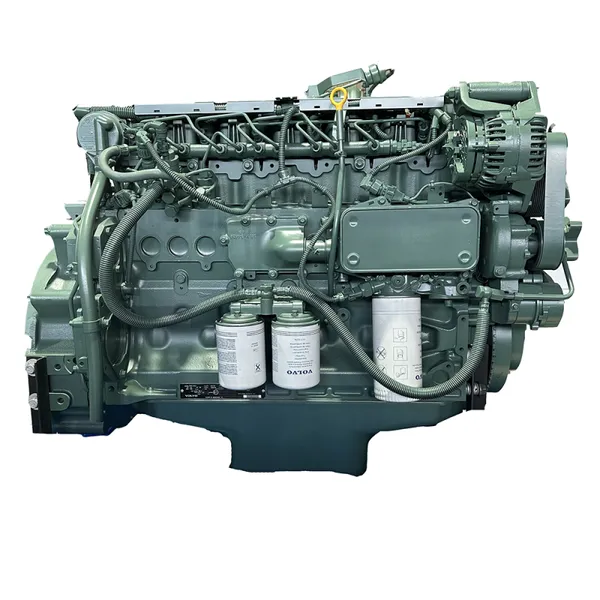
Factory Manufacture 123kw 4 Stroke Volvo D6e Machinery Engine for Construction MachineryUS$ 7500.00MOQ: 1 Unit
-
New BF6M2012C Cylinder 4-stroke Original Water-cooled Generator With Live Start FunctionUS$ 4500.00 - 5400.00MOQ: 1 Unit
-
Original Water Cooled 4 Stroke 6 Cylinder DEUTZ TCD2012062V Machinery EnginesUS$ 4888.00 - 5081.00MOQ: 1 Unit
-
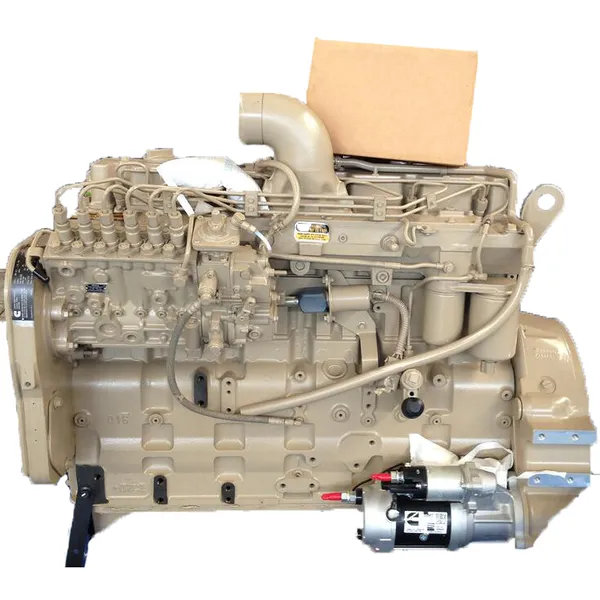
Factory Outlet 6 Cylinder 250HP 2200rpm 6C8.3-C250 Construction Machinery Engines for CuminsUS$ 34627.00 - 36450.00MOQ: 1 Unit
-
1104D-44TA Diesel Engine 83kw New Water-Cooled Machine With Electric Start and Pump Good Price Per UnitUS$ 3700.00 - 4200.00MOQ: 1 Unit
-
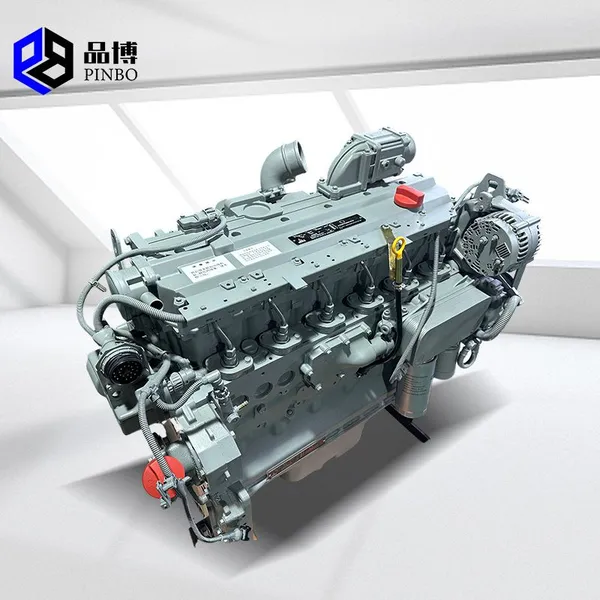
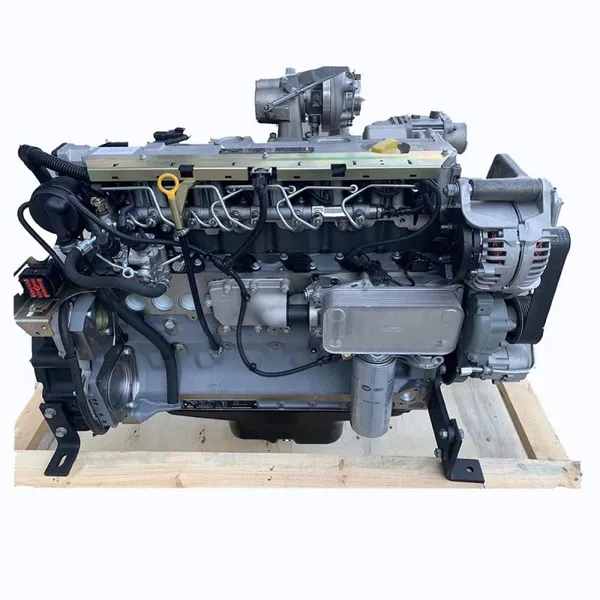
Original Water Cooled 4 Stroke DEUTZ TCD 2013 L06 2V Machinery Engines for SaleUS$ 7070.00 - 7443.00MOQ: 1 Unit
-
Excavator Engine Assy QSL8.9 Complete Engine Assembly CUMMINS Qsl 9 Diesel EngineUS$ 4300.00 - 4600.00MOQ: 1 Unit
-
Genuine Vovo D4d EAE2 Diesel Engine for VOLVO EC140 ExcavatorNegotiableMOQ: 1 Unit
-
Factory Outlet 6 Cylinder 250HP 2200rpm 6C8.3-C250 Construction Machinery Engines for CuminsUS$ 4700.00 - 5100.00MOQ: 1 Unit
-
Good Price 153kw 4 Stroke Electric Start D7E Diesel Engine for Construction MachineryUS$ 8350.00MOQ: 1 Unit
-
WEICHAI 178kw 4 Stroke WD10G240E203 Diesel Engine for SEM660D SEM660B Wheel LoaderUS$ 3920.00 - 4127.00MOQ: 1 Unit
-
Dongfeng Shanghai SC11CB220G2B1 6-Cylinder Diesel Engine 162kw (220hp) SDEC 3306 New Condition Core Included Farm MachineryUS$ 6500.00MOQ: 1 Unit
-
ISUZU 4 Cylinder Diesel Engine 4BG1 Machinery Engines for Kobelco SK135 ExcavatorUS$ 6800.00MOQ: 1 Unit
-
130Hp Diesel Engine YC4D130 Yuchai Diesel Motor Price for TruckUS$ 3400.00 - 3600.00MOQ: 1 Unit
-
Shanghai SDEC SC9D220G2 162KW Diesel Engine for SEM922 SEM921 GraderUS$ 5320.00 - 5600.00MOQ: 1 Unit
-
Factory Outlet Sinotruk D1242 Engine Assembly for Construction IndustryUS$ 4615.00 - 4858.00MOQ: 1 Unit