
 Business License

VOLVO D7E Engine Family and Tier Configurations
A VOLVO D7E engine family is not one engine. The name covers a set of builds that share a block and a layout while differing in the hardware bolted to the core, the calibration loaded into it and the way it was released for a machine. A buyer who treats the name as a single specification is quoting for a whole family when what has to be replaced is one member of it.
This article maps that family. It sets out the axes along which a VOLVO D7E engine family spreads, shows where the castings stay common and where the builds part company, explains how to read a member from the outside, and closes on how to name the right one in an enquiry. D7E engine tier configurations are treated here as a description of a build rather than as a ranking of quality.
Three readers come to this page. One holds a machine and needs a unit that will go into it, one has two offers carrying the same model string and different figures, and one is assembling a fleet from machines of several ages. Pinbo Power keeps the machine description ahead of the model string for all three, because the family answers a question about lineage while the order answers a question about fit.
1. VOLVO D7E Engine Family: One Name Covering Several Work Roles
The reason a single designation covers several builds is that the platform was designed to be configured rather than sold as a fixed article. An equipment builder chooses a displacement class, then selects a dress, a rating and a control release to suit a frame and a duty that the engine maker never sees. What survives into the replacement market is therefore the family name rather than the configuration.
That arrangement is efficient for the builder and awkward for everyone downstream. Two machines built a few years apart can carry units that share external dimensions and behave differently under load. The difference is not a defect and it is not concealed; it is simply not written on the outside of the engine.
Four work roles account for most of the family in service. A machine that follows a hydraulic load, a vehicle that holds a road speed for long periods, a stationary drive that defends one governed speed, and a unit prepared for a duty that mixes all three across a season. Each role asks the same block for a different shape of output.
| Work role | What the member is asked to do | Where the difference sits |
|---|---|---|
| Machine with a hydraulic load | Follow a load that changes with the task | Rating and governing behaviour |
| Vehicle duty at road speed | Hold a steady output for hours | Rating and cooling package |
| Stationary governed drive | Defend one speed against a changing load | Governor setting and release |
| Mixed seasonal duty | Tolerate a high share of capacity for part of a year | Margin carried at the working point |
A buyer who can place a machine in one of those rows has narrowed the family to a handful of members before any figure is compared, which is the point at which a useful question becomes possible. Pinbo Import and Export starts from that row rather than from the model string in every replacement enquiry it answers.
2. D7E Engine Tier Configurations: The Four Axes a Build Moves Along
A D7E engine tier configurations question is really a question about four axes, and a build is properly described when all four are named. Remove any one of them and the description turns ambiguous, which is how two members of one family come to look interchangeable on paper.
The first axis is the rating, which fixes the output and the speed at which it is quoted. The second is the dress, meaning the parts bolted to the core: the front end, the flywheel housing, the manifolds, the filter arrangement and the accessory drive. The third is the control release, which sets the calibration and the interface the machine harness expects to meet.
The fourth axis is the emissions placement, which records the market and the period the build was released into. The four are not independent, since a change of rating usually travels with a change of dress and a change of release almost always travels with a change of calibration. A build is therefore a combination rather than a set of separate choices.
| Axis | What it fixes | Where it shows up in practice |
|---|---|---|
| Rating | Output and the speed it is quoted at | The figures on the sheet |
| Dress | Front end, housings, manifolds, filters | Whether the unit fits the bay |
| Control release | Calibration and expected machine interface | Behaviour and the tool needed to read it |
| Emissions placement | Market and period of release | The entry that names the build |
Read together, those axes describe a member well enough for a supplier to work from. Read apart, each looks like a detail that can be settled later, and that assumption is how mismatches enter an order that was meant to be straightforward.
3. VOLVO D7E Engine Family: Where the Castings Are Shared and Where They Part
The shared part of the family is the part that carries the load. The block, the crankcase, the cylinder head and the crankshaft are common across a wide spread of the range, together with the basic geometry of bore, stroke and swept volume. That common core is what makes it a family rather than a set of unrelated engines.
What separates the members begins where the castings end. The front cover carries a different arrangement of gears and drives from one build to the next, the rear housing decides what will bolt to the back face, and the intake and exhaust sides change with the aspiration and the cooling arrangement. None of that alters the structure, and each of it decides whether the unit will go into a given machine.
This split explains a pattern that puzzles buyers in the replacement market. Two units can measure alike across the block and still be unsuitable for one another, because the difference sits in the parts that connect the engine to the machine rather than in the engine itself.
Jining Pinbo Import and Export asks for photographs of the front cover, the rear face and both sides before matching a unit to a machine.
4. D7E Engine Tier Configurations: Reading a Member From Its Outside
A build can be read from its outside by someone who knows what to look at, and four features carry most of the information. The first is the arrangement at the front, where the accessory drive and the position of the cooling fan tell a reader which machine family the unit was prepared for.
The second is the rear face, where the housing pattern and the size of the flywheel decide what transmission or pump will attach. The third is the intake and exhaust side, since the routing of the manifolds and the position of the charger vary between members. The fourth is the control hardware, where the location of the unit and the shape of the connector indicate which release the engine carries.
No single feature names the member on its own, and together they narrow it far enough to ask a precise question. A supplier who receives four photographs beside a description of the machine can usually place the build without waiting for a plate to be cleaned.
Pinbo Power treats those four images as the working part of a D7E engine tier configurations check rather than as a courtesy, because a photograph answers what a description leaves open.
5. VOLVO D7E Variant Lineup: Why Two Members of One Platform Differ
Two members of one platform behave differently because the calibration and the bolted hardware differ, not because one was built to a lower standard. A VOLVO D7E variant lineup is a set of jobs rather than a ladder of quality, and reading it as a ranking leads a buyer to pay for a member the machine cannot use.
The clearest case is a governed build beside a variable speed one. A unit prepared for a stationary drive defends one speed against a changing load, and its governor is set for that work. A unit prepared for a machine that follows a hydraulic load is allowed to fall back and recover as the task demands. The blocks are the same and the behaviour in service is not.
A second case sets a vehicle build against a machine build. The vehicle unit spends its life at a steady output and its cooling package is sized for that, while the machine unit meets a load that rises and falls through the day and is released against that pattern instead.
A third case sets a build prepared for a cold market beside one prepared for a hot one, where the same casting carries a different rating and different cooling provision. A member chosen without the working pattern beside it is a member chosen at random from a set of compatible castings.
6. VOLVO D7E Engine Family: Naming the Right Member in an Enquiry
Naming the right member is a short task once the four axes are known. A complete enquiry carries the machine and what it drives, the duty in hours and load, a description of the unit being replaced, and the release read from the machine file or controller.
The order matters more than the length. A buyer who leads with the model string invites a question in return, while a buyer who leads with the machine and the duty receives a build that can be examined. The difference is not courtesy; it is that the family holds several answers and the machine is what selects among them.
Three details are worth adding because they are cheap to gather and expensive to be wrong about: the housing pattern at the rear face, the position of the front accessory drive, and the location of the control unit on the machine. Each is visible in a photograph and each decides whether the member will go in.
Those three details are what Jining Pinbo Import and Export Co Ltd collects before preparing a build for an enquiry.
7. VOLVO D7E Variant Lineup: How a Parts Shelf Follows the Map
A parts shelf follows the map rather than the name. Once a fleet runs several members of one family, the shared castings belong to common stock while the dress items belong to individual members, and a shelf arranged by model string alone mixes the two together.
The practical division is simple enough. Wear items that follow the duty are held in multiples, dress items that follow the build are held singly against a known lead time, and structural parts that rarely fail are held as part numbers rather than as objects. A VOLVO D7E variant lineup read in that way turns into a two-column list rather than a warehouse.
Records complete the arrangement. If each machine is filed with its rating, its dress and its release, then a question raised a season later is answered from the machine rather than from a recollection, and the file is the part of the map that survives a change of staff.
Pinbo Power keeps those three entries beside every order it dispatches, so a fleet that has bought once can be matched again without repeating the whole description from the beginning.
8. VOLVO D7E Variant Lineup: What a Family Chart Cannot Settle
A chart of the family cannot settle the condition of a particular unit. A used engine that matches the right member in every external respect can still be at the end of its working life inside, and no map drawn from the outside will show that.
Neither can the chart decide the duty on its own. Two fleets running comparable machines sometimes need different members because one works in heat and altitude while the other works at sea level in a temperate season, and the installation corrects the sheet rather than the other way round.
What the map does is narrower and still worth having. It removes the members that cannot apply, states the language in which a build should be described, and tells a buyer what to photograph before writing. That is a modest service for a document that has never seen a machine.
The next step belongs to the buyer and it is small. Describe the machine, state the duty, send the four photographs, and the conversation moves from a family to a single unit. A build matched from a name is a build matched to an assumption.
9. Frequently Asked Questions
9.1 What does VOLVO D7E engine family mean in practice?
A VOLVO D7E engine family is a set of builds that share a block, a layout and a swept volume while differing in rating, dress, control release and emissions placement. In practice the phrase tells a buyer that the model string identifies a lineage rather than a single article, so two units carrying the same designation can behave differently in service. It also tells a supplier that a description is incomplete until all four axes are named. For anyone working in the replacement market, the practical consequence is that the machine and its duty decide the member while the plate provides the starting point.
9.2 How are D7E engine tier configurations described?
They are described along four axes: the rating and its quoted speed, the dress bolted to the core, the control release with its calibration, and the emissions placement that names the market and period of release. A member is fully described when all four are stated together, because each of them changes what the unit will do without changing the castings underneath. Two of the four, the rating and the dress, decide whether the engine produces what the machine needs and whether it goes into the bay. The remaining two decide how it behaves and what paperwork follows it.
9.3 What should a VOLVO D7E variant lineup be used for?
A VOLVO D7E variant lineup is more useful for eliminating members than for choosing one. Reading the axes removes the builds that cannot apply to a machine, states the language in which a member should be described, and tells a buyer which four photographs to send with an enquiry. It cannot judge the condition of a used unit or decide the duty on its own. Used that way the map saves a round of correspondence, and it leaves the buyer with a short list rather than a single answer.
9.4 Which parts of the family are shared across members?
The shared parts are the ones that carry the load: the block, the crankcase, the cylinder head and the crankshaft, together with the basic geometry of bore, stroke and swept volume. Everything forward of the front cover and behind the rear housing belongs to the build rather than to the family. That is the line to remember when two units look interchangeable, because the parts that connect an engine to a machine sit on the side of it that varies. A parts shelf can be arranged around the same division.
Recently Posted
-
DEUTZ F3L912 vs F4L912: Cylinder Count and Power Trade-Offs
October 22, 2026A workshop in an export market replaced a three cylinder air cooled engine with a four cylinder unit of the same family and found Read More
-
DEUTZ BF6M1015 vs VOLVO D7E: Comparing Industrial Engine Platforms
October 22, 2026A fleet operator with a mixed workshop put a DEUTZ BF6M1015 beside a VOLVO D7E on paper and asked which platform to standardise on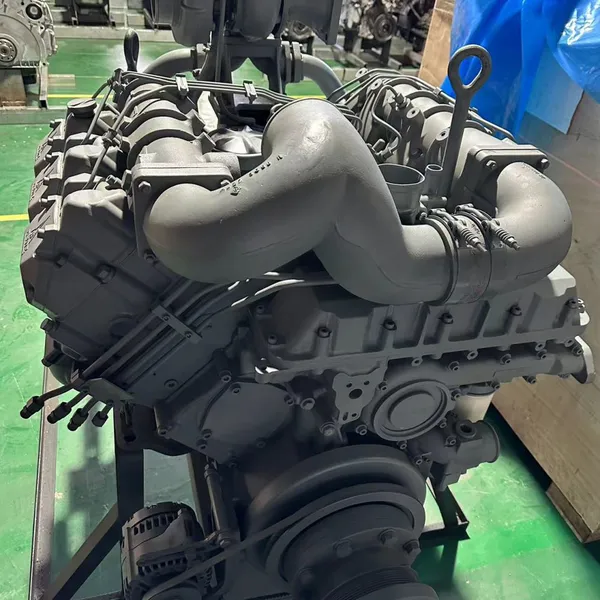 Read More
-
DEUTZ BF6M1015 vs BF6M2012: A Selection Guide
October 22, 2026A contractor compared two quotations for a crushing plant and picked the engine with the lower cost per kilowatt, then spent a sea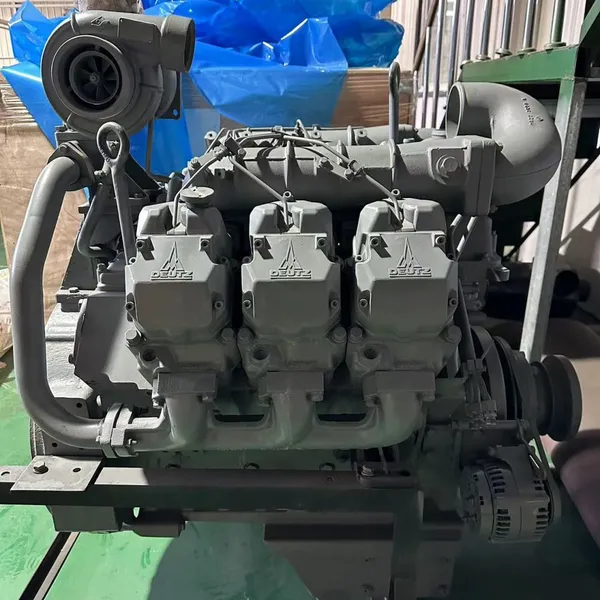 Read More
-
What Is the Kubota V3300 Diesel Engine?
October 21, 2026A Kubota V3300 diesel engine is a four cylinder liquid cooled unit of about three and a third litres, built for compact machines r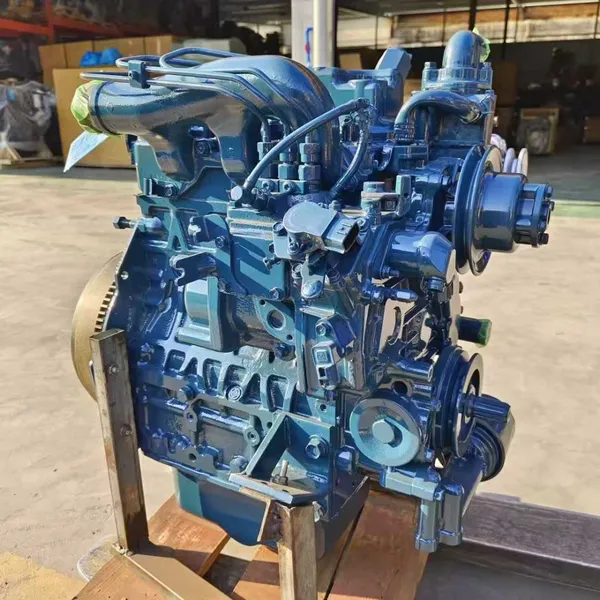 Read More

Contact Us
Recommended Products
-
 New 129 kW QSB6.7 Diesel Engine Excavator Construction Machinery Electric Start Water-Cooled Core Including Motor PumpUS$ 1888.00 - 3888.00MOQ: 1 Unit
-
Wholesale Diesel Engine Genuine 4 Stroke Direct Injection Doosan DL08 Engine for SaleUS$ 4558.00 - 4800.00MOQ: 1 Unit
-
Factory Price DOOSAN DL06 Construction Machinery Motor 6 Cylinder 115kw Water-Cooled With Core Components Engine and PumpUS$ 4752.00 - 5000.00MOQ: 1 Unit
-
Factory Price 4 Stroke 115kw Doosan DB58 Complete Engine Assy for Dx220 ExcavatorUS$ 3450.00 - 3650.00MOQ: 1 Unit
-
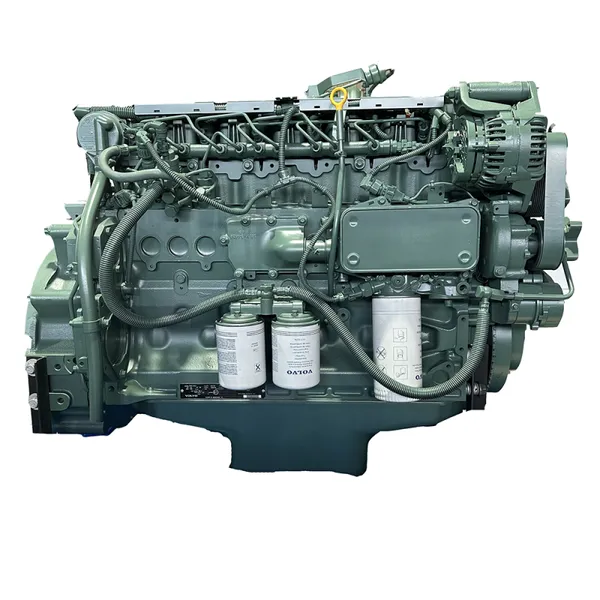
Factory Manufacture 123kw 4 Stroke Volvo D6e Machinery Engine for Construction MachineryUS$ 7500.00MOQ: 1 Unit
-
New BF6M2012C Cylinder 4-stroke Original Water-cooled Generator With Live Start FunctionUS$ 4500.00 - 5400.00MOQ: 1 Unit
-
Original Water Cooled 4 Stroke 6 Cylinder DEUTZ TCD2012062V Machinery EnginesUS$ 4888.00 - 5081.00MOQ: 1 Unit
-
Factory Outlet 6 Cylinder 250HP 2200rpm 6C8.3-C250 Construction Machinery Engines for CuminsUS$ 34627.00 - 36450.00MOQ: 1 Unit
-
1104D-44TA Diesel Engine 83kw New Water-Cooled Machine With Electric Start and Pump Good Price Per UnitUS$ 3700.00 - 4200.00MOQ: 1 Unit
-
Original Water Cooled 4 Stroke DEUTZ TCD 2013 L06 2V Machinery Engines for SaleUS$ 7070.00 - 7443.00MOQ: 1 Unit
-
Excavator Engine Assy QSL8.9 Complete Engine Assembly CUMMINS Qsl 9 Diesel EngineUS$ 4300.00 - 4600.00MOQ: 1 Unit
-
Genuine Vovo D4d EAE2 Diesel Engine for VOLVO EC140 ExcavatorNegotiableMOQ: 1 Unit
-
Factory Outlet 6 Cylinder 250HP 2200rpm 6C8.3-C250 Construction Machinery Engines for CuminsUS$ 4700.00 - 5100.00MOQ: 1 Unit
-
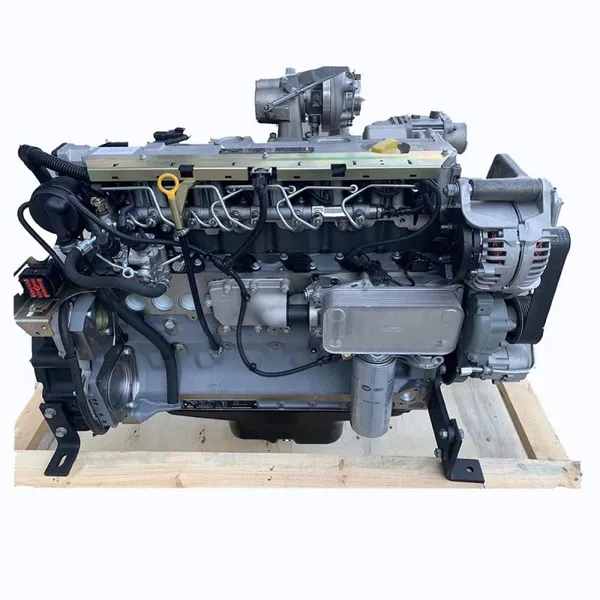
Good Price 153kw 4 Stroke Electric Start D7E Diesel Engine for Construction MachineryUS$ 8350.00MOQ: 1 Unit
-
WEICHAI 178kw 4 Stroke WD10G240E203 Diesel Engine for SEM660D SEM660B Wheel LoaderUS$ 3920.00 - 4127.00MOQ: 1 Unit
-
Dongfeng Shanghai SC11CB220G2B1 6-Cylinder Diesel Engine 162kw (220hp) SDEC 3306 New Condition Core Included Farm MachineryUS$ 6500.00MOQ: 1 Unit
-
ISUZU 4 Cylinder Diesel Engine 4BG1 Machinery Engines for Kobelco SK135 ExcavatorUS$ 6800.00MOQ: 1 Unit
-
130Hp Diesel Engine YC4D130 Yuchai Diesel Motor Price for TruckUS$ 3400.00 - 3600.00MOQ: 1 Unit
-
Shanghai SDEC SC9D220G2 162KW Diesel Engine for SEM922 SEM921 GraderUS$ 5320.00 - 5600.00MOQ: 1 Unit
-
Factory Outlet Sinotruk D1242 Engine Assembly for Construction IndustryUS$ 4615.00 - 4858.00MOQ: 1 Unit