
 Business License

What Is the VOLVO D7E Diesel Engine?
A VOLVO D7E diesel engine is an inline six cylinder, liquid cooled industrial unit of roughly seven litres, built around electronic control and used across construction machinery, material handling, haulage and stationary drive work. Most buyers meet it inside a machine rather than in a catalogue, because the unit is selected by the equipment builder to suit a frame, a pump and a duty settled somewhere else.
This D7E engine overview sets the unit out on its own terms. It places the VOLVO D7E diesel engine inside its family, describes the shape of a seven litre block, explains what electronic control changes about the way the unit behaves and is repaired, sketches the duty patterns it is built to hold, and names the two faces where it meets the rest of the machine. VOLVO D7E engine basics are gathered here as the common ground beneath the rest of this series.
Three situations bring a buyer to this page. A failed unit has to be replaced, a machine is being assembled and an engine has to be chosen for it, or a used unit has to be judged before money changes hands. Pinbo Power keeps the working pattern ahead of the model string in all three, because an engine of this class is bought against the machine it will drive rather than against the figure printed at the top of a table.
1. VOLVO D7E Diesel Engine: A Unit Defined by Its Working Life
The unit belongs to a class of industrial diesel in which the working life decides the specification rather than the other way round. A machine brings a fixed frame, a fixed transmission or pump drive, a cooling package sized by the bay, and a duty that is already known. The engine is chosen to sit inside that arrangement, which is why one designation appears across equipment from several manufacturers working in unrelated sectors.
Service asks three things of the unit at the same time. The demand the work places on it, the space the bay allows around it, and the number of hours it will run between one inspection and the next. An engine described against those three has been described in the terms that matter, whatever the label on its plate says.
Read from the machine side, this is not a road engine. Its output is held against hydraulic or transmission demand for long stretches, its speed is often governed rather than varied by a driver, and its service routine follows the working calendar of the site rather than a distance travelled.
2. D7E Engine Overview: What the Designation States and What It Leaves Open
The name carries a family letter, a size figure and a series marker. The figure rounds the swept volume, so it states the class the unit belongs to, while the letters place that class inside a wider family sharing one design language. None of it fixes what the engine will be asked to do.
What the designation leaves open is the release. The same block can be issued for construction machinery, for material handling or for a stationary application, and each release carries its own control settings, its own governed behaviour and its own dress. An order placed from the name covers a share of the requirement and leaves the rest to be discovered later.
The gap is left open on purpose rather than by oversight. One maker supplies many equipment builders, and no single duty can be written into a family name that has to serve them all. Filling that gap is what the order does, and it explains why an enquiry that opens with a model string tends to close with yet another question.
3. VOLVO D7E Engine Basics: The Physical Shape of a Seven Litre Unit
The VOLVO D7E engine basics begin at the core. The unit is an inline six cylinder, liquid cooled block of roughly seven litres, with a cast structure carrying the gear train, the front cover and the accessory drive, and the flywheel housing closing the rear. Its proportions give a moderate piston speed across the working range, which is what a machine engine of this size needs from its block.
A swept volume of that order brings a useful property: the unit reaches a working output without being driven to the end of its range. Each cylinder carries a measured load for the demand it meets, and the block is asked to hold that load for long periods rather than to survive short bursts.
| Part of the unit | What it decides | What the machine supplies |
|---|---|---|
| Cylinder block and swept volume | The class the unit belongs to | The demand the work places on it |
| Cooling circuit | How much heat leaves the engine | Radiator, fan and the airflow the bay allows |
| Control unit and sensors | How the engine answers a change in load | Harness, connectors and the machine system |
| Front end and flywheel housing | How the unit couples to what it drives | Pumps, transmission and the mounting frame |
4. D7E Engine Overview: What Control Architecture Changes on the Unit
Electronic control sits at the centre of this platform rather than at its edge. A controller reads speed, load, temperature and a set of pressures, then decides how much fuel each injector receives and at what moment. That arrangement makes the unit responsive and economical, and it also means the engine and the machine share one nervous system rather than two separate ones.
The practical consequence is a change in how faults are found. A mechanical governor gives up its information as smoke, sound and behaviour, while an electronic unit keeps a record that a reader can retrieve. Finding a fault therefore begins with a connection rather than with a spanner, and it ends with a code, a value or a live figure rather than with a guess.
Service tools follow from that. A workshop has to hold the interface and the software that match the build in front of it, because the calibration inside the unit decides what it will accept. A reader from another build may connect and still be unable to speak to the engine, which is why the release details matter as much as the part number.
5. D7E Engine Overview: The Duty Shapes the Unit Is Built Around
A D7E engine overview is more useful read against duty than against a machine list. The unit appears in wheel loaders, material handling equipment, haulage trucks and stationary drives, and those settings differ far more in the shape of their working day than in the size of the engine they carry.
| Duty shape | What the engine meets | What it asks of the unit |
|---|---|---|
| Short cycle with a heavy idle share | Repeated load steps from a hydraulic circuit | Quick response and a steady governed speed |
| Continuous work at one setting | Long hours at a single load and speed | Stable combustion and cool running |
| Mixed travel and working load | A demand that changes through the day | Torque spread across a broad band |
| Intermittent or seasonal use | Long periods standing, then heavy work | Clean starting and protection in storage |
Those four rows describe shapes rather than jobs, and one machine can pass through several of them inside a year. Two units of one build can therefore have very different working lives, and the same engine can be easy or hard to keep depending on which row its machine spends its hours in.
The table also shows what the unit is not asked to do. There is no long haul at a steady high speed, and no duty that changes by the minute as a road engine expects. A buyer whose work falls outside the rows on this list should say so early, because the answer may point to another platform.
6. VOLVO D7E Engine Basics: The Two Ends and the Surrounding Systems
An industrial engine meets the rest of the machine at two faces. The flywheel housing and its coupling decide what attaches behind, whether a transmission, a pump drive or a generator head. The front end carries the accessory drive and the mounting points that hold the unit inside the frame.
Around that core sit systems that may be supplied by the equipment builder rather than by the engine maker. Whoever laid out the bay usually settled the air cleaner, the radiator and its fan, the fuel tank, the mounting frame and the exhaust route, which leaves the engine with a fixed set of connections to satisfy.
Planning a replacement therefore starts with the bay. Two machines can share a designation and still present different work to a fitter, because what surrounds the engine in one frame is not what surrounds it in the other. Filters, belts and fittings sit where the layout put them rather than where the engine would prefer them to be.
A written record of what left the warehouse keeps that loop workable. At Jining Pinbo Import and Export the calibration release and the accessory list travel with the order number, so a workshop that asks for a sensor two seasons later is answered from the record of the unit it actually received.
7. D7E Engine Overview: Three Facts That Identify the Right Unit
A buyer can confirm most of what is needed from a D7E engine overview with three facts. The first is the machine: what it drives, how heavy the work is, and how many hours it runs in a year. The second is the bay, meaning the mounting faces, the coupling at the flywheel end, and the room left for cooling air and for service access. The third is the control release, which decides whether the unit will communicate with the machine around it.
Working through them puts the unit in place before a figure is ever mentioned. Size, fit and the control question all resolve at that stage, and none of the three can be settled later by hoping. An enquiry that skips the answers buys a guess with a purchase order number attached to it.
The sequence carries as much weight as the answers, which is why Pinbo Import and Export begins every enquiry with the work rather than with the catalogue. Open with a model string and a budget and the reply is a list of questions. Open with the machine and the reply is a unit that can be ordered.
8. VOLVO D7E Diesel Engine: What an Overview Cannot Settle
Some questions cannot be answered by an article of this kind. Which release the unit carries is one of them, because that is decided when the order is placed. What condition a used engine is in is another, because that comes from an inspection and a reading rather than from a paragraph. How the machine will be operated through the year is the third, since no description of a job predicts the hand that runs it.
An article can still do something useful with those open questions. It narrows the field, gives a buyer the vocabulary to ask clearly, and sets out what a supplier needs in hand before it can answer. That is a limited job, and it is the honest one for writing that has never stood beside the machine.
The next move belongs to the buyer and it is a small one. Send the machine, the working pattern and a photograph of the bay, and the exchange changes from a general description into a decision about one unit. Jining Pinbo Import and Export Co Ltd asks for those three before it puts a build forward for that reason, since an engine matched from a name is an engine matched to an assumption.
9. Frequently Asked Questions
9.1 What is a VOLVO D7E diesel engine?
It is an inline six cylinder, liquid cooled industrial diesel of roughly seven litres, designed around electronic control rather than a mechanical governor. The unit is used across construction machinery, material handling, haulage and stationary drive, and in each setting it is chosen by the equipment builder to suit a frame and a working pattern. Buyers meet it inside a machine rather than through a catalogue, and the designation states size and family while leaving the release and the dress to the order.
9.2 What does a D7E engine overview need to cover?
Four subjects, and the order in which they are taken matters. First what the name states about size and family, then what it leaves to the order, then the physical arrangement of the unit, and finally the duty shapes it was built to hold. Treat the electronic side as part of that arrangement rather than as a separate topic, since control sits inside the unit on this platform. Set those out in a sentence each and an enquiry can be written that draws a build instead of a request for further detail.
9.3 Which VOLVO D7E engine basics decide whether the unit fits a machine?
Take them in this order: the mounting faces and their bolt pattern, the coupling behind the flywheel, the space left for cooling air, and the release that has to agree with the machine harness. The first three decide whether the unit will physically go in, and the fourth decides whether it will work once it is there. Confirm them in that sequence, because a footprint that does not fit cannot be rescued by any figure printed on a sheet. A photograph of the bay beside the release details answers most of it before a supplier replies.
9.4 What does electronic control change for a workshop?
It moves the first step of every diagnosis from the engine bay to a connection. A mechanical unit reports its condition through behaviour, while a controlled unit stores a record that a reader retrieves, and the fault is then described by a code or a live value rather than by a symptom alone. The workshop therefore has to hold the correct interface and software for the release in front of it, and it has to keep a record of which release each machine carries, because a tool matched to another build may connect and still be unable to speak to the unit.
Recently Posted
-
What Is the Kubota V3300 Diesel Engine?
October 21, 2026A Kubota V3300 diesel engine is a four cylinder liquid cooled unit of about three and a third litres, built for compact machines r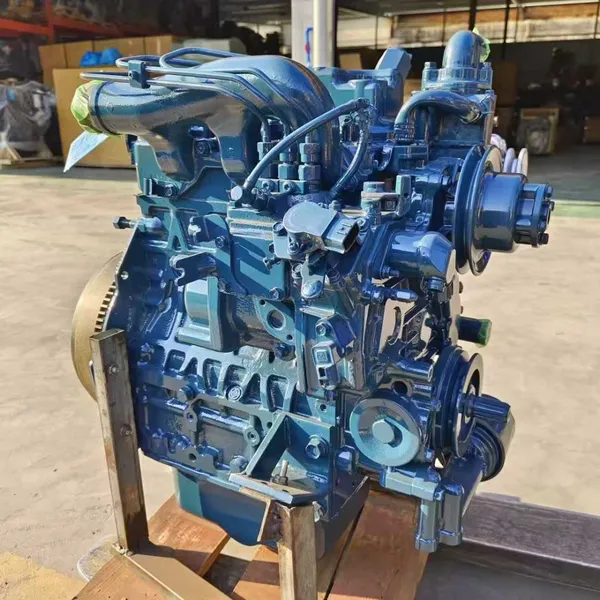 Read More
-
6CTA8.3-C260 vs Doosan DL06: Choosing a Wheel Loader Engine
October 21, 2026A quarry operator in South America ran two loaders on the same face, one with a larger engine and one with a lighter six cylinder,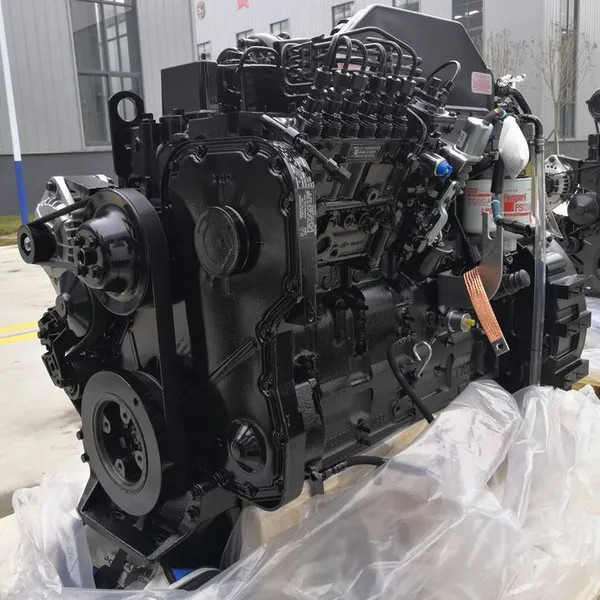 Read More
-
6CTA8.3-C260 vs 6CT8.3: Which Cummins Rating Fits Your Machine
October 21, 2026A crushing plant in eastern Europe ordered two replacement engines against one enquiry, and both arrived with a C series designati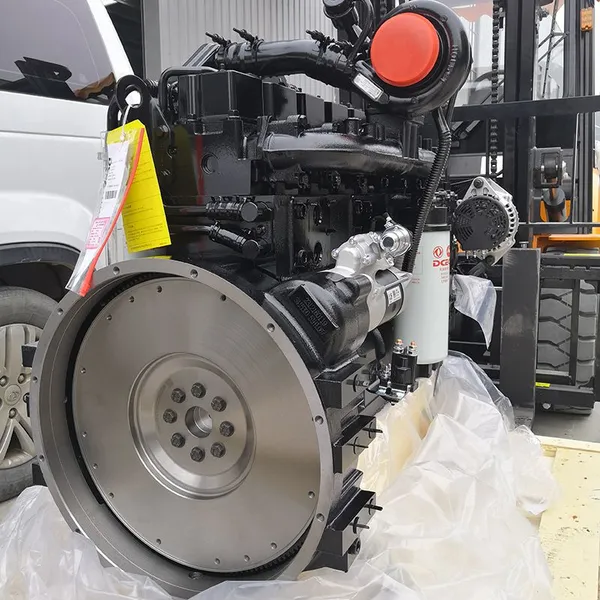 Read More
-
What Is the VOLVO D8H Diesel Engine?
October 21, 2026A VOLVO D8H diesel engine is a six cylinder liquid cooled unit in the eight litre region, and it is bought for work rather than fo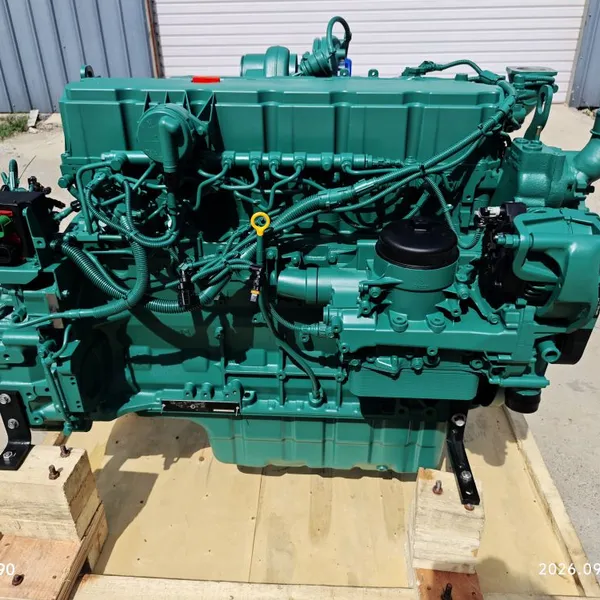 Read More

Contact Us
Recommended Products
-
 New 129 kW QSB6.7 Diesel Engine Excavator Construction Machinery Electric Start Water-Cooled Core Including Motor PumpUS$ 1888.00 - 3888.00MOQ: 1 Unit
-
Wholesale Diesel Engine Genuine 4 Stroke Direct Injection Doosan DL08 Engine for SaleUS$ 4558.00 - 4800.00MOQ: 1 Unit
-
Factory Price DOOSAN DL06 Construction Machinery Motor 6 Cylinder 115kw Water-Cooled With Core Components Engine and PumpUS$ 4752.00 - 5000.00MOQ: 1 Unit
-
Factory Price 4 Stroke 115kw Doosan DB58 Complete Engine Assy for Dx220 ExcavatorUS$ 3450.00 - 3650.00MOQ: 1 Unit
-
Factory Manufacture 123kw 4 Stroke Volvo D6e Machinery Engine for Construction MachineryUS$ 7500.00MOQ: 1 Unit
-
New BF6M2012C Cylinder 4-stroke Original Water-cooled Generator With Live Start FunctionUS$ 4500.00 - 5400.00MOQ: 1 Unit
-
Original Water Cooled 4 Stroke 6 Cylinder DEUTZ TCD2012062V Machinery EnginesUS$ 4888.00 - 5081.00MOQ: 1 Unit
-
Factory Outlet 6 Cylinder 250HP 2200rpm 6C8.3-C250 Construction Machinery Engines for CuminsUS$ 34627.00 - 36450.00MOQ: 1 Unit
-
1104D-44TA Diesel Engine 83kw New Water-Cooled Machine With Electric Start and Pump Good Price Per UnitUS$ 3700.00 - 4200.00MOQ: 1 Unit
-
Original Water Cooled 4 Stroke DEUTZ TCD 2013 L06 2V Machinery Engines for SaleUS$ 7070.00 - 7443.00MOQ: 1 Unit
-
Excavator Engine Assy QSL8.9 Complete Engine Assembly CUMMINS Qsl 9 Diesel EngineUS$ 4300.00 - 4600.00MOQ: 1 Unit
-
Genuine Vovo D4d EAE2 Diesel Engine for VOLVO EC140 ExcavatorNegotiableMOQ: 1 Unit
-
Factory Outlet 6 Cylinder 250HP 2200rpm 6C8.3-C250 Construction Machinery Engines for CuminsUS$ 4700.00 - 5100.00MOQ: 1 Unit
-
Good Price 153kw 4 Stroke Electric Start D7E Diesel Engine for Construction MachineryUS$ 8350.00MOQ: 1 Unit
-
WEICHAI 178kw 4 Stroke WD10G240E203 Diesel Engine for SEM660D SEM660B Wheel LoaderUS$ 3920.00 - 4127.00MOQ: 1 Unit
-
Dongfeng Shanghai SC11CB220G2B1 6-Cylinder Diesel Engine 162kw (220hp) SDEC 3306 New Condition Core Included Farm MachineryUS$ 6500.00MOQ: 1 Unit
-
ISUZU 4 Cylinder Diesel Engine 4BG1 Machinery Engines for Kobelco SK135 ExcavatorUS$ 6800.00MOQ: 1 Unit
-
130Hp Diesel Engine YC4D130 Yuchai Diesel Motor Price for TruckUS$ 3400.00 - 3600.00MOQ: 1 Unit
-
Shanghai SDEC SC9D220G2 162KW Diesel Engine for SEM922 SEM921 GraderUS$ 5320.00 - 5600.00MOQ: 1 Unit
-
Factory Outlet Sinotruk D1242 Engine Assembly for Construction IndustryUS$ 4615.00 - 4858.00MOQ: 1 Unit