
 Business License

Doosan DL06 Engine Family and Model Codes Explained
A workshop sent a photograph of an engine plate that read DL06 and ordered a liner set from it. The set arrived correct to the family and wrong to the unit, because the characters after the family name described a build with a different liner arrangement.
Plate reading looks like a small skill until it is skipped. A designation is written to be read in parts, and each part removes a group of builds from the field until one is left.
This article decodes Doosan DL06 engine model codes, places the unit inside the wider DL06 engine family lineup, and explains what a Doosan DL06 variant designation adds once the family name has been settled.
1. Why Doosan DL06 Engine Model Codes Decide What You Receive
Doosan DL06 engine model codes are the ordering key, and they carry more information than most parts lists print.
Two engines described by the same family name can differ in their liner arrangement, their governor, their injection system and their cooling package. Each of those differences changes the part number that fits.
A counter that orders from the family name alone is ordering from a description rather than from an identification. The distance between the two is where wrong parts come from.
Pinbo Power settles this question at the enquiry stage, before a part is quoted, because a photograph of the plate costs nothing to send and a return costs both time and freight.
One habit makes the codes easier to use across a fleet. When a unit is first entered into a record, the full string is copied from the plate rather than shortened to the family name, so every later parts request starts from the same identification.
2. DL06 Engine Family Lineup: Where This Unit Sits Among Its Relatives
The DL06 engine family lineup runs across several displacements built on one design language, and the DL06 occupies the middle of that spread.
Below it sit four cylinder units of roughly half the swept volume, used in compact machinery where the envelope is tight. Above it sit six cylinder engines of roughly seven and a half litres, built for heavier digging and hauling.
The family is organised by displacement class rather than by machine, so a workshop that knows one member recognises the layout of the rest. Bore, stroke and the general arrangement of the head carry across the range with detail changes between members.
Keeping the classes in view is useful when a machine is repowered. A buyer moving up a class gains displacement and torque, and also mass, cooling demand and a longer block, so the frame has to be checked alongside the output.
| Class | Cylinders | Swept volume | Where it works |
|---|---|---|---|
| Compact class | Four, inline | Roughly three to four litres | Compact machines, light handling |
| DL06 class | Six, inline | Roughly six litres | Mid size excavators, wheel loaders |
| Larger six class | Six, inline | Roughly seven and a half litres | Heavy excavators, large loaders |
The table describes tendencies rather than figures for a particular serial number. Where a plate and a table disagree, the plate governs, since a build is finished to what the order asked for.
3. Reading Doosan DL06 Engine Model Codes in Sequence
Doosan DL06 engine model codes are read from left to right, and the string is built so that each block of characters narrows the field.
The opening letters name the engine family. The digits that follow describe the displacement class in rounded form rather than an exact swept volume, which is why the number on a plate and the figure in a manual can differ slightly.
What comes after the displacement block carries the build. Those characters are the part a counter most often drops, and they are the part that decides which of two similar engines is being described.
Reading in sequence keeps the order of the questions right. Family first, then size, then the build that the last characters describe.
Two habits keep the reading accurate. Write the string in full rather than in part, and quote it exactly as it appears, since a transposed character describes a different build. A supplier receiving a partial code has to guess at the rest, and a guess is how the wrong part is ordered.
4. Doosan DL06 Variant Designation and the Characters After the Family
A Doosan DL06 variant designation carries the configuration, and that is where two engines sharing a family name separate.
Aspiration is usually the first of those differences. A naturally aspirated build and a turbocharged build of the same displacement share a block and differ on the air side, which changes the manifold, the pistons and the fuelling.
The rating family sits beside it. One block is offered at ratings set for continuous work, for variable mobile duty and for standby service, and each rating carries a different expected load factor.
Cooling arrangement and governor type complete the picture. A mechanically governed build is set at the pump, while an electronically controlled build is mapped through the control unit, and the two are serviced with different tools.
A variant designation is not decoration. It names the build, and the build decides what fits and how the engine behaves.
The characters are read in a fixed order for a reason. Aspiration changes the air side, the rating family changes the fuelling, and the governor and cooling decide the installation, so a reader who starts at the wrong end of the string arrives at the wrong build.
5. DL06 Engine Family Lineup: Shared Hardware Across the Range
The DL06 engine family lineup matters to a fleet because shared design lets one shelf serve several machines.
Filters, gaskets, injector nozzles and much of the pump internals travel between displacements, so a workshop holding stock for one size already holds a large share of what another needs.
The parts that do not travel are those tied to the cylinder count and the build. Liners, pistons and head gaskets are specific to a displacement, and the variant characters decide the rest.
| Item | Shared across the family | Specific to a build |
|---|---|---|
| Filters and gaskets | Common families of parts | Size decides the variant |
| Injection components | Pump internals where the design matches | Nozzles and settings |
| Internal parts | Few | Liners, pistons, head gasket |
Reading the table as a planning aid keeps a store from carrying one item twice under two descriptions, which is a modest saving that repeats every season.
Pinbo Import and Export helps fleets build that single shelf by listing the consumables a mixed fleet uses against the family rather than against a machine. The list stays short, and it saves a store from carrying one filter under two descriptions.
6. Doosan DL06 Variant Designation and the Rating That Follows It
A Doosan DL06 variant designation sits above the rating on most engine records, and the two are read together rather than apart.
The variant names the configuration. The rating states the output that configuration is set to deliver and the duty class that output assumes.
Two units of the same variant can still carry different ratings where the application asked for a different load profile, which is why a quotation printing an output figure without a class is hard to compare.
Pinbo Import and Export records the variant and the rating against the order for that reason, so a follow-up enquiry is answered against the build that was supplied rather than against a similar one.
Reading the two together also protects a commercial position. A rating applied outside its duty class is visible from the record, and a question is easier to settle when the build and the class were written down at the point of order rather than reconstructed later.
7. Doosan DL06 Engine Model Codes in the Enquiry and the Quotation
Doosan DL06 engine model codes belong in the first message of an enquiry, and three items are enough to place a request on the right build.
The first is a photograph of the plate taken square on, with the whole string in frame. The second is the hour meter reading, which tells a workshop where the unit sits in its service life.
The third is the machine the engine drives, together with the duty it works. A loader and a generating set can share a block and call for different cooling, governor settings and filtration.
Those three items let a supplier match a part or a replacement unit to the build on the plate rather than to the family name on a list.
A supplier working from those three items can answer in one exchange, which keeps a machine down for less time than a back and forth over the string on its own.
8. Where Model Codes Stop and Measurement Begins
Model codes describe what an engine was built as, and measurement describes what it has become, and the second is needed wherever a unit has worked.
A plate can be worn, replaced or fitted from a different engine, so a code read from a plate is a claim until it is checked against the hardware.
Clearances taken at the liners, the bearings and the valve train describe condition in a way no designation can. On a used unit those measurements set the price more than the model string does.
Jining Pinbo Import and Export Co Ltd works from both when a used unit is discussed, so the code fixes the build and the measurements fix the state of it.
Pinbo Power keeps the plate record and the measurement record in one file for that reason, so the two can be compared without a search. Where the plate and the hardware disagree, the measurements decide the price and the plate decides the parts list.
9. Frequently Asked Questions
9.1 What do Doosan DL06 engine model codes actually describe?
Doosan DL06 engine model codes describe three things in sequence, and each one narrows the field. The opening letters name the engine family and place the unit among its relatives, while the digits that follow describe the displacement class in rounded form rather than an exact swept volume. The characters after that carry the build, covering aspiration, rating family, governor type and the cooling arrangement the order asked for. Read in that order, the string narrows a parts request from a family name to a single build.
9.2 Where does the DL06 engine family lineup place this unit?
The DL06 engine family lineup places a six cylinder unit of roughly six litres in the middle of the range. Below it sit four cylinder engines of roughly three to four litres for compact machinery, and above it sit six cylinder engines of roughly seven and a half litres for heavier digging and hauling. The family is organised by displacement class rather than by machine, so a workshop that knows one member recognises the layout of the others. Bore and stroke carry across the range with detail changes between members.
9.3 What does a Doosan DL06 variant designation add?
A Doosan DL06 variant designation adds the configuration that the family name leaves open. It separates a naturally aspirated build from a turbocharged one, and it separates ratings set for continuous work, variable mobile duty and standby service. It also distinguishes a mechanically governed build, set at the pump, from an electronically controlled one mapped through the control unit. Those differences change the parts that fit and the way the engine answers a load, so the variant is read before a part number is chosen.
9.4 What should go with a DL06 enquiry?
A square photograph of the plate with the whole string in frame comes first, because it fixes the build the request is matched against. The hour meter reading comes second, since it places the unit in its service life and shapes what is worth quoting. The machine and its duty come third, because a loader and a generating set can share a block and still call for different cooling and governor settings. Those three items let a supplier answer against the engine on the bench rather than a similar one.
Recently Posted
-
Doosan DL08 Engine Architecture and Common Configurations
October 16, 2026A workshop had two DL08 engines standing side by side and found that the oil filter head sat in a different place on each, with th Read More
 -
What Is the Doosan DL08 Diesel Engine?
October 16, 2026A wheel loader arrived at a workshop with an engine that looked much like the unit it was meant to replace, and the difference sho Read More
 -
What Is the Doosan DL06 Diesel Engine?
October 15, 2026A workshop in an export market ordered service parts for a machine whose plate read DL06, working from the assumption that the num Read More
 -
What Is the DEUTZ F3L912 Air-Cooled Diesel Engine?
October 15, 2026A hire yard kept two small compressors through a winter shutdown. The liquid cooled unit came back to the workshop after the first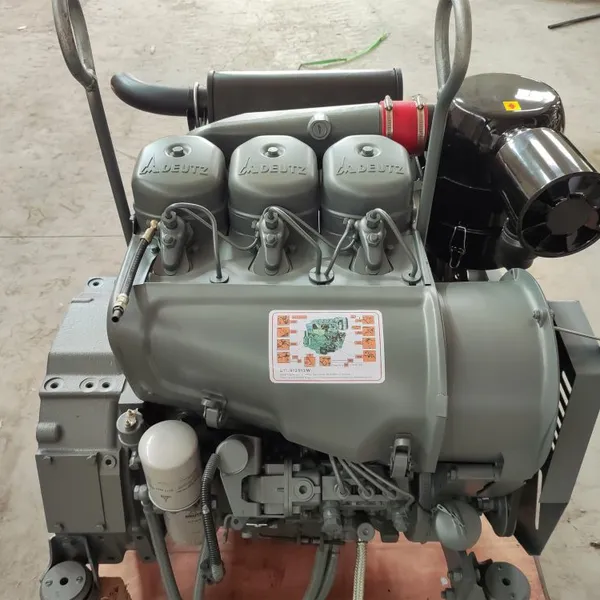 Read More

Contact Us
Recommended Products
-
 New 129 kW QSB6.7 Diesel Engine Excavator Construction Machinery Electric Start Water-Cooled Core Including Motor PumpUS$ 1888.00 - 3888.00MOQ: 1 Unit
 -
Wholesale Diesel Engine Genuine 4 Stroke Direct Injection Doosan DL08 Engine for SaleUS$ 4558.00 - 4800.00MOQ: 1 Unit
-
Factory Price DOOSAN DL06 Construction Machinery Motor 6 Cylinder 115kw Water-Cooled With Core Components Engine and PumpUS$ 4752.00 - 5000.00MOQ: 1 Unit
-
Factory Price 4 Stroke 115kw Doosan DB58 Complete Engine Assy for Dx220 ExcavatorUS$ 3450.00 - 3650.00MOQ: 1 Unit
-
Factory Manufacture 123kw 4 Stroke Volvo D6e Machinery Engine for Construction MachineryUS$ 7500.00MOQ: 1 Unit
-
New BF6M2012C Cylinder 4-stroke Original Water-cooled Generator With Live Start FunctionUS$ 4500.00 - 5400.00MOQ: 1 Unit
-
Original Water Cooled 4 Stroke 6 Cylinder DEUTZ TCD2012062V Machinery EnginesUS$ 4888.00 - 5081.00MOQ: 1 Unit
-
Factory Outlet 6 Cylinder 250HP 2200rpm 6C8.3-C250 Construction Machinery Engines for CuminsUS$ 34627.00 - 36450.00MOQ: 1 Unit
-
1104D-44TA Diesel Engine 83kw New Water-Cooled Machine With Electric Start and Pump Good Price Per UnitUS$ 3700.00 - 4200.00MOQ: 1 Unit
-
Original Water Cooled 4 Stroke DEUTZ TCD 2013 L06 2V Machinery Engines for SaleUS$ 7070.00 - 7443.00MOQ: 1 Unit
-
Excavator Engine Assy QSL8.9 Complete Engine Assembly CUMMINS Qsl 9 Diesel EngineUS$ 4300.00 - 4600.00MOQ: 1 Unit
-
Genuine Vovo D4d EAE2 Diesel Engine for VOLVO EC140 ExcavatorNegotiableMOQ: 1 Unit
-
Factory Outlet 6 Cylinder 250HP 2200rpm 6C8.3-C250 Construction Machinery Engines for CuminsUS$ 4700.00 - 5100.00MOQ: 1 Unit
-
Good Price 153kw 4 Stroke Electric Start D7E Diesel Engine for Construction MachineryUS$ 8350.00MOQ: 1 Unit
-
WEICHAI 178kw 4 Stroke WD10G240E203 Diesel Engine for SEM660D SEM660B Wheel LoaderUS$ 3920.00 - 4127.00MOQ: 1 Unit
-
Dongfeng Shanghai SC11CB220G2B1 6-Cylinder Diesel Engine 162kw (220hp) SDEC 3306 New Condition Core Included Farm MachineryUS$ 6500.00MOQ: 1 Unit
-
ISUZU 4 Cylinder Diesel Engine 4BG1 Machinery Engines for Kobelco SK135 ExcavatorUS$ 6800.00MOQ: 1 Unit
-
130Hp Diesel Engine YC4D130 Yuchai Diesel Motor Price for TruckUS$ 3400.00 - 3600.00MOQ: 1 Unit
-
Shanghai SDEC SC9D220G2 162KW Diesel Engine for SEM922 SEM921 GraderUS$ 5320.00 - 5600.00MOQ: 1 Unit
-
Factory Outlet Sinotruk D1242 Engine Assembly for Construction IndustryUS$ 4615.00 - 4858.00MOQ: 1 Unit