
 Business License

What Is the Cummins 6CTA8.3-C260 Diesel Engine?
A wheel loader working a quarry face in South America lost the better part of a season to a repower that looked simple on paper. The owner bought a used 6CTA8.3-C260 diesel engine from a listing that quoted a horsepower figure and nothing else, and the block itself was genuine. Two weeks of shifting went well, then coolant temperature started climbing under load, an exhaust manifold cracked, and an oil sample came back with elevated iron. The unit had been built for a lighter duty than the loader imposed, and the radiator had never been sized for continuous digging in 35 degree ambient heat.
Anyone who has priced a replacement engine from a bare model number knows the gap between a listing and a running machine. A part number tells you the family and the displacement, and says nothing about duty rating, cooling package or governor setting.
This article explains what the 6CTA8.3-C260 diesel engine is, how the C series family is organised, which ratings sit behind the C260 label, and what to verify before money changes hands. It is written for buyers, fleet mechanics and repower engineers who have to match an engine to a machine rather than to a data sheet.
1. What the 6CTA8.3-C260 Diesel Engine Is and Where It Fits
The 6CTA8.3-C260 diesel engine is a six cylinder, turbocharged and aftercooled unit of 8.3 litres from the Cummins C series.
The letter string carries its own description once you learn to read it: six cylinders, C series block, turbocharger, aftercooler, 8.3 litres of displacement, and a 260 horsepower rating at the end. The same block moved from truck duty into industrial and marine work, which is why it turns up under wheel loaders, excavators, generator sets and small workboats.
Cummins built the C series in several displacements and several aspiration configurations, so buyers who shop by block alone often take home the wrong one. A naturally aspirated C series engine and a turbocharged aftercooled version share a bore and a stroke, yet differ in almost every support system around them.
Where the 6CTA8.3-C260 diesel engine earns its place is in machines that need sustained torque rather than a short peak. That distinction decides the radiator, the governor, the flywheel housing and the service routine long before it decides the price.
Dealer coverage and parts stocking separate a fast repair from a long one. A supplier holding warehouse stock and an inspection bench such as Jining Pinbo Import and Export Co Ltd can shorten the gap between a failed engine and a working machine, which matters more in a quarry than a small difference in the quotation.
The practical test is whether the rating on the plate matches the duty the machine performs. An engine rated for intermittent truck work will not hold continuous digging duty at the same output, however healthy the block turns out to be.
2. Cummins 6CTA8.3 Engine Basics: Block, Head and Rotating Group
The Cummins 6CTA8.3 engine basics start with the block, because the block decides what the rest of the engine can be asked to do.
It is an inline six with a cast iron block, a single cast iron cylinder head and a gear driven camshaft, and the rotating group is built around a forged steel crankshaft carried in seven main bearings. Bore and stroke sit at 114 mm by 135 mm, which gives 8.3 litres across six cylinders and a stroke bias that shows up as torque low in the rev range.
Compression ratio lands near 17 to 1 on the turbocharged aftercooled version. Fuel delivery is handled by a mechanical pump on earlier builds and by an electronic unit on later ones, and the two behave differently enough that the pump type belongs in the buying decision.
The figures below are the ones worth having in hand before two offers are compared side by side. Treat them as typical values for the family rather than exact numbers for one serial number.
| Item | Typical value |
|---|---|
| Configuration | Inline six, four stroke, turbocharged and aftercooled |
| Displacement | 8.3 litres |
| Bore and stroke | 114 mm x 135 mm |
| Compression ratio | roughly 17 to 1 |
| Valve gear | 12 valve, pushrod, two per cylinder |
| Main bearings | 7 |
| Dry weight | roughly 600 kg |
| Oil capacity | roughly 15 litres |
| Coolant capacity | roughly 20 litres |
Those figures set the ceiling on how much work the engine absorbs before heat and wear take over, and the Cummins 6CTA8.3 engine basics are no different from any other industrial unit in that respect.
3. Power Ratings and Displacement in the 6CTA8.3-C260 Diesel Engine
The C260 label points at one rating inside a family that offers several, and the difference between them is not cosmetic.
An intermittent rating is intended for machines that load and unload through a shift, while a continuous rating is intended for duty that never lets go, such as a generator set running a production line. Fuel delivery, injection timing and the governor change between the two, and the cooling package changes with them.
The table below sets out the pattern that most plates on this family follow. A seller who cannot say which column a unit belongs to has not read the plate.
| Rating family | Output | Rated speed | Typical duty |
|---|---|---|---|
| Intermittent | roughly 260 hp (194 kW) | 2,200 rpm | Loaders, excavators, haul trucks |
| Continuous | roughly 215 hp (160 kW) | 1,800 rpm | Generator sets, pumps, marine auxiliary |
| Peak torque | roughly 990 N m | 1,300 rpm | All duties |
Reading the plate before the listing saves more money than negotiating over a worn turbo. A rating that does not appear in the seller's description usually means the seller bought the engine the same way you are about to.
Displacement works with the rating here, not against it. An 8.3 litre six can hold a mid-load band without working hard, which is why it survives duty cycles that would shorten the life of a smaller, harder worked unit.
4. A 6CTA8.3-C260 Engine Overview of Industrial and Marine Duty
A 6CTA8.3-C260 engine overview that stops at the horsepower figure leaves out the parts that decide whether the unit survives its first season.
On the industrial side the engine drives loaders, backhoes, crushers and generator sets, and on the marine side it appears in workboats and fishing vessels as both propulsion and auxiliary power. Each of those duties imposes a different heat load, a different vibration profile and a different service interval.
A marine installation pulls raw water through a heat exchanger and asks the engine to hold a steady speed for hours, while a loader asks for repeated torque spikes and dust laden intake air. Any 6CTA8.3-C260 engine overview that ignores that split is describing a different engine from the one in front of you.
Pinbo Power has worked both ends of that range, and the inspection routine differs enough between them that the same unit can look sound in one application and marginal in another.
Running hours tell less than most buyers expect. A marine auxiliary that idles at part load for long stretches can outlast a hard worked loader engine with fewer hours on the clock, so hours belong alongside the duty history rather than above it.
5. How the 6CTA8.3-C260 Diesel Engine Behaves Under Load
Torque arrives early on this engine, which is the reason it suits digging and lifting work.
Roughly 990 N m is available near 1,300 rpm, so the machine pulls away from a stall without a long wait for the turbocharger to spool. Fuel burn lands in the range of 200 to 215 grams per kilowatt hour at a mid-load point, and that figure climbs quickly once the operator works above the rated band.
Heat rejection is the number that catches people out. A turbocharged aftercooled engine of this size sends a large share of its fuel energy into the cooling system, and an undersized radiator will hold temperature at light load and lose control the moment the machine digs into a face.
Altitude costs power as well, at roughly 1 percent per 300 metres above sea level unless the fuel pump is adjusted to compensate. Operators who move a machine from a coastal yard to a high plateau often blame the engine for a problem that belongs to the fuel setting.
Load profile also decides how the exhaust and intake behave. A machine that cycles hard builds heat in the manifold and the turbo housing, and the cool-down routine before shutdown matters more on this engine family than the owner's manual suggests.
6. Matching a Cummins 6CTA8.3 Engine to Wheel Loaders and Generator Sets
Matching starts with the duty, not with the machine badge.
A wheel loader spends its shift cycling between no load and a full bucket, so it takes an intermittent rating and a radiator sized for dust and high ambient temperature. A generator set holds one speed all day, so it takes a continuous rating, an isochronous governor and a cooling package built for steady heat soak.
Three items decide whether the installation holds up once the engine is in the frame: the flywheel housing and coupling, the air cleaner capacity, and the exhaust back pressure. A restrictive exhaust can cost more power than a worn injector, and it is the least expensive item on the list to check before assembly.
Pinbo Import and Export keeps a working list of the housing and coupling combinations that fit the common loader and generator frames, which removes a step from the matching process and shortens the time between an enquiry and a shipping date.
The Cummins 6CTA8.3 engine basics above apply to every duty, but the support systems around the block are what make one installation last and another fail early. Two machines with identical engines can differ by thousands of hours purely because of the radiator behind them.
7. Fuel, Cooling and Service Access on a 6CTA8.3 Engine
Service access decides how much of the engine's design life a fleet actually collects.
Oil and filter changes fall at roughly 250 hours in dusty work and 500 hours in clean marine service, and a larger sump works in the operator's favour. Coolant condition matters more on an aftercooled unit, because the aftercooler core adds a second path for heat and a second place for scale to collect.
Belt tension, valve lash and injector timing round out the short list, and each of them is reachable from the side of the block on this family. A 6CTA8.3 engine that has been run on the wrong coolant will usually show a temperature rise before it shows any other symptom, which makes the gauge the first diagnostic tool in the cab.
Spare parts availability is the other half of service access. Filters, gaskets, water pumps and injectors for this family are widely stocked, so a planned service rarely becomes a waiting game unless the part is a build specific item.
Keep a written service record with the hour meter readings. It converts an unknown used engine into a known quantity at resale, and it is the first document a serious buyer asks for.
8. Used Units and Rebuild Decisions: A Cummins 6CTA8.3 Engine Checklist
A used engine is a set of decisions, and the Cummins 6CTA8.3 engine basics below are the ones worth confirming in person.
Start with the plate and confirm the rating. Then pull an oil sample and read the iron and copper numbers against the hours claimed, because a clean sample with high iron is a contradiction that needs explaining.
Compression across six cylinders should sit within roughly a 10 percent band from cylinder to cylinder, and blowby past the breather tells you more about ring and liner condition than any seller description. After that, check the turbocharger for shaft play, look for coolant staining around the head gasket, and confirm that the front and rear seals are dry.
A unit that passes those checks is usually worth a rebuild rather than a replacement. The same 6CTA8.3-C260 engine overview applies to used stock, with the inspection order reversed: prove the rating first, then the condition.
Pinbo Power quotes a rebuild and a replacement side by side so the decision is made on figures rather than on habit. Roughly five to ten working days is a realistic window for inspection, crating and dispatch once the paperwork is settled.
Budget for the parts that are normally tired on a used unit. Water pump, thermostat, injectors, belts and hoses are inexpensive relative to a failure in the field, and replacing them during the rebuild is the cheaper sequence.
9. Frequently Asked Questions
9.1 What is the difference between a 6CTA8.3 and a 6CTA8.3-C260 diesel engine?
The block and the displacement are the same, and the difference sits in the rating and the support systems built around it. The rated build leaves the line calibrated for one duty band, with fuel delivery, injection timing and governor settings matched to that band. A bare C series designation describes the family and the aspiration instead, which is why two engines with the same block can behave differently in the same machine. Buyers who move a plate between the two often inherit a heat problem, because the radiator and aftercooler were sized for the original rating.
9.2 Where can I find a reliable 6CTA8.3-C260 engine overview before I buy?
A useful 6CTA8.3-C260 engine overview has to cover four things at once: the rating, the cooling package, the governor setting and the service history. Most listings publish a model string and a horsepower claim, and leave the rest for the buyer to discover after the engine is in the frame. Ask for a plate photograph, the oil sample record and the hours logged at each service. A supplier who answers those questions in writing is easier to work with than one who quotes a price and waits.
9.3 What are the first Cummins 6CTA8.3 engine basics a buyer should confirm?
Start with the bore, the stroke and the displacement, because those three figures confirm that the engine is the unit being advertised rather than a lookalike from another family. Then confirm the aspiration, since a turbocharged aftercooled block carries an intercooler circuit and a cooling load that a naturally aspirated version does not. The third check is the governor, which sets how the engine holds speed under changing load. Those Cummins 6CTA8.3 engine basics are settled in a few minutes with the plate and the build record in hand.
9.4 How long should a rebuilt 6CTA8.3-C260 diesel engine last?
A properly rebuilt 6CTA8.3-C260 diesel engine usually runs for several thousand hours before the next major service, and the exact figure depends far more on duty and cooling than on the rebuild itself. Engines held at a steady mid load in clean conditions outlast engines that spend their shifts cycling between idle and full power in dust. Consistent oil sampling is the practical way to see wear arriving before it becomes a failure. In our experience the machines that fail early are the ones that were never matched to the rating on the plate.
Recently Posted
-
What Is the Doosan DL06 Diesel Engine?
October 15, 2026A workshop in an export market ordered service parts for a machine whose plate read DL06, working from the assumption that the num Read More
 -
What Is the DEUTZ F3L912 Air-Cooled Diesel Engine?
October 15, 2026A hire yard kept two small compressors through a winter shutdown. The liquid cooled unit came back to the workshop after the first Read More
 -
DEUTZ BF6M1015 Engine Variants and Designations Explained
October 15, 2026A workshop in south eastern Europe ordered six engines against a single line on a quotation, and two of the six arrived with a dif Read More
 -
What Is the DEUTZ BF6M1015 Diesel Engine?
October 14, 2026A power plant in eastern Europe ran two generator sets on the same bus, and the older machine kept dropping out on load steps that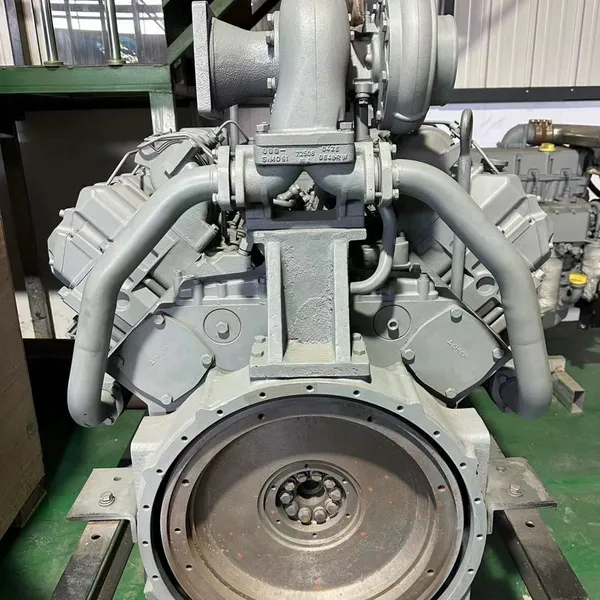 Read More

Contact Us
Recommended Products
-
 New 129 kW QSB6.7 Diesel Engine Excavator Construction Machinery Electric Start Water-Cooled Core Including Motor PumpUS$ 1888.00 - 3888.00MOQ: 1 Unit
 -
Wholesale Diesel Engine Genuine 4 Stroke Direct Injection Doosan DL08 Engine for SaleUS$ 4558.00 - 4800.00MOQ: 1 Unit
-
Factory Price DOOSAN DL06 Construction Machinery Motor 6 Cylinder 115kw Water-Cooled With Core Components Engine and PumpUS$ 4752.00 - 5000.00MOQ: 1 Unit
-
Factory Price 4 Stroke 115kw Doosan DB58 Complete Engine Assy for Dx220 ExcavatorUS$ 3450.00 - 3650.00MOQ: 1 Unit
-
Factory Manufacture 123kw 4 Stroke Volvo D6e Machinery Engine for Construction MachineryUS$ 7500.00MOQ: 1 Unit
-
New BF6M2012C Cylinder 4-stroke Original Water-cooled Generator With Live Start FunctionUS$ 4500.00 - 5400.00MOQ: 1 Unit
-
Original Water Cooled 4 Stroke 6 Cylinder DEUTZ TCD2012062V Machinery EnginesUS$ 4888.00 - 5081.00MOQ: 1 Unit
-
Factory Outlet 6 Cylinder 250HP 2200rpm 6C8.3-C250 Construction Machinery Engines for CuminsUS$ 34627.00 - 36450.00MOQ: 1 Unit
-
1104D-44TA Diesel Engine 83kw New Water-Cooled Machine With Electric Start and Pump Good Price Per UnitUS$ 3700.00 - 4200.00MOQ: 1 Unit
-
Original Water Cooled 4 Stroke DEUTZ TCD 2013 L06 2V Machinery Engines for SaleUS$ 7070.00 - 7443.00MOQ: 1 Unit
-
Excavator Engine Assy QSL8.9 Complete Engine Assembly CUMMINS Qsl 9 Diesel EngineUS$ 4300.00 - 4600.00MOQ: 1 Unit
-
Genuine Vovo D4d EAE2 Diesel Engine for VOLVO EC140 ExcavatorNegotiableMOQ: 1 Unit
-
Factory Outlet 6 Cylinder 250HP 2200rpm 6C8.3-C250 Construction Machinery Engines for CuminsUS$ 4700.00 - 5100.00MOQ: 1 Unit
-
Good Price 153kw 4 Stroke Electric Start D7E Diesel Engine for Construction MachineryUS$ 8350.00MOQ: 1 Unit
-
WEICHAI 178kw 4 Stroke WD10G240E203 Diesel Engine for SEM660D SEM660B Wheel LoaderUS$ 3920.00 - 4127.00MOQ: 1 Unit
-
Dongfeng Shanghai SC11CB220G2B1 6-Cylinder Diesel Engine 162kw (220hp) SDEC 3306 New Condition Core Included Farm MachineryUS$ 6500.00MOQ: 1 Unit
-
ISUZU 4 Cylinder Diesel Engine 4BG1 Machinery Engines for Kobelco SK135 ExcavatorUS$ 6800.00MOQ: 1 Unit
-
130Hp Diesel Engine YC4D130 Yuchai Diesel Motor Price for TruckUS$ 3400.00 - 3600.00MOQ: 1 Unit
-
Shanghai SDEC SC9D220G2 162KW Diesel Engine for SEM922 SEM921 GraderUS$ 5320.00 - 5600.00MOQ: 1 Unit
-
Factory Outlet Sinotruk D1242 Engine Assembly for Construction IndustryUS$ 4615.00 - 4858.00MOQ: 1 Unit