
 Business License

Compact Diesel Engines and Electrification in Light Construction Equipment
A rental depot in a city centre now sends battery powered mini machines to indoor and courtyard jobs, and keeps its diesel units for everything else. The two fleets sit side by side in the same yard, and neither has displaced the other.
That arrangement describes where electrification in light equipment has actually arrived. It has taken a defined set of jobs rather than a category of machine, and the boundary between the two fleets is drawn by the work rather than by the size of the unit.
These notes on the compact diesel engine trend examine what is already on site, treat Kubota V3300 engine electrification as a shift that has reached particular duties rather than whole product lines, and set out how the light equipment power options in front of a buyer are being weighed by owners who are making the comparison now.
1. Compact Diesel Engine Trend: What Is Already on Site
The compact diesel engine trend worth describing is the one visible in yards and depots rather than the one described in forecasts.
Battery machines have arrived in the smallest classes first. Mini excavators, compact loaders, small dumpers and walk behind rollers are now offered with electric drive by several builders, and the units are in service rather than on show stands.
The diesel machines in those same classes have not gone away. They remain in production, they are still bought new, and the second hand market for them is active. What has changed is that a buyer in these classes now has a genuine choice where previously there was none.
That is the honest shape of the change so far. It is a widening of the choice within a few classes rather than a replacement of one power source by another across the board.
2. Kubota V3300 Engine Electrification: The Machines It Touches First
Kubota V3300 engine electrification shows up first in machines whose duty has a natural boundary at the end of a shift.
Indoor work is the clearest case. A machine that must run inside a building or in a confined courtyard has a problem that exhaust gas cannot solve, and a battery unit removes it at the source rather than managing it downstream.
Urban sites follow, where a machine works in a street or a plaza surrounded by people. Noise is the second constraint there, and an electric drive removes most of it along with the exhaust.
The third group is the fleet working a fixed daily pattern with a home base. A machine that returns to the same depot each evening can be charged there on a schedule, and the regularity of the pattern is what makes the arrangement work.
Each of those cases shares a feature: the duty is bounded, and the boundary is known before the machine is bought. Where that is true, the electric option is being taken seriously. Where it is not, the diesel machine is still being specified.
3. Light Equipment Power Options: Battery Machines in Their Working Window
Light equipment power options divide on one physical quantity, which is the energy a machine can carry relative to the work it must do.
A diesel machine carries its energy in a tank that can be refilled in minutes, and the energy density of the fuel is high. A battery machine carries its energy in cells whose mass is a large part of the machine, and recharging takes longer than filling a tank.
The practical result is a working window. A battery unit performs its full duty for a period that suits a shift or a defined job, and then needs to be taken out of service. A diesel unit performs the same duty until it is refuelled, and the refuelling can be done in the time it takes to change an operator.
That difference decides the class of work each suits. A machine doing intermittent work with pauses has time to recover and uses less energy per hour, which extends its window. A machine doing continuous heavy work in a single long push empties the same battery in a fraction of the time.
| Work pattern | Effect on a battery machine | Effect on a diesel machine |
|---|---|---|
| Intermittent with pauses | Energy use falls, window extends | Idle hours still register |
| Continuous heavy duty | Window shortens sharply | Refuel and continue |
| Indoor or enclosed | Suits the machine directly | Needs ventilation and extraction |
| No power at the site | Requires charging provision | Requires a fuel delivery |
4. Light Equipment Power Options: Charging, Swapping and the Depot
Light equipment power options depend on what happens between shifts, and that part of the comparison belongs to the depot rather than to the machine.
The simplest arrangement is overnight charging at a home base. It requires a supply of adequate capacity where the machine is parked, and it suits a fleet whose machines return to one place each day.
A second arrangement used by rental fleets is a spare battery pack. The machine is not charged in place; the pack is exchanged at the depot, and the machine returns to work with a full one while the empty pack is charged on a bench. That approach decouples the machine's working hours from the charging time, at the cost of buying packs that are not earning.
The third arrangement is opportunity charging, in which the machine is connected whenever the work pauses. It suits a site with a supply nearby and a duty made of short bursts, and it depends on the operator forming the habit.
Whichever route is chosen, the depot has to provide something a diesel fleet did not need: a supply capable of charging a fleet overnight, and the space and the handling to move packs where swapping is used. That cost belongs in the comparison and is often left out of it.
5. Compact Diesel Engine Trend: Hybrid Arrangements Already in Service
The compact diesel engine trend also includes arrangements that keep the engine and add electric drive, and several of those are already working in the field.
One arrangement uses the diesel engine to generate electricity while electric motors drive the machine. The engine can then run at a steady efficient point rather than following every change in demand, and the drive responds quickly because the response comes from the motor.
A second uses the engine for the heavy work and a motor for the rest. The engine covers travel at load or a high demand attachment, and the electric side covers movement around site, which is where a machine spends much of its idle time.
A third uses a hydraulic accumulator to capture the energy of a falling boom and return it on the next lift. That is a hydraulic rather than an electric change, and it sits in the same family of measures because it reduces the fuel needed for a given cycle.
Each of these arrangements has been delivered and is running somewhere rather than being proposed. Each also adds components and complexity, so the saving has to be measured against the duty the machine actually performs rather than against an ideal cycle.
6. Kubota V3300 Engine Electrification: Where the Diesel Still Holds
Kubota V3300 engine electrification has not reached the duties where energy must be carried into a place with nothing to plug into.
A machine working a remote site with no supply, no depot and no routine return cannot rely on a battery that has to be charged somewhere. The same is true of a machine whose working window is longer than a shift, because a pack sized for that duty becomes heavy enough to change the character of the machine.
Power density is the second reason. A compact machine must lift, dig and push within a small footprint, and a large battery takes mass and volume away from the work. Where the duty is heavy and continuous, the diesel engine remains the smaller and lighter way to carry the energy required.
The third reason is serviceability far from base. A diesel unit can be refuelled from a can, repaired with hand tools and kept running by a mechanic on site. A battery machine depends on electronics and on a power supply, and that dependency is a cost in places where neither is easy to obtain. Pinbo Import and Export supplies compact diesel engines into exactly those places, where a machine has to keep working with whatever can be carried to it.
7. Compact Diesel Engine Trend: What Operators Are Measuring
The compact diesel engine trend is being decided in fleet offices against a cost comparison that has become more detailed than it once was.
Energy cost is the first line. Electricity drawn at a depot is cheaper per unit of work than diesel in most places, and that gap is the main reason the electric machines show a saving on paper.
Maintenance is the second. A battery machine has far fewer wear parts, no oil changes and no filters, so the routine that occupies a workshop on a diesel fleet largely disappears. Against that, the battery pack itself has a life and a replacement cost that is not a line item on a diesel machine.
Utilisation is the third and the one that decides the outcome. A battery machine that is idle while it charges, or one whose pack is being swapped, earns less than a diesel unit working the same hours. Fleet operators comparing the two are therefore measuring the hours a machine is available in a day rather than its cost per hour alone.
Resale value closes the comparison. The diesel compact machine has a long established second hand market, while the electric one is a newer entry to it, and that difference shows in what a fleet expects to recover at the end of a machine's life.
8. Kubota V3300 Engine Electrification: The Replacement Market Behind It
Kubota V3300 engine electrification will not remove the diesel engine from light equipment for a long time, and the reason is the fleet that already exists.
Many thousands of compact machines are working with diesel engines in them, and those machines will continue to be repaired, rebuilt and resold for as long as they earn. An owner facing a failed unit has a choice between a new battery machine and a replacement engine, and both are being taken.
The replacement route keeps a machine working at a fraction of the cost of a new unit, and it preserves an installation the owner already understands. That is why demand for compact diesel engines persists even as new machine sales shift.
Jining Pinbo Import and Export supplies that market with compact diesel engines for machines already in service, and it asks for the plate and the housing details before quoting so the build matches the bay. Pinbo Power keeps the build and the accessory list against each order, so a machine rebuilt once can be supplied again from its own record. Jining Pinbo Import and Export Co Ltd treats the replacement trade as a long term business rather than a step behind the new machine market.
9. Frequently Asked Questions
9.1 What does the compact diesel engine trend look like in practice?
The compact diesel engine trend in practice is a widening of choice rather than a replacement of one power source by another. Battery machines have arrived in the smallest classes, including mini excavators, compact loaders and walk behind rollers, and they are in everyday service. The diesel machines in those same classes are still built, still bought new and still traded second hand. What has changed is that a buyer in these classes now has a real choice where previously there was none.
9.2 Which duties has Kubota V3300 engine electrification reached first?
Kubota V3300 engine electrification has reached duties with a natural boundary, and each of those duties is bounded before the machine is bought. Indoor work comes first, because an electric machine removes exhaust gas at the source rather than managing it afterwards. Urban sites follow, where noise is a second constraint that operators on those jobs now weigh. The third group is a fleet working a fixed daily pattern with a home base, where machines can be charged on a schedule.
9.3 How do the light equipment power options divide?
Light equipment power options divide on the energy a machine can carry against the work it must do. A diesel machine carries its energy in a tank that refills in minutes, while a battery machine carries it in cells that form a large part of the machine and take longer to replenish. The result is a working window that suits a shift or a defined job. Intermittent work with regular pauses extends that window, and continuous heavy work in a single long push shortens it sharply.
9.4 Where does the diesel compact machine still hold its place?
The diesel compact machine holds its place where energy has to be carried into a place with nothing to plug into. A machine on a remote site with no supply and no depot cannot depend on a battery charged elsewhere, and a duty longer than a shift needs a pack heavy enough to change the machine. Power density matters too, since a large battery takes mass and volume away from the work. Serviceability away from base adds a further reason.
Recently Posted
-
Heavy Truck Engine Overhauls and the Circular Parts Economy
November 24, 2026A VOLVO D8H engine overhaul is rarely a decision about one truck. It sits inside a trade that has grown up around returning worn u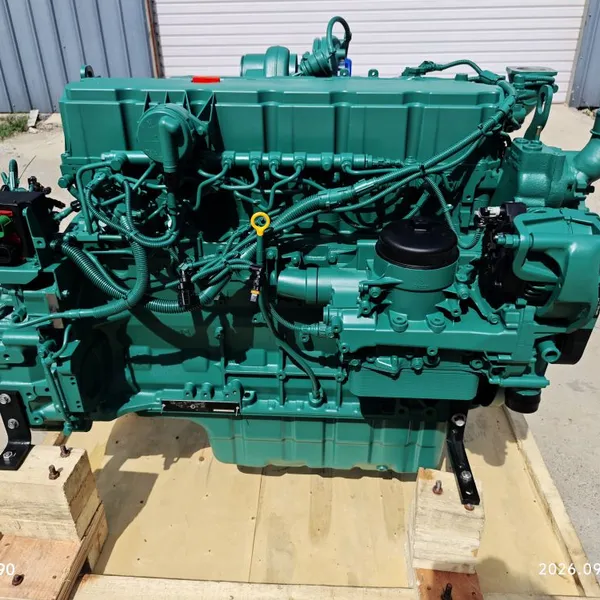 Read More
-
Fuel Quality Trends and Their Impact on VOLVO D7E Engine Service
November 24, 2026A workshop repairing fuel systems on seven litre industrial engines began keeping the drained fuel in sample jars, and after a sea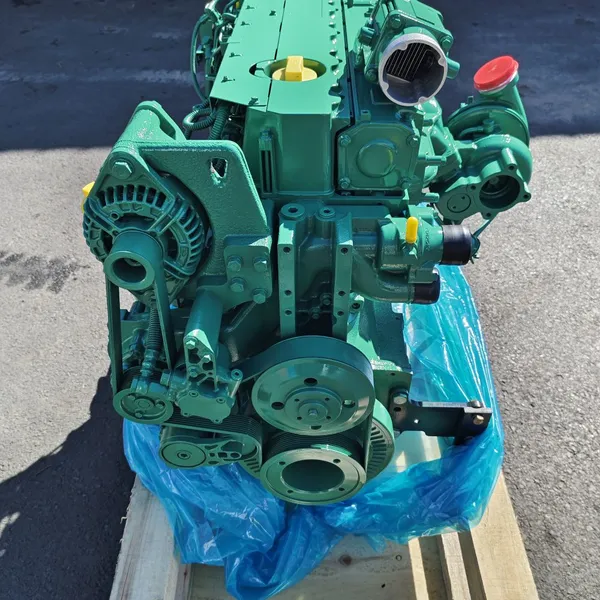 Read More
-
Grid Stability Projects and Demand for KTTA19-C700 Class Generator Engines
November 23, 2026A tender that crossed the desk of a generator set builder asked for four engines of a mid-size class, arranged to run together and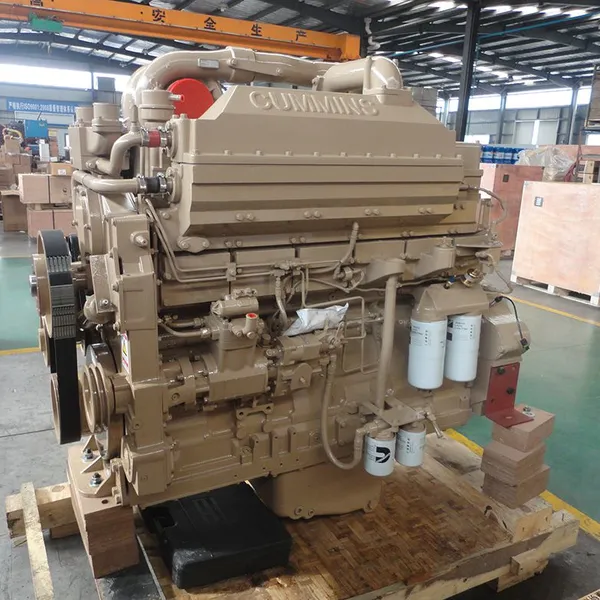 Read More
-
Long Block and Remanufactured Options for Doosan DL08 Engines
November 23, 2026A loader owner facing a worn engine weighed three routes on a single afternoon: repair the unit in place, fit a long block, or exc Read More

Contact Us
Recommended Products
-
 New 129 kW QSB6.7 Diesel Engine Excavator Construction Machinery Electric Start Water-Cooled Core Including Motor PumpUS$ 1888.00 - 3888.00MOQ: 1 Unit
-
Wholesale Diesel Engine Genuine 4 Stroke Direct Injection Doosan DL08 Engine for SaleUS$ 4558.00 - 4800.00MOQ: 1 Unit
-
Factory Price DOOSAN DL06 Construction Machinery Motor 6 Cylinder 115kw Water-Cooled With Core Components Engine and PumpUS$ 4752.00 - 5000.00MOQ: 1 Unit
-
Factory Price 4 Stroke 115kw Doosan DB58 Complete Engine Assy for Dx220 ExcavatorUS$ 3450.00 - 3650.00MOQ: 1 Unit
-
Factory Manufacture 123kw 4 Stroke Volvo D6e Machinery Engine for Construction MachineryUS$ 7500.00MOQ: 1 Unit
-
New BF6M2012C 4-stroke Original Water-cooled Diesel EngineUS$ 4500.00 - 5400.00MOQ: 1 Unit
-
Original Water Cooled 4 Stroke 6 Cylinder DEUTZ TCD2012062V Machinery EnginesUS$ 4888.00 - 5081.00MOQ: 1 Unit
-
Factory Outlet 6 Cylinder 250HP 2200rpm 6C8.3-C250 Construction Machinery Engines for CuminsUS$ 34627.00 - 36450.00MOQ: 1 Unit
-
1104D-44TA Diesel Engine 83kw New Water-Cooled Machine With Electric Start and Pump Good Price Per UnitUS$ 3700.00 - 4200.00MOQ: 1 Unit
-
Original Water Cooled 4 Stroke DEUTZ TCD 2013 L06 2V Machinery Engines for SaleUS$ 7070.00 - 7443.00MOQ: 1 Unit
-
Excavator Engine Assy QSL8.9 Complete Engine Assembly CUMMINS Qsl 9 Diesel EngineUS$ 4300.00 - 4600.00MOQ: 1 Unit
-
Genuine Vovo D4d EAE2 Diesel Engine for VOLVO EC140 ExcavatorNegotiableMOQ: 1 Unit
-
Factory Outlet 6 Cylinder 250HP 2200rpm 6C8.3-C250 Construction Machinery Engines for CuminsUS$ 4700.00 - 5100.00MOQ: 1 Unit
-
Good Price 153kw 4 Stroke Electric Start D7E Diesel Engine for Construction MachineryUS$ 8350.00MOQ: 1 Unit
-
WEICHAI 178kw 4 Stroke WD10G240E203 Diesel Engine for SEM660D SEM660B Wheel LoaderUS$ 3920.00 - 4127.00MOQ: 1 Unit
-
Dongfeng Shanghai SC11CB220G2B1 6-Cylinder Diesel Engine 162kw (220hp) SDEC 3306 New Condition Core Included Farm MachineryUS$ 6500.00MOQ: 1 Unit
-
ISUZU 4 Cylinder Diesel Engine 4BG1 Machinery Engines for Kobelco SK135 ExcavatorUS$ 6800.00MOQ: 1 Unit
-
130Hp Diesel Engine YC4D130 Yuchai Diesel Motor Price for TruckUS$ 3400.00 - 3600.00MOQ: 1 Unit
-
Shanghai SDEC SC9D220G2 162KW Diesel Engine for SEM922 SEM921 GraderUS$ 5320.00 - 5600.00MOQ: 1 Unit
-
Factory Outlet Sinotruk D1242 Engine Assembly for Construction IndustryUS$ 4615.00 - 4858.00MOQ: 1 Unit