
 Business License

What Is the Cummins KTTA19-C700 Diesel Engine?
A KTTA19-C700 diesel engine is a six cylinder unit of roughly nineteen litres, charged in two stages and aftercooled, built on a block that has been in industrial service for a long time and supplied in a setting written for continuous work. The letters ahead of the number describe the route the air takes rather than the size of the iron, and that is where most of what a buyer needs to know sits.
Read this as a Cummins KTTA19 engine overview written from the buyer's side of the counter. It puts the unit on the ladder of builds that share its block, explains why nineteen litres falls where it does between the smaller and the larger industrial sizes, sets out what the second charger changes in daily work, and closes on the KTTA19-C700 engine basics that decide whether the unit suits an application at all.
Two questions arrive with almost every enquiry of this kind. The first is what the name means, and the second is what the machine will be asked to do. A supplier who answers the second one well has answered most of the first, and Jining Pinbo Import and Export works from the duty description rather than from the model string for that reason.
1. Cummins KTTA19 Engine Overview: Four Letters That Mark Four Steps
The K19 block carries six cylinders and a swept volume of about nineteen litres, and the family built on it is described by letters placed ahead of the number. Each added letter marks a step in the way air reaches the cylinder.
The base build breathes on its own. A single T introduces a turbocharger, which uses exhaust energy to drive more air into the engine. An A adds aftercooling, so the compressed charge is cooled before it enters the manifold. A second T adds a further stage of compression ahead of the first, with cooling between the two.
| Build | Air path | Typical duty | What it adds on the buyer's side |
|---|---|---|---|
| K19 | Naturally aspirated | Light industrial work | Fewest parts and the shortest service list |
| KT19 | Single stage turbocharged | General industrial drive | More output from the same block, one charger to plan around |
| KTA19 | Turbocharged and aftercooled | Continuous industrial and marine duty | A cooler charge and a wider thermal margin |
| KTTA19 | Two stage turbocharged and aftercooled | Continuous work in awkward conditions | The widest margin in exchange for the longest service list |
Read the steps as an exchange rather than as a ladder of quality. Every step up buys more air per cycle, and every step up also buys more heat to reject, more components to maintain and a narrower tolerance for dirty air or poor fuel.
That is why the two stage build is described here as the version written for long runs in awkward places rather than as the flagship of the family. Its purpose is to hold a stated output when the ambient air is thin, hot, or both.
2. KTTA19-C700 Diesel Engine Basics: Why Nineteen Litres Sits Where It Does
Nineteen litres is a middle size in industrial terms. Below it sit the six cylinder units of fourteen or fifteen litres and the larger four cylinder units, and above it sit the vee configurations of thirty odd litres.
The middle size earns its place by spreading the load. Nineteen litres across six cylinders works out at a little over three litres of swept volume per cylinder, which is a comfortable figure for a piston and a cylinder head asked to work for weeks at a time. A four cylinder unit of similar total volume carries half a litre more in each cylinder, and that difference shows up as a heavier thermal load on parts that cannot easily be replaced in the field.
The cylinder count also shapes the way the unit delivers its torque. A firing order spread over six cylinders gives a smoother flow into the flywheel than a four cylinder arrangement, which matters for a driven machine that has to hold a steady speed rather than absorb a rough one.
Size sets the physical side as well. An inline six of nineteen litres needs a base frame and a machine room, and it is installed where it can sit level and be reached from both sides. A machine that cannot offer that access will not be improved by a more capable unit, and applications of that shape belong with a different size class. Pinbo Power reads the machine room before the specification sheet for that reason, since the space a unit occupies is decided long before the unit is chosen.
3. KTTA19-C700 Engine Basics: What the Two Chargers Do to the Duty
Two stages exist because one stage has a ceiling. Compressing air heats it, and heated air is less dense, so beyond a certain pressure a second compression gives less benefit than the heat it adds unless the charge is cooled on the way between the stages.
Arranged properly, the two stage path lets the unit burn more fuel in the same cylinder without lifting the exhaust temperature into the region where valves and pistons begin to suffer. For a buyer the practical effect is margin: at altitude, in a hot plant room or behind a restricted air filter, a build of this kind still has room to hold its stated output where a single stage version would be derated.
What it asks in return is care with the air. The inlet path has to stay clean and short, the intercooler has to reject its heat somewhere, and the chargers become items on the planned maintenance list rather than lifetime parts. A site with no workshop and no spares channel will find that list harder to hold than a site with both.
On a duty that holds a steady load, the second stage keeps the unit a comfortable distance from its thermal limit. On a duty of repeated hard load steps taken from idle, the build is not arranged around that pattern, and a different version of the same family would suit it better.
4. Cummins KTTA19 Engine Overview: Where the C700 Designation Sits
The suffix carries a stated output rather than a component. It names a point in the family of settings the maker publishes for the block, and each point is written for a governed speed and a set of ambient conditions.
The same casting can therefore leave the works against more than one figure. Fuel delivery, governor setting and the approval attached to the application decide which figure applies, and the figure is a promise about that combination rather than a property of the iron.
A rating of this kind is read with three companions: the governed speed, the conditions under which the figure holds, and the class of duty it is approved for. A buyer who records the number without the three has recorded a fragment of the answer.
Neighbouring settings on the same block exchange output for life margin, and the choice between them follows the working point rather than the size of the number. A plant that runs at part load for most of its hours gains little from the higher setting and pays for it at every service interval.
5. KTTA19-C700 Diesel Engine: Names It Is Confused With
Four names meet in this family and are mistaken for one another often enough to be worth setting out. K19 describes the bare block, KT19 the block with one charger, KTA19 the charged and aftercooled version, and KTTA19 the two stage build described here. Adding a setting suffix narrows any of them further.
The cost of mixing them is paid at installation rather than at the desk. Inlet pipework sized for one arrangement does not line up with the other, a spare charger ordered against the wrong name arrives with the wrong housing, and a governor setting approved for one build does not match the duty of another.
| Name on the enquiry | What it actually describes | What to check before quoting |
|---|---|---|
| K19 | Bare naturally aspirated block | Whether the application needs a charged build at all |
| KT19 | Block with single stage charging | Charger size and whether an aftercooler is already fitted |
| KTA19 | Charged and aftercooled | Which of the two later builds the machine was laid out for |
| KTTA19 | Two stage charging with cooling between stages | Pipework route, intercooler position and the service list that follows |
A plate photograph settles arguments that a typed model name cannot. At Jining Pinbo Import and Export Co Ltd an enquiry is checked against the plate, the casting number and the arrangement of the existing pipework together, because a name written on an order form is a shorter description of a unit than the unit itself.
6. KTTA19-C700 Engine Basics: Where This Build Stops
Four kinds of work sit outside what this build is for, and naming them saves a wasted quotation.
Marine propulsion is the first. A vessel engine has to take a propeller load through a marine gearbox, be cooled by sea water and meet a duty class counted in hours at sea. The industrial two stage build shares a block with the marine versions but not the dress, the approval or the gearbox interface.
Road going vehicles are the second. Machines that have to meet a road emission stage are built around a different specification and a different control system, and the industrial unit has no part in that market.
The third is work that starts and stops. A unit sized and dressed for long runs spends its life differently from one called on for twenty minutes at a time, and an application of that shape pays for a service list it never uses.
Space is the last limit. A unit of this size needs a floor it can be bolted to and access on both sides, and a machine that offers neither will not be improved by a larger engine.
7. Cummins KTTA19 Engine Overview: Five Questions That Come Back
A buyer who sends a model name and a delivery port receives questions in return, and the same five arrive in almost every case.
The first concerns the load. What is the steady demand, what is the largest step the machine has to absorb, and how many hours a year will the unit run? The second concerns the site: the ambient range, the altitude, and what the air carries in the way of dust or salt.
The third concerns the driven equipment. Whether the machine turns a generator, a pump or a shaft decides the governor setting and the way output has to hold under a changing load. The fourth concerns fuel and service: who will change the oil, which filters can be bought locally, and whether the workshop on site has seen a two stage build before.
The fifth concerns the record. Buyers who can produce a photograph of the plate, the current arrangement and the last overhaul hour receive a shorter reply, because those three items answer half of what would otherwise be asked.
8. KTTA19-C700 Diesel Engine: Three Checks Before the Enquiry Goes Out
Three checks shorten the distance between an enquiry and a workable quotation, and all three are made before the message is sent.
The first is the load profile. Write down the hours at each level of demand across a normal working week rather than the peak the machine can reach, since a peak describes an event and a profile describes the life of the unit. The second is the installation. Record the base frame dimensions, the flywheel housing or coupling pattern, the inlet and exhaust routes and the cooling circuit, because those four decide whether a unit of this size fits at all.
The third is support. Establish what can be delivered to the site within a fortnight and who will fit it, because a two stage build asks for a service capability that a single stage unit does not.
Enquiries that arrive with all three are answered with a build, a setting and a service list in one exchange. Jining Pinbo Import and Export asks for them in that order for that reason, and it reads a duty statement as part of the specification rather than as a note beside it.
9. Frequently Asked Questions
9.1 What is a KTTA19-C700 diesel engine?
It is an inline six of about nineteen litres built on the Cummins K19 block, charged in two stages and aftercooled, and supplied in a setting intended for continuous work. The block is a long established industrial casting, and the two stage air path is what separates this build from its single stage relatives. What follows from that is a wider margin in thin or hot air and a longer service list, because two chargers, an intercooler and their pipework become part of the maintenance plan. These KTTA19-C700 engine basics are the part of the description that decides whether the unit suits a machine at all.
9.2 What does a Cummins KTTA19 engine overview have to cover?
An overview worth reading covers the family, the air path, the meaning of the setting and the limits of the build, in that order. Family explains which block the unit comes from, the air path explains why the letters differ between relatives, the setting explains what the number promises and under which conditions, and the limits save a buyer from quoting the unit into work it was never intended for. A buyer who can set those four points out in a sentence each is ready to place an enquiry that will be answered with a build rather than with a request for more information.
9.3 Which KTTA19-C700 engine basics decide an order?
Three decide most of it: the load profile the machine will actually run, the installation dimensions that decide whether the unit fits, and the service support available at the destination. Output, setting and dress all follow from those three, and the KTTA19-C700 engine basics are worth settling in that order. A machine that cannot accept the footprint or be supported at the destination is not improved by any setting printed on the sheet. A buyer who can state the three plainly receives a build recommendation rather than a list of options.
9.4 How does the two stage build differ from the other K19 versions?
The differences are in the air path and in what follows from it. A naturally aspirated block takes in what the atmosphere offers, a single stage build adds one charger, and a charged and aftercooled version cools the charge before the manifold. The two stage build compresses twice with cooling between the stages, which holds a stated output better in thin or hot air and adds hardware to the maintenance plan. A buyer comparing the two should read the extra stage as a purchase of margin rather than of output, since the block underneath is shared.
Recently Posted
-
DEUTZ F3L912 vs F4L912: Cylinder Count and Power Trade-Offs
October 22, 2026A workshop in an export market replaced a three cylinder air cooled engine with a four cylinder unit of the same family and found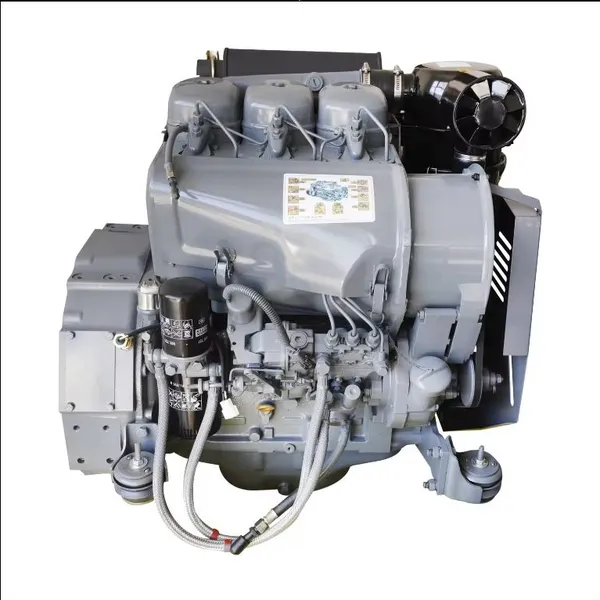 Read More
-
DEUTZ BF6M1015 vs VOLVO D7E: Comparing Industrial Engine Platforms
October 22, 2026A fleet operator with a mixed workshop put a DEUTZ BF6M1015 beside a VOLVO D7E on paper and asked which platform to standardise on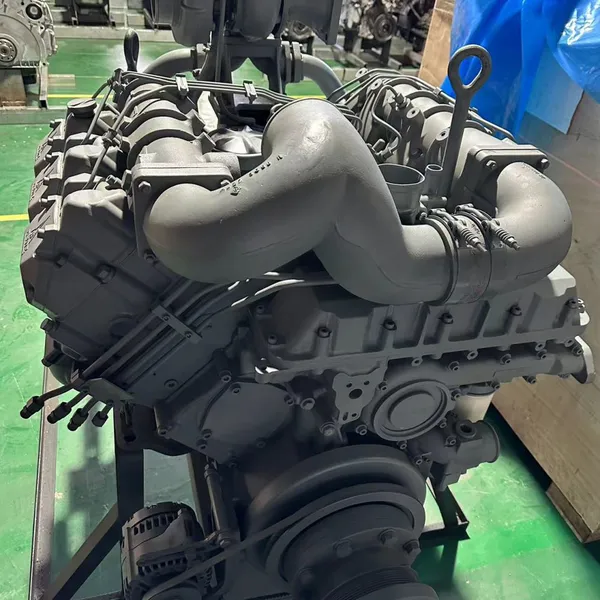 Read More
-
DEUTZ BF6M1015 vs BF6M2012: A Selection Guide
October 22, 2026A contractor compared two quotations for a crushing plant and picked the engine with the lower cost per kilowatt, then spent a sea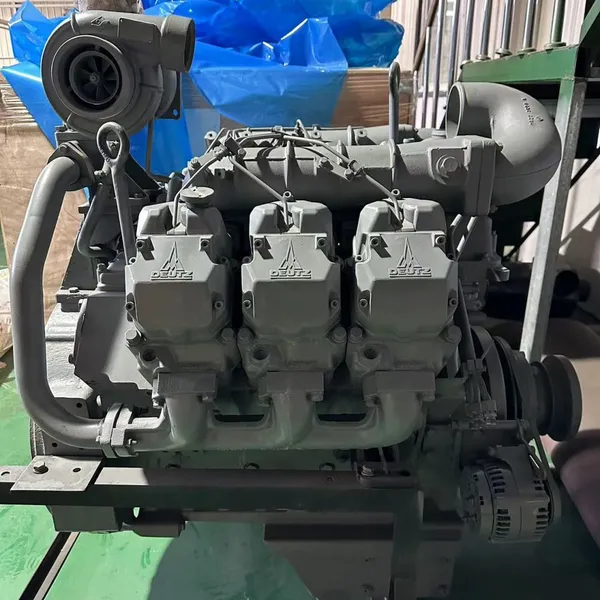 Read More
-
What Is the Kubota V3300 Diesel Engine?
October 21, 2026A Kubota V3300 diesel engine is a four cylinder liquid cooled unit of about three and a third litres, built for compact machines r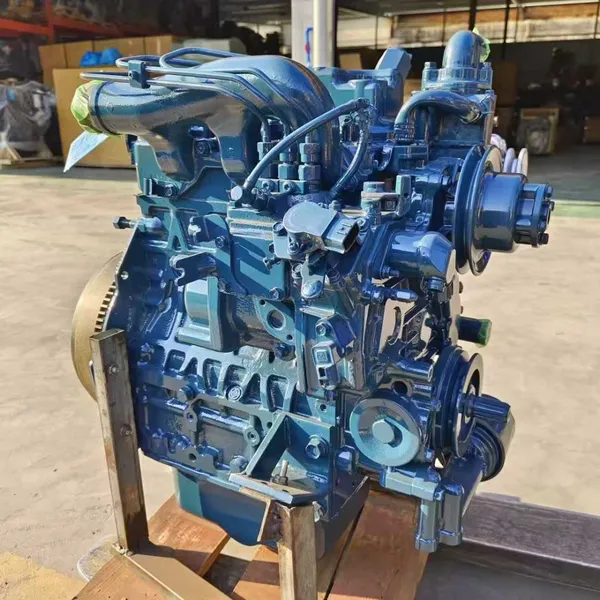 Read More

Contact Us
Recommended Products
-
 New 129 kW QSB6.7 Diesel Engine Excavator Construction Machinery Electric Start Water-Cooled Core Including Motor PumpUS$ 1888.00 - 3888.00MOQ: 1 Unit
-
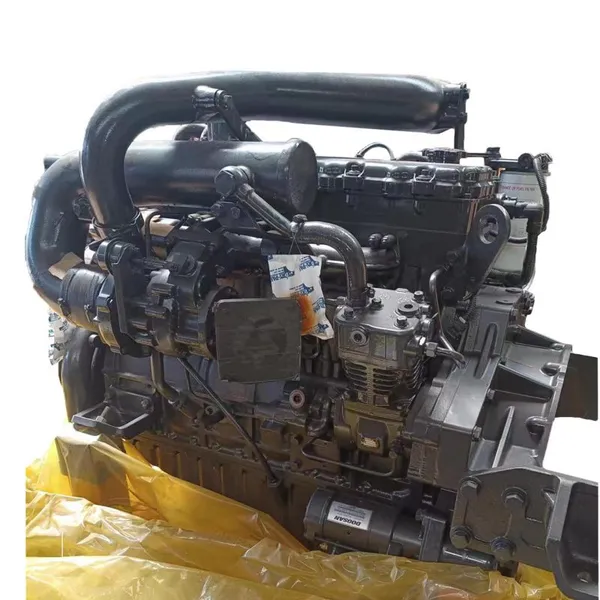
Wholesale Diesel Engine Genuine 4 Stroke Direct Injection Doosan DL08 Engine for SaleUS$ 4558.00 - 4800.00MOQ: 1 Unit
-
Factory Price DOOSAN DL06 Construction Machinery Motor 6 Cylinder 115kw Water-Cooled With Core Components Engine and PumpUS$ 4752.00 - 5000.00MOQ: 1 Unit
-
Factory Price 4 Stroke 115kw Doosan DB58 Complete Engine Assy for Dx220 ExcavatorUS$ 3450.00 - 3650.00MOQ: 1 Unit
-
Factory Manufacture 123kw 4 Stroke Volvo D6e Machinery Engine for Construction MachineryUS$ 7500.00MOQ: 1 Unit
-
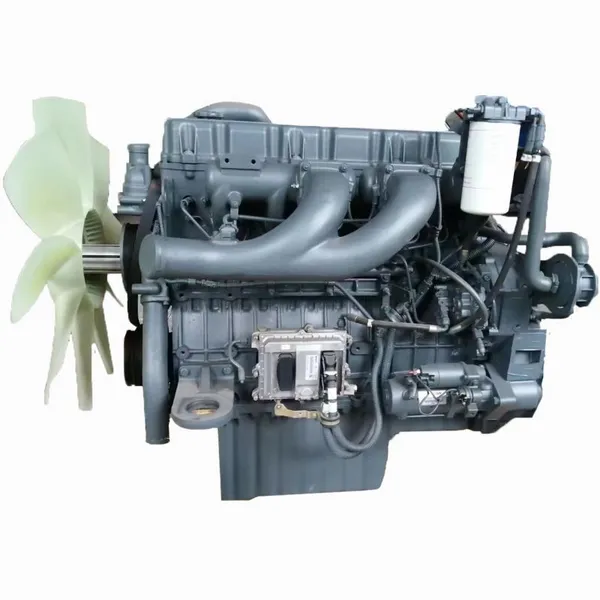
New BF6M2012C Cylinder 4-stroke Original Water-cooled Generator With Live Start FunctionUS$ 4500.00 - 5400.00MOQ: 1 Unit
-
Original Water Cooled 4 Stroke 6 Cylinder DEUTZ TCD2012062V Machinery EnginesUS$ 4888.00 - 5081.00MOQ: 1 Unit
-
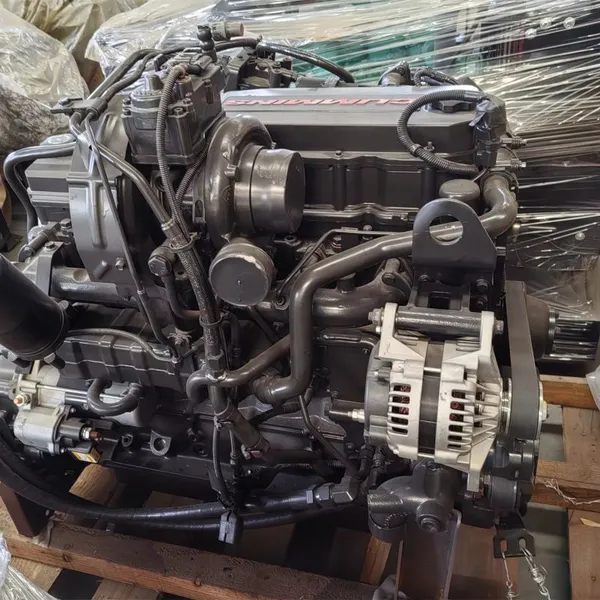
Factory Outlet 6 Cylinder 250HP 2200rpm 6C8.3-C250 Construction Machinery Engines for CuminsUS$ 34627.00 - 36450.00MOQ: 1 Unit
-
1104D-44TA Diesel Engine 83kw New Water-Cooled Machine With Electric Start and Pump Good Price Per UnitUS$ 3700.00 - 4200.00MOQ: 1 Unit
-
Original Water Cooled 4 Stroke DEUTZ TCD 2013 L06 2V Machinery Engines for SaleUS$ 7070.00 - 7443.00MOQ: 1 Unit
-
Excavator Engine Assy QSL8.9 Complete Engine Assembly CUMMINS Qsl 9 Diesel EngineUS$ 4300.00 - 4600.00MOQ: 1 Unit
-
Genuine Vovo D4d EAE2 Diesel Engine for VOLVO EC140 ExcavatorNegotiableMOQ: 1 Unit
-
Factory Outlet 6 Cylinder 250HP 2200rpm 6C8.3-C250 Construction Machinery Engines for CuminsUS$ 4700.00 - 5100.00MOQ: 1 Unit
-
Good Price 153kw 4 Stroke Electric Start D7E Diesel Engine for Construction MachineryUS$ 8350.00MOQ: 1 Unit
-
WEICHAI 178kw 4 Stroke WD10G240E203 Diesel Engine for SEM660D SEM660B Wheel LoaderUS$ 3920.00 - 4127.00MOQ: 1 Unit
-
Dongfeng Shanghai SC11CB220G2B1 6-Cylinder Diesel Engine 162kw (220hp) SDEC 3306 New Condition Core Included Farm MachineryUS$ 6500.00MOQ: 1 Unit
-
ISUZU 4 Cylinder Diesel Engine 4BG1 Machinery Engines for Kobelco SK135 ExcavatorUS$ 6800.00MOQ: 1 Unit
-
130Hp Diesel Engine YC4D130 Yuchai Diesel Motor Price for TruckUS$ 3400.00 - 3600.00MOQ: 1 Unit
-
Shanghai SDEC SC9D220G2 162KW Diesel Engine for SEM922 SEM921 GraderUS$ 5320.00 - 5600.00MOQ: 1 Unit
-
Factory Outlet Sinotruk D1242 Engine Assembly for Construction IndustryUS$ 4615.00 - 4858.00MOQ: 1 Unit