
 Business License

Buying a DEUTZ F3L912 Engine: Condition Assessment and Documentation
A workshop bought a used F3L912 on the strength of a clean exterior and a compression figure quoted over the phone. The engine ran for a month, then began using oil, and the strip down showed a cylinder head that had been skimmed twice. Nothing in the appearance had warned of it, and nothing in the paperwork recorded it.
Air cooled engines hide wear in places a water cooled unit does not. There is no coolant to show contamination, no radiator to reveal scale, and the cooling surfaces sit in the open where heat and dust do their work quietly.
This article sets out what a DEUTZ F3L912 engine buying guide has to cover, shows where an F3L912 engine condition assessment should begin and in what order, and closes with the air cooled engine documentation that turns an opinion about a used engine into a set of facts.
1. What a DEUTZ F3L912 Engine Buying Guide Has to Cover
A DEUTZ F3L912 engine buying guide has to cover three things before it covers price: what the machine needs, what the unit is and what condition it is in.
The first is settled between the buyer and the machine. Bore, stroke and swept volume place the engine in a size class, and the duty the machine imposes decides whether that class is right. An engine bought at the wrong rating will run and will not deliver the service interval its build allowed.
The second is settled at the plate. The designation on the plate states the build, and the build decides the rating, the governor arrangement and the accessories fitted to the unit.
The third is the part most used engines are bought without, and it is the part this guide spends its length on. Condition cannot be read from a photograph, and it is the reason a used engine costs less than a new one.
Jining Pinbo Import and Export Co Ltd works through those three in order with a buyer, because a quotation that starts at the price leaves the other two to be discovered after delivery.
2. F3L912 Engine Condition Assessment: Where to Start
An F3L912 engine condition assessment starts with the evidence that can be gathered without dismantling anything, and moves inward when that evidence raises a question.
The first group is external. Look for oil weeping at the cylinder head joint, at the pushrod tubes and at the front and rear seals. On an air cooled engine, oil that has reached the cooling fins is worth particular attention, because it holds dust against the metal and raises the temperature of the cylinder it is stuck to.
The second group is the cooling surfaces. Fins that are clogged, bent or missing reduce the area available to reject heat, and a cylinder running hot wears faster than its neighbours. A head that has been run hot may also show discolouration along the exhaust side.
The third group is the running evidence. On a unit that can be started, the first minute tells a great deal: how readily it fires, whether it hunts at idle, whether the exhaust runs clean once warm, and whether any knock appears under a light load.
The table below sets the checks in the order worth doing them, since each one decides whether the next is necessary.
| Stage | What to look for | What it points to |
|---|---|---|
| External check | Oil weeping at joints and seals, oil on the fins | Gasket condition, seal wear, overheating history |
| Cooling surfaces | Clogged or bent fins, head discolouration | Restricted air path, past overheating |
| Starting behaviour | Firing from cold, idle stability, exhaust colour | Compression, fuelling, injector condition |
| Running under load | Response, blowby, exhaust temperature | Ring and liner condition, pump setting |
A buyer who works through those stages in order rarely needs to open the engine to decide. The stages that follow are for the units where one of them raised an unresolved question.
3. Air Cooled Engine Documentation to Ask For
Air cooled engine documentation does more work than its equivalent on a liquid cooled unit, because there is less external evidence to go on.
The plate is the starting document. Read it at full size rather than from a thumbnail, since two similar designations can differ by a character and by a whole rating class. Record the designation and photograph the plate beside the hour meter so the two can be read together.
A service history is the second document, where the seller holds one. It does not have to be complete to be useful; a partial record that shows the intervals actually followed is more informative than a binder of invoices that says nothing about how the engine was treated.
A record of any previous repair is the third, and it is the one most often missing. A cylinder head that has been skimmed, a pump that has been recalibrated away from its original setting or a set of oversize pistons all change the engine from the specification on the plate, and each of those facts belongs in writing.
Where a document is missing, ask what is known rather than pressing for a document that does not exist. A seller who describes a used engine as it is, with the gaps stated, is easier to work with than one whose paperwork answers every question perfectly.
4. DEUTZ F3L912 Engine Buying Guide: Cooling Fins and Shrouds
A DEUTZ F3L912 engine buying guide has to spend time on the cooling system, because on an air cooled engine that system is not a bolt-on part but the mechanism the whole design depends on.
The fins on the cylinders and the head transfer heat directly to the air moving across them, and the shrouds and baffles are what route that air rather than letting it escape around the outside. A shroud that is missing, cracked or fitted loosely lets the fan move air past the engine instead of through it, and the cylinders run hotter for reasons that leave no mark.
Check the cooling fan and its drive as well. A fan that has lost blades or that runs on a slack belt moves less air at exactly the moment the engine needs more, and the fault shows as a temperature rise under load rather than at idle.
The oil cooler belongs in the same inspection on this engine, since it rejects its share of the heat load and shares the airflow with the cylinders. A cooler whose fins are packed with dust adds to the temperature of everything downstream of it.
For a used unit, this is the area where appearance and condition diverge most. A fresh coat of paint over clogged fins looks better than a bare engine that has been cleaned, and the second is worth more to the buyer.
5. F3L912 Engine Condition Assessment of Compression and Leaks
An F3L912 engine condition assessment reaches its useful limit at compression and leakage, and both can be measured without removing the engine from its frame.
A compression reading taken on a warm engine and compared across the cylinders says more than an absolute figure. Cylinders that read close to each other are working together, while a single low cylinder points to a valve, a ring set or a head gasket rather than to general wear.
Leakage testing adds detail that compression alone cannot give. Air introduced into a cylinder at top dead centre escapes past the rings, the intake valve, the exhaust valve or the head gasket, and where it escapes tells the mechanic which of those needs attention.
Blowby observed at the breather while the engine runs is a field measure of the same condition. A light haze that clears as the engine warms is normal on a used unit, while a steady plume that increases with load points to worn rings and liners.
None of those three requires the engine to be stripped, and together they decide whether a strip down is warranted at all. A seller who cannot provide them is offering an engine whose condition rests on a description. Pinbo Import and Export records those results for every unit it offers, so the figures can be checked before payment rather than after delivery.
6. Air Cooled Engine Documentation and Service History
Air cooled engine documentation and the service history work together, and neither is worth much without the other.
An hour meter reading means little on its own, since the same figure describes a hard season and an easy one. A service record beside it converts the number into a picture of how the engine was used, and it shows whether the intervals were followed or stretched.
Valve clearance belongs in that record on this engine. The clearance is set mechanically and drifts with use, and an engine whose valves have been adjusted on schedule runs cooler and starts more readily than one where the task was deferred.
Lubricating oil condition belongs there as well. On an air cooled engine the oil carries a larger share of the heat load than it does on a liquid cooled unit, so its condition matters sooner and its service interval is shorter.
Where the record has gaps, the gaps themselves are information. An engine bought with a stated hour reading and no service history is bought on the seller's word, and the price should reflect that.
Jining Pinbo Import and Export keeps the plate photograph, the condition notes and the service record against one order number, so a question raised later can be answered from the file rather than from memory.
7. DEUTZ F3L912 Engine Buying Guide: Rebuild or Original
A DEUTZ F3L912 engine buying guide has to deal with the difference between an original engine and a rebuilt one, because the two carry different values and look alike from outside.
A rebuilt unit is not a lesser engine when the work is documented. A rebuild that includes new liners, pistons and bearings, with the clearances recorded, produces an engine with a known and measured condition, and that can be worth more than an untouched unit of unknown history.
The difficulty lies in the rebuild that is described rather than recorded. Where no documentation exists, the buyer is being asked to accept a claim about work that cannot be seen, and the components inside the engine may be a mixture of new and reused parts.
A few marks help. A cylinder head that has been skimmed loses material, and the difference can be measured at the head face. Oversize pistons and liners are marked as such, and their presence indicates a previous rebore. Paint applied over a gasket line usually means the joint has been opened.
The practical rule is to buy the documented engine where the two are offered at a similar price, and to price the undocumented one as a unit of unknown condition rather than as a rebuilt engine.
8. F3L912 Engine Condition Assessment Before Payment
An F3L912 engine condition assessment is worth finishing before payment rather than after delivery, because the balance of the conversation changes once the engine has moved.
Where the buyer can attend in person, the stages in this article take an afternoon. Where the engine is bought at a distance, the same stages can be covered by records: a plate photograph, compression and leakage figures, a written note of any repair, and photographs of the cooling surfaces in their present state.
Those items can be asked for before the order is placed, and a seller who holds them will send them without difficulty. A seller who cannot produce them has told the buyer something useful about the engine.
Pinbo Power prepares that set for every unit it offers, so a buyer working across borders receives the same facts a workshop would gather on site.
The last step is to write the findings down. An assessment held in the buyer's memory alone cannot be compared against the machine after it is installed, and it cannot support a conversation if the engine behaves differently from its description.
9. Frequently Asked Questions
9.1 What should a DEUTZ F3L912 engine buying guide check first?
A DEUTZ F3L912 engine buying guide should start with what the machine needs and what the plate states, and then move to condition. The plate names the build, and the build decides the rating and the governor arrangement, so a unit of the right size but the wrong build will still disappoint. Once those two are settled, the assessment can work through the external checks, the cooling surfaces and the running evidence in that order. Starting at the price inverts the process and leaves the important questions to be answered after delivery.
9.2 How is an F3L912 engine condition assessment done without stripping the engine?
An F3L912 engine condition assessment can reach a firm conclusion without dismantling the unit, using compression, leakage and blowby together. A compression reading compared across the cylinders shows whether they are working together or whether one is low, and a leakage test at top dead centre identifies whether air escapes past the rings, a valve or the head gasket. Blowby seen at the breather gives a field measure of ring and liner condition, and together those three decide whether a strip down is warranted at all. A seller who cannot provide them is describing the engine rather than measuring it.
9.3 What air cooled engine documentation matters most?
The air cooled engine documentation that matters most is the plate read at full size, a service history showing the intervals actually followed, and a written note of any previous repair. The plate states the build, and the plate and the hour meter should be photographed together so the two can be read as a pair. The service history converts an hour reading into a picture of how the engine was used. The repair note matters because a skimmed head, a recalibrated pump or oversize pistons all change the engine from the specification on the plate.
9.4 Is a rebuilt F3L912 worth more than an original one?
A rebuilt F3L912 with documented work can be worth more than an untouched unit of unknown history, because the clearances inside it have been measured and recorded rather than left to chance. The difficulty lies in the engine described as rebuilt without any paperwork, since a buyer is then accepting a claim about work that cannot be seen. A few marks help, including material removed from a skimmed head face, oversize pistons and liners marked as such, and paint over a gasket line. Where the two are offered at similar prices, the documented engine is the safer purchase.
Recently Posted
-
How to Choose a Doosan DL06 Engine Supplier
October 29, 2026Two quotations for the same DL06 arrived on the same day, one several hundred dollars below the other, and the cheaper order was t Read More
-
Sourcing DEUTZ BF6M1015 Engines: What Overseas Buyers Should Verify
October 29, 2026A buyer in South America received a container of engines that matched the quotation in every respect except one, and that one cost Read More
-
How to Source a Genuine 6CTA8.3-C260 Engine: Buyer Checklist
October 28, 2026A buyer in eastern Europe paid a deposit against an engine advertised as genuine, and the crate that arrived held a rebuilt unit w Read More
-
VOLVO D8H vs DEUTZ BF6M1015: Which Engine Suits Heavy Duty Work
October 28, 2026A VOLVO D8H vs DEUTZ BF6M1015 question is rarely about output at all. It arrives from a fleet that has a machine or a vehicle work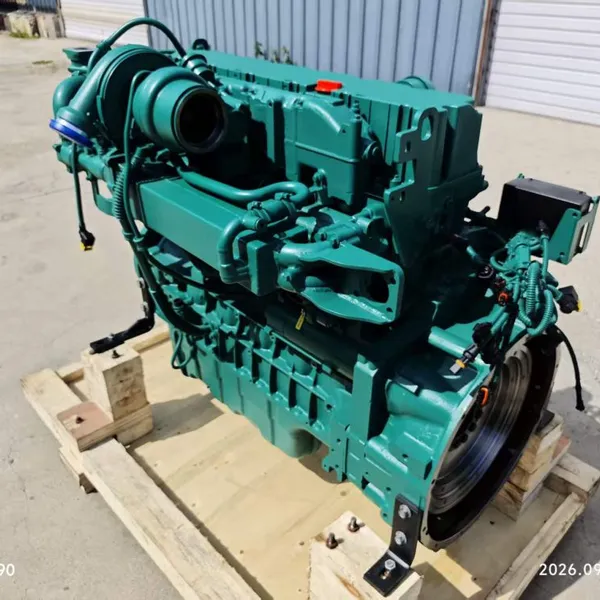 Read More

Contact Us
Recommended Products
-
 New 129 kW QSB6.7 Diesel Engine Excavator Construction Machinery Electric Start Water-Cooled Core Including Motor PumpUS$ 1888.00 - 3888.00MOQ: 1 Unit
-
Wholesale Diesel Engine Genuine 4 Stroke Direct Injection Doosan DL08 Engine for SaleUS$ 4558.00 - 4800.00MOQ: 1 Unit
-
Factory Price DOOSAN DL06 Construction Machinery Motor 6 Cylinder 115kw Water-Cooled With Core Components Engine and PumpUS$ 4752.00 - 5000.00MOQ: 1 Unit
-
Factory Price 4 Stroke 115kw Doosan DB58 Complete Engine Assy for Dx220 ExcavatorUS$ 3450.00 - 3650.00MOQ: 1 Unit
-
Factory Manufacture 123kw 4 Stroke Volvo D6e Machinery Engine for Construction MachineryUS$ 7500.00MOQ: 1 Unit
-
New BF6M2012C Cylinder 4-stroke Original Water-cooled Generator With Live Start FunctionUS$ 4500.00 - 5400.00MOQ: 1 Unit
-
Original Water Cooled 4 Stroke 6 Cylinder DEUTZ TCD2012062V Machinery EnginesUS$ 4888.00 - 5081.00MOQ: 1 Unit
-
Factory Outlet 6 Cylinder 250HP 2200rpm 6C8.3-C250 Construction Machinery Engines for CuminsUS$ 34627.00 - 36450.00MOQ: 1 Unit
-
1104D-44TA Diesel Engine 83kw New Water-Cooled Machine With Electric Start and Pump Good Price Per UnitUS$ 3700.00 - 4200.00MOQ: 1 Unit
-
Original Water Cooled 4 Stroke DEUTZ TCD 2013 L06 2V Machinery Engines for SaleUS$ 7070.00 - 7443.00MOQ: 1 Unit
-
Excavator Engine Assy QSL8.9 Complete Engine Assembly CUMMINS Qsl 9 Diesel EngineUS$ 4300.00 - 4600.00MOQ: 1 Unit
-
Genuine Vovo D4d EAE2 Diesel Engine for VOLVO EC140 ExcavatorNegotiableMOQ: 1 Unit
-
Factory Outlet 6 Cylinder 250HP 2200rpm 6C8.3-C250 Construction Machinery Engines for CuminsUS$ 4700.00 - 5100.00MOQ: 1 Unit
-
Good Price 153kw 4 Stroke Electric Start D7E Diesel Engine for Construction MachineryUS$ 8350.00MOQ: 1 Unit
-
WEICHAI 178kw 4 Stroke WD10G240E203 Diesel Engine for SEM660D SEM660B Wheel LoaderUS$ 3920.00 - 4127.00MOQ: 1 Unit
-
Dongfeng Shanghai SC11CB220G2B1 6-Cylinder Diesel Engine 162kw (220hp) SDEC 3306 New Condition Core Included Farm MachineryUS$ 6500.00MOQ: 1 Unit
-
ISUZU 4 Cylinder Diesel Engine 4BG1 Machinery Engines for Kobelco SK135 ExcavatorUS$ 6800.00MOQ: 1 Unit
-
130Hp Diesel Engine YC4D130 Yuchai Diesel Motor Price for TruckUS$ 3400.00 - 3600.00MOQ: 1 Unit
-
Shanghai SDEC SC9D220G2 162KW Diesel Engine for SEM922 SEM921 GraderUS$ 5320.00 - 5600.00MOQ: 1 Unit
-
Factory Outlet Sinotruk D1242 Engine Assembly for Construction IndustryUS$ 4615.00 - 4858.00MOQ: 1 Unit